References
- Toronto Resident’s Handbook of Neonatology (SickKids Clinical Pathway)
Key takeaways
- Therapeutic hypothermia must begin within the 1–6 hour window after birth to interrupt the injury cascade before secondary energy failure.
- All four inclusion criteria are required: ≥36 weeks (SickKids: ≥35w and >1.8kg), age ≤6h, evidence of intrapartum hypoxia (pH ≤7.0 or BE ≥ -16, or acute event with Apgar ≤5 at 10 min), and moderate-to-severe encephalopathy.
- Whole-body cooling targets 33.5 ± 0.5°C for exactly 72 hours with continuous rectal or esophageal temperature monitoring.
- Rewarming must be slow — no more than 0.5°C per 1–2 hours over 6–12 hours — with high vigilance for seizures, hypotension and NEC.
- Stop cooling early only for refractory hypotension, persistent hypoxemia/PPHN or life-threatening coagulopathy; obtain a brain MRI on days 4–7.
Therapeutic Hypothermia in Neonatal HIE
Clinical Criteria, 72-Hour Protocol, and Systems Management
An evidence-based visual reference based on the Toronto Resident’s Handbook of Neonatology (SickKids Clinical Pathway)
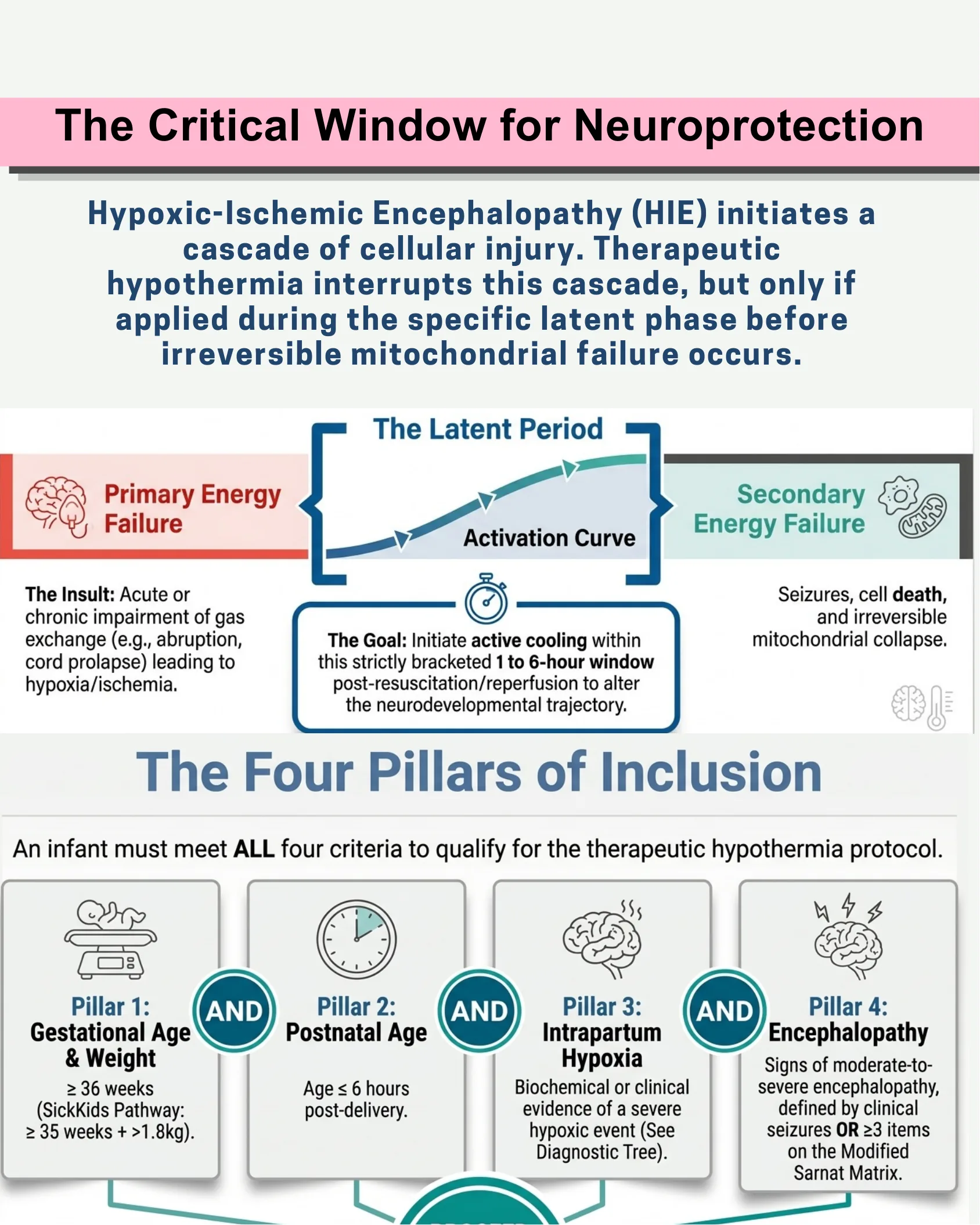
The Critical Window for Neuroprotection
The Critical Window for Neuroprotection
Hypoxic-Ischemic Encephalopathy (HIE) initiates a cascade of cellular injury. Therapeutic hypothermia interrupts this cascade, but only if applied during the specific latent phase before irreversible mitochondrial failure occurs.
- Primary Energy Failure: The Insult: Acute or chronic impairment of gas exchange (e.g., abruption, cord prolapse) leading to hypoxia/ischemia.
- The Latent Period (Activation Curve): The Goal: Initiate active cooling within this strictly bracketed 1 to 6-hour window post-resuscitation/reperfusion to alter the neurodevelopmental trajectory.
- Secondary Energy Failure: Seizures, cell death, and irreversible mitochondrial collapse.
The Four Pillars of Inclusion
An infant must meet ALL four criteria to qualify for the therapeutic hypothermia protocol.
- Pillar 1: Gestational Age & Weight — ≥ 36 weeks (SickKids Pathway: ≥ 35 weeks + >1.8kg).
- Pillar 2: Postnatal Age — Age ≤ 6 hours post-delivery.
- Pillar 3: Intrapartum Hypoxia — Biochemical or clinical evidence of a severe hypoxic event (See Diagnostic Tree).
- Pillar 4: Encephalopathy — Signs of moderate-to-severe encephalopathy, defined by clinical seizures OR ≥3 items on the Modified Sarnat Matrix.
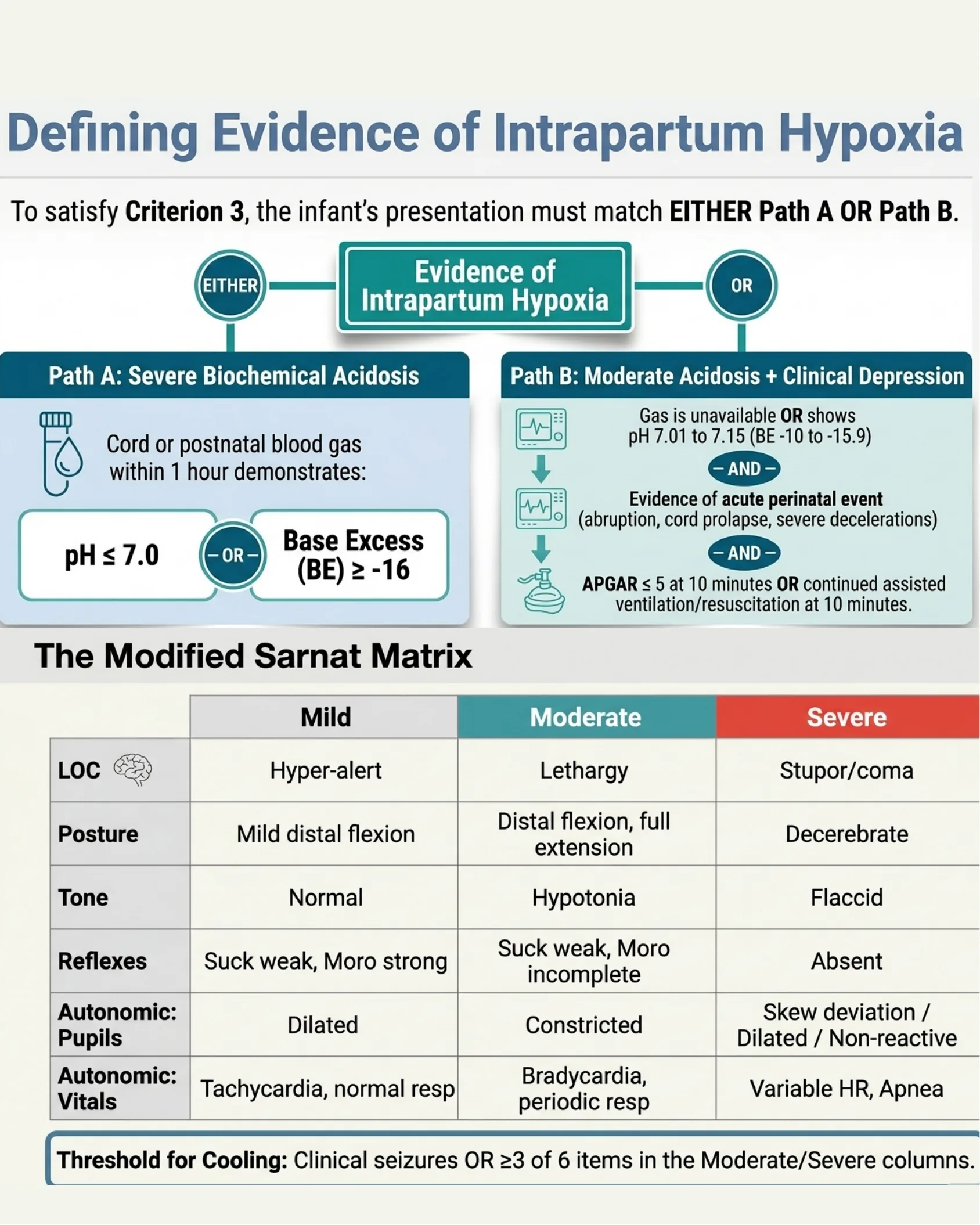
Defining Evidence of Intrapartum Hypoxia
Defining Evidence of Intrapartum Hypoxia
To satisfy Criterion 3, the infant’s presentation must match EITHER Path A OR Path B.
- Path A: Severe Biochemical Acidosis — Cord or postnatal blood gas within 1 hour demonstrates: pH ≤ 7.0 OR Base Excess (BE) ≥ -16.
- Path B: Moderate Acidosis + Clinical Depression — Gas is unavailable OR shows pH 7.01 to 7.15 (BE -10 to -15.9) AND Evidence of acute perinatal event (abruption, cord prolapse, severe decelerations) AND APGAR ≤ 5 at 10 minutes OR continued assisted ventilation/resuscitation at 10 minutes.
The Modified Sarnat Matrix
| Mild | Moderate | Severe | |
|---|---|---|---|
| LOC | Hyper-alert | Lethargy | Stupor/coma |
| Posture | Mild distal flexion | Distal flexion, full extension | Decerebrate |
| Tone | Normal | Hypotonia | Flaccid |
| Reflexes | Suck weak, Moro strong | Suck weak, Moro incomplete | Absent |
| Autonomic: Pupils | Dilated | Constricted | Skew deviation / Dilated / Non-reactive |
| Autonomic: Vitals | Tachycardia, normal resp | Bradycardia, periodic resp | Variable HR, Apnea |
Threshold for Cooling: Clinical seizures OR ≥3 of 6 items in the Moderate/Severe columns.
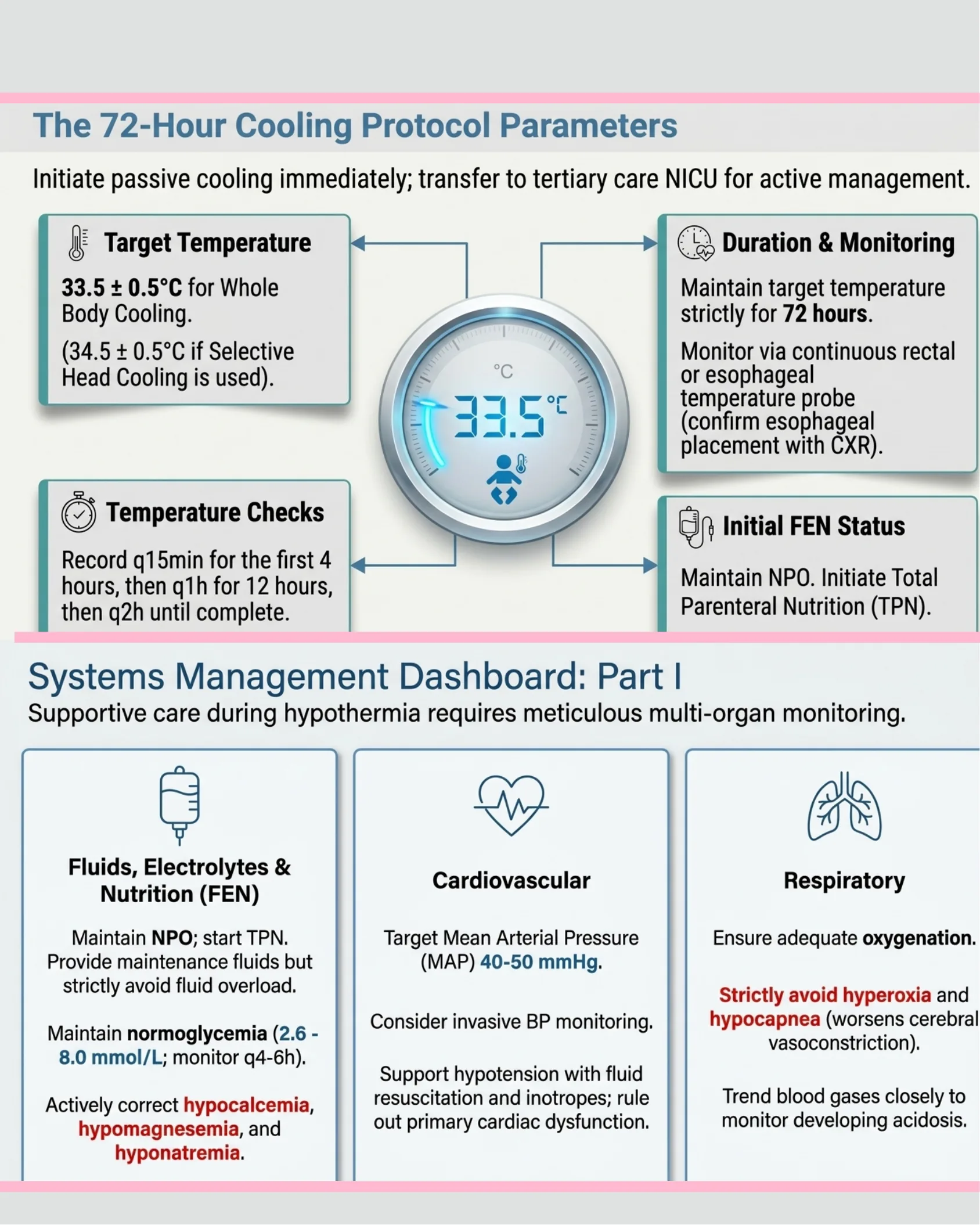
The 72-Hour Cooling Protocol Parameters
The 72-Hour Cooling Protocol Parameters
Initiate passive cooling immediately; transfer to tertiary care NICU for active management.
- Target Temperature: 33.5 ± 0.5°C for Whole Body Cooling. (34.5 ± 0.5°C if Selective Head Cooling is used).
- Duration & Monitoring: Maintain target temperature strictly for 72 hours. Monitor via continuous rectal or esophageal temperature probe (confirm esophageal placement with CXR).
- Temperature Checks: Record q15min for the first 4 hours, then q1h for 12 hours, then q2h until complete.
- Initial FEN Status: Maintain NPO. Initiate Total Parenteral Nutrition (TPN).
Systems Management Dashboard: Part I
Supportive care during hypothermia requires meticulous multi-organ monitoring.
- Fluids, Electrolytes & Nutrition (FEN): Maintain NPO; start TPN. Provide maintenance fluids but strictly avoid fluid overload. Maintain normoglycemia (2.6 – 8.0 mmol/L; monitor q4-6h). Actively correct hypocalcemia, hypomagnesemia, and hyponatremia.
- Cardiovascular: Target Mean Arterial Pressure (MAP) 40-50 mmHg. Consider invasive BP monitoring. Support hypotension with fluid resuscitation and inotropes; rule out primary cardiac dysfunction.
- Respiratory: Ensure adequate oxygenation. Strictly avoid hyperoxia and hypocapnea (worsens cerebral vasoconstriction). Trend blood gases closely to monitor developing acidosis.
Systems Management Dashboard: Part II
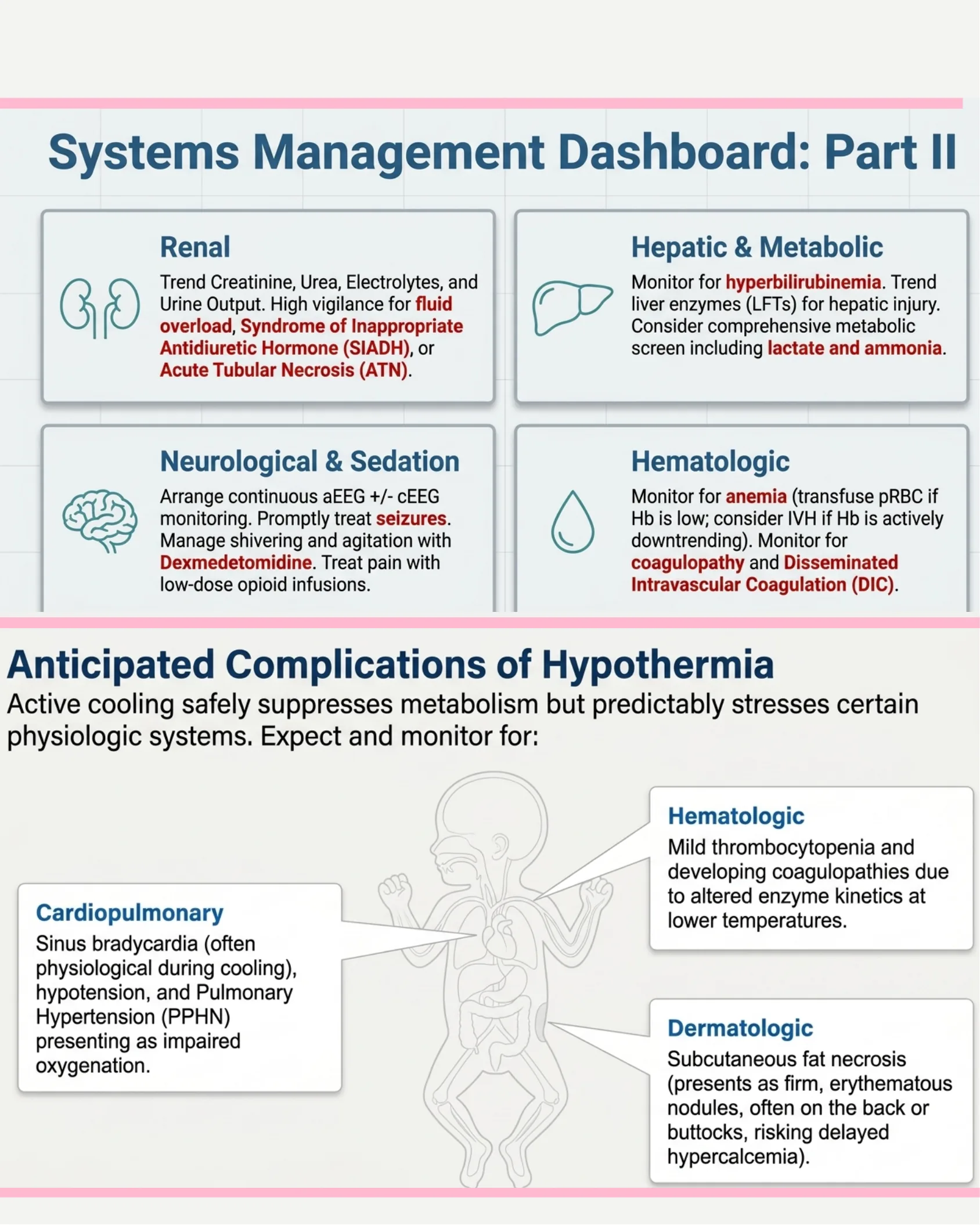
Systems Management Dashboard: Part II
- Renal: Trend Creatinine, Urea, Electrolytes, and Urine Output. High vigilance for fluid overload, Syndrome of Inappropriate Antidiuretic Hormone (SIADH), or Acute Tubular Necrosis (ATN).
- Hepatic & Metabolic: Monitor for hyperbilirubinemia. Trend liver enzymes (LFTs) for hepatic injury. Consider comprehensive metabolic screen including lactate and ammonia.
- Neurological & Sedation: Arrange continuous aEEG +/- cEEG monitoring. Promptly treat seizures. Manage shivering and agitation with Dexmedetomidine. Treat pain with low-dose opioid infusions.
- Hematologic: Monitor for anemia (transfuse pRBC if Hb is low; consider IVH if Hb is actively downtrending). Monitor for coagulopathy and Disseminated Intravascular Coagulation (DIC).
Anticipated Complications of Hypothermia
Active cooling safely suppresses metabolism but predictably stresses certain physiologic systems. Expect and monitor for:
- Cardiopulmonary: Sinus bradycardia (often physiological during cooling), hypotension, and Pulmonary Hypertension (PPHN) presenting as impaired oxygenation.
- Hematologic: Mild thrombocytopenia and developing coagulopathies due to altered enzyme kinetics at lower temperatures.
- Dermatologic: Subcutaneous fat necrosis (presents as firm, erythematous nodules, often on the back or buttocks, risking delayed hypercalcemia).
Emergency Cessation: Indications to Stop Cooling
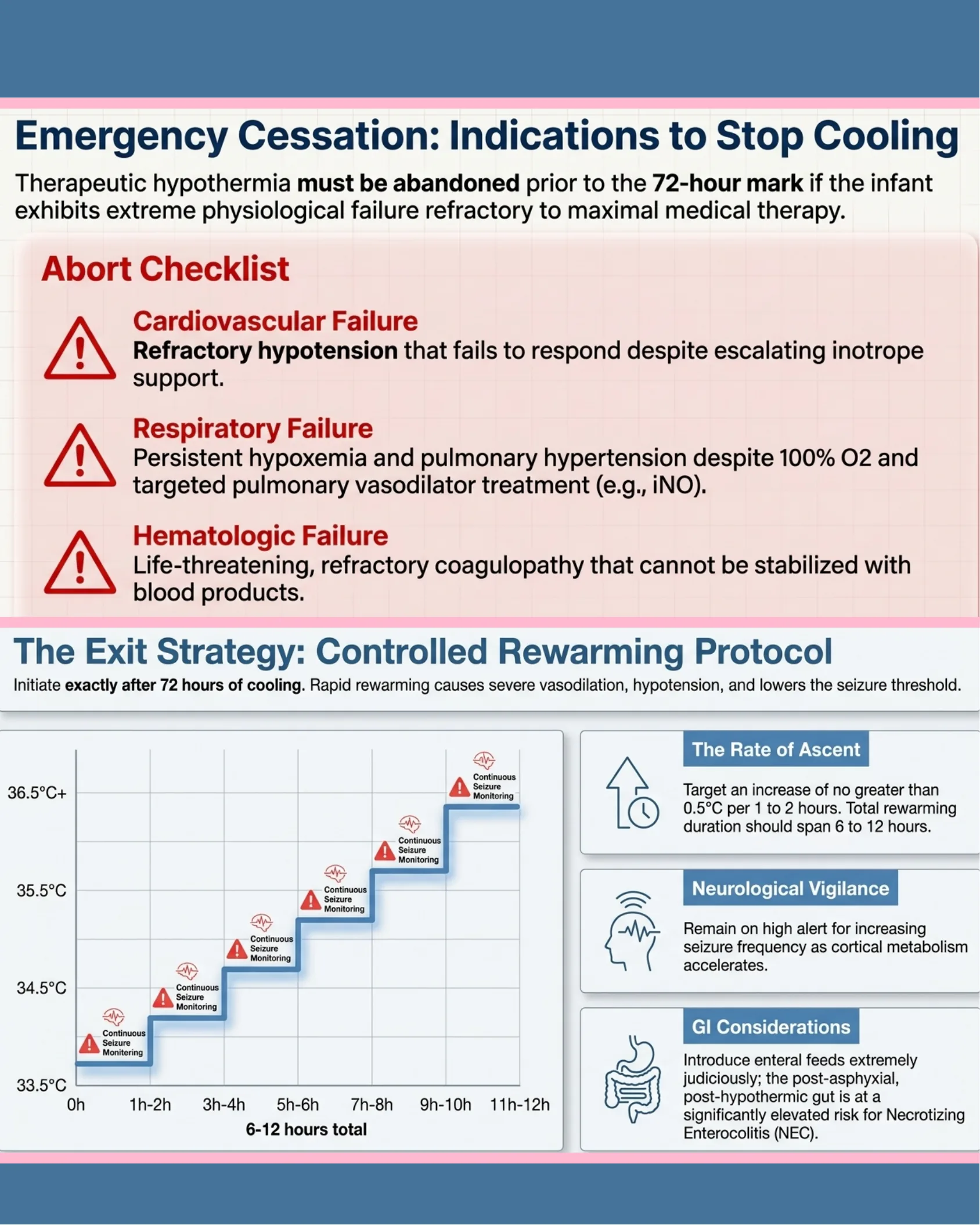
Emergency Cessation: Indications to Stop Cooling
Therapeutic hypothermia must be abandoned prior to the 72-hour mark if the infant exhibits extreme physiological failure refractory to maximal medical therapy.
Abort Checklist
- Cardiovascular Failure: Refractory hypotension that fails to respond despite escalating inotrope support.
- Respiratory Failure: Persistent hypoxemia and pulmonary hypertension despite 100% O2 and targeted pulmonary vasodilator treatment (e.g., iNO).
- Hematologic Failure: Life-threatening, refractory coagulopathy that cannot be stabilized with blood products.
The Exit Strategy: Controlled Rewarming Protocol
Initiate exactly after 72 hours of cooling. Rapid rewarming causes severe vasodilation, hypotension, and lowers the seizure threshold.
- Step chart: 33.5°C (0h) → 34.5°C (1h-2h) → 35°C (3h-4h) → 35.5°C (5h-6h) → 36°C (7h-8h) → 36.5°C+ (9h-12h), with continuous seizure monitoring at each step.
- The Rate of Ascent: Target an increase of no greater than 0.5°C per 1 to 2 hours. Total rewarming duration should span 6 to 12 hours.
- Neurological Vigilance: Remain on high alert for increasing seizure frequency as cortical metabolism accelerates.
- GI Considerations: Introduce enteral feeds extremely judiciously; the post-asphyxial, post-hypothermic gut is at a significantly elevated risk for Necrotizing Enterocolitis (NEC).
Post-Rewarming and Maintenance
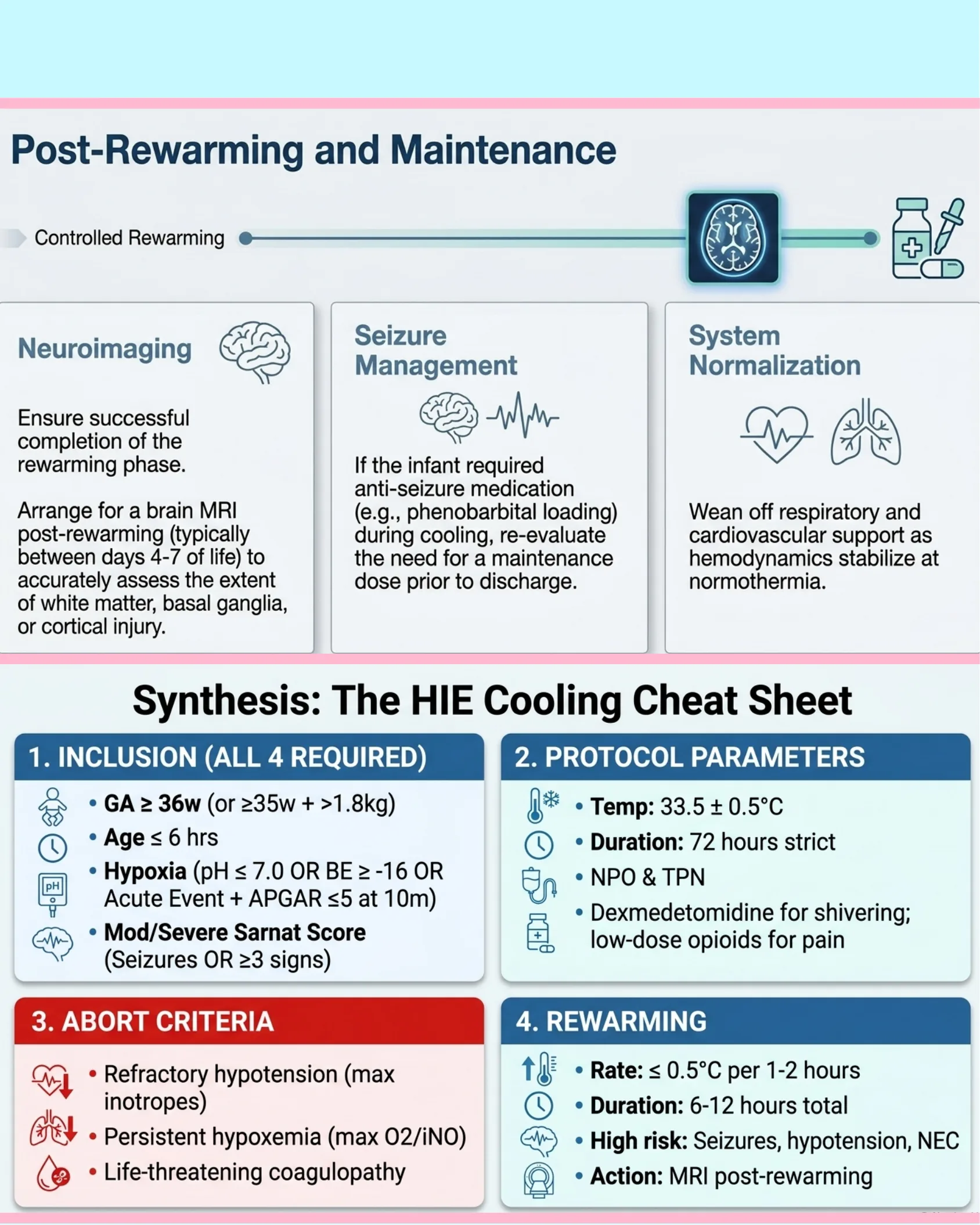
Post-Rewarming and Maintenance
- Neuroimaging: Ensure successful completion of the rewarming phase. Arrange for a brain MRI post-rewarming (typically between days 4-7 of life) to accurately assess the extent of white matter, basal ganglia, or cortical injury.
- Seizure Management: If the infant required anti-seizure medication (e.g., phenobarbital loading) during cooling, re-evaluate the need for a maintenance dose prior to discharge.
- System Normalization: Wean off respiratory and cardiovascular support as hemodynamics stabilize at normothermia.
Synthesis: The HIE Cooling Cheat Sheet
- 1. Inclusion (All 4 Required): GA ≥ 36w (or ≥35w + >1.8kg); Age ≤ 6 hrs; Hypoxia (pH ≤ 7.0 OR BE ≥ -16 OR Acute Event + APGAR ≤5 at 10m); Mod/Severe Sarnat Score (Seizures OR ≥3 signs).
- 2. Protocol Parameters: Temp: 33.5 ± 0.5°C; Duration: 72 hours strict; NPO & TPN; Dexmedetomidine for shivering; low-dose opioids for pain.
- 3. Abort Criteria: Refractory hypotension (max inotropes); Persistent hypoxemia (max O2/iNO); Life-threatening coagulopathy.
- 4. Rewarming: Rate: ≤ 0.5°C per 1-2 hours; Duration: 6-12 hours total; High risk: Seizures, hypotension, NEC; Action: MRI post-rewarming.

neofast
Neonatal Prescription
Download on the App Store | Get it on Google Play
Frequently asked questions
When must therapeutic hypothermia be started?
Within 1–6 hours of birth (age ≤6h), during the latent phase before irreversible mitochondrial failure.
What is the target temperature and duration?
33.5 ± 0.5°C for whole-body cooling, maintained for exactly 72 hours (34.5°C if selective head cooling).
What are the inclusion criteria?
All four: GA ≥36w (or ≥35w and >1.8kg), age ≤6h, evidence of intrapartum hypoxia, and moderate-to-severe encephalopathy (seizures or ≥3 Sarnat signs).
How fast should rewarming be?
No more than 0.5°C every 1–2 hours, over a total of 6–12 hours.
When should cooling be stopped early?
For refractory hypotension, persistent hypoxemia/pulmonary hypertension despite 100% O2 and iNO, or life-threatening coagulopathy.