Key takeaways
- The BSRI (Behavioral Signs of Respiratory Instability) scale scores five clinical items (Interaction, Midline Alignment, Extension Patterns, Tachypnea, Respiratory Effort); scores ≥8 reflect high functional tolerance, while lower values warn to stop handling and restraint.
- BSRI item 4 flags severe instability when respiratory rate exceeds 80 breaths per minute or tachypnea is followed by apnea, versus stability when RR stays below 60 breaths per minute during activity.
- The OSST (Optimal State Scoring Tool) assesses four multisystem domains: Respiratory, Neuroregulation, Infection and Inflammation, and Nutrition and Growth.
- The interdisciplinary CCBPD chronic care model reduced Bayley III scores below 70 at 2 years corrected age from 49.8% to 15.2% for cognitive/language delay and from 41.7% to 10.9% for severe motor delay, a decrease of over 60% in severe developmental delays.
- The developmental intervention promoting touch, active positioning, and gradual stimulation has not been shown to increase rates of accidental extubation.
References
- Susey et al., 2026 (AAP NeoReviews)
Optimizing Neurodevelopment in Severe Bronchopulmonary Dysplasia
Optimizing Neurodevelopment in Severe Bronchopulmonary Dysplasia
The clinical utility of BSRI and OSST scores in the longitudinal monitoring and transition to the bedside chronic care model.
Interdisciplinary Presentation of the Neonatal Intensive Care Unit | Integration of Clinical Scores into NeoFast
Source: Susey et al., 2026 (AAP NeoReviews)
- BSRI – Behavioral Signs of Respiratory Instability
- OSST – Optimal State Scoring Tool
- CCBPD – Comprehensive Center for Bronchopulmonary Dysplasia, located at Nationwide Children’s Hospital (Columbus, Ohio).
NeoFast App: BSRI and OSST Scales
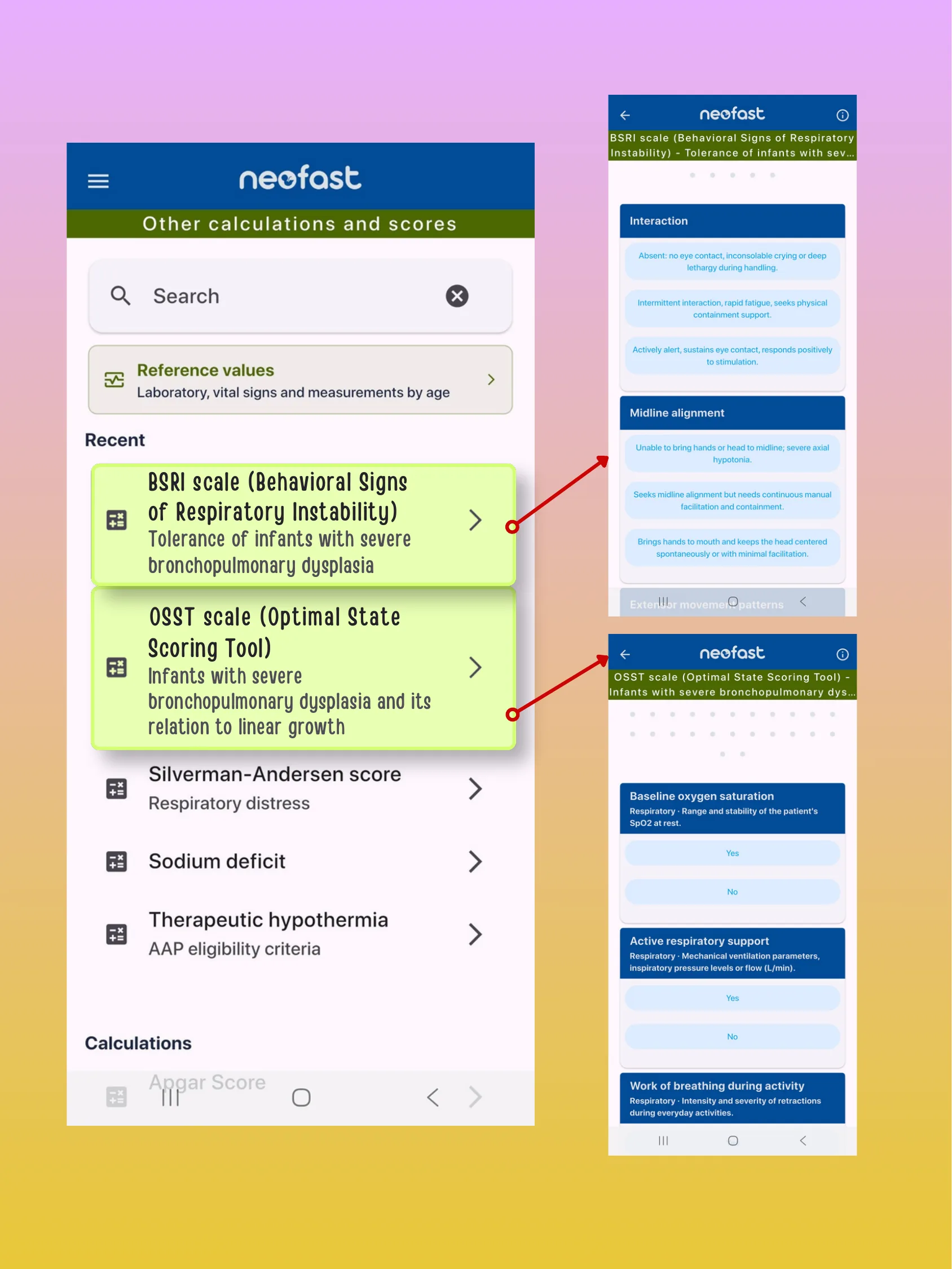
NeoFast — Other calculations and scores
Search bar and Reference values (Laboratory, vital signs and measurements by age).
Recent
- BSRI scale (Behavioral Signs of Respiratory Instability) – Tolerance of infants with severe bronchopulmonary dysplasia
- OSST scale (Optimal State Scoring Tool) – Infants with severe bronchopulmonary dysplasia and its relation to linear growth
- Silverman-Andersen score – Respiratory distress
- Sodium deficit
- Therapeutic hypothermia – AAP eligibility criteria
Calculations
- Apgar Score
BSRI scale detail screen
- Interaction
- Absent: no eye contact, inconsolable crying or deep lethargy during handling.
- Intermittent interaction, rapid fatigue, seeks physical containment support.
- Actively alert, sustains eye contact, responds positively to stimulation.
- Midline alignment
- Unable to bring hands or head to midline; severe axial hypotonia.
- Seeks midline alignment but needs continuous manual facilitation and containment.
- Brings hands to mouth and keeps the head centered spontaneously or with minimal facilitation.
- Exterior movement patterns (next item, partially shown)
OSST scale detail screen
- Baseline oxygen saturation — Respiratory · Range and stability of the patient’s SpO2 at rest. (Yes / No)
- Active respiratory support — Respiratory · Mechanical ventilation parameters, inspiratory pressure levels or flow (L/min). (Yes / No)
- Work of breathing during activity — Respiratory · Intensity and severity of retractions during everyday activities.
The Burden of Neurodevelopmental Impairment (NDI)
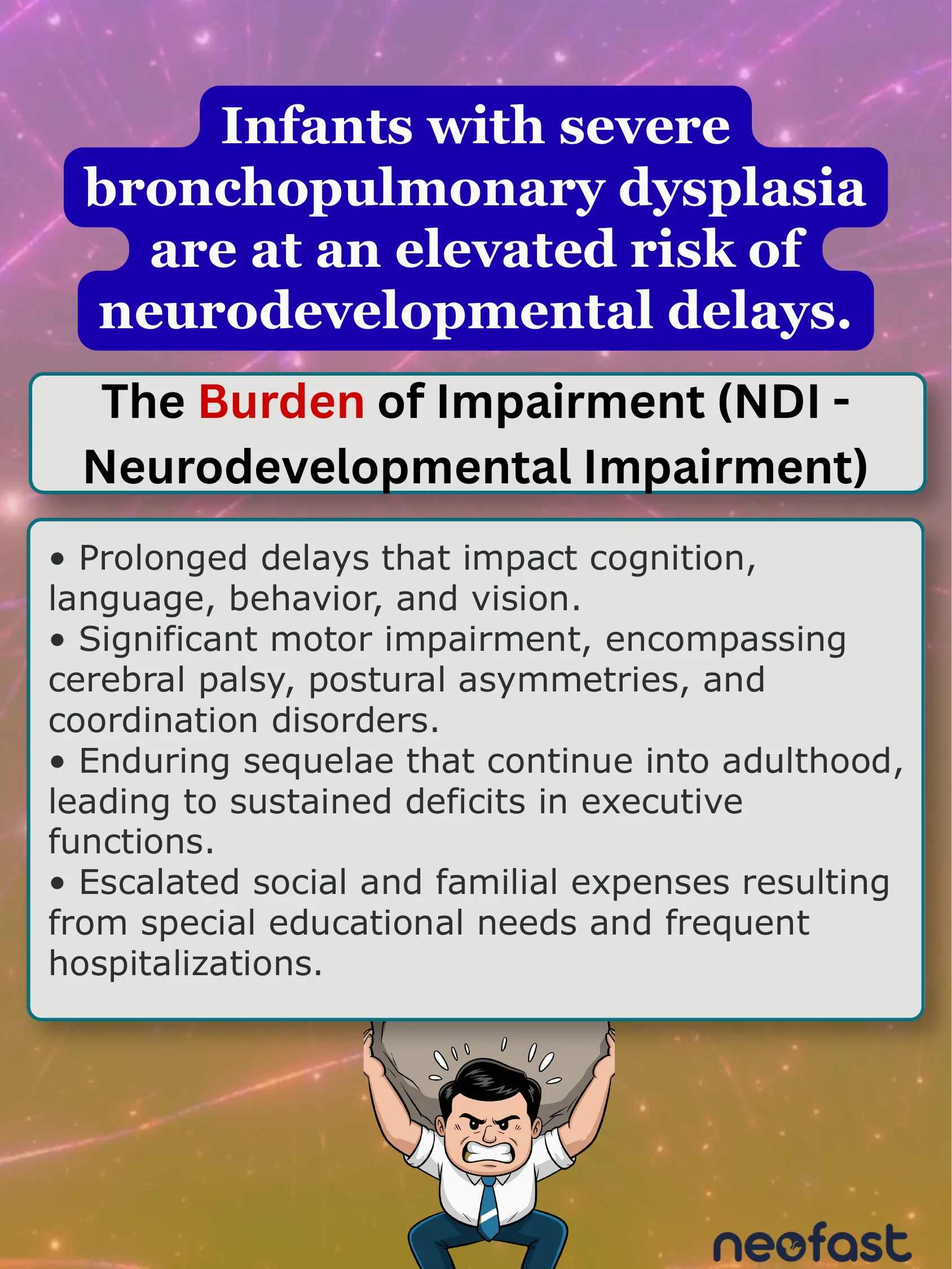
Infants with severe bronchopulmonary dysplasia are at an elevated risk of neurodevelopmental delays.
The Burden of Impairment (NDI – Neurodevelopmental Impairment)
- Prolonged delays that impact cognition, language, behavior, and vision.
- Significant motor impairment, encompassing cerebral palsy, postural asymmetries, and coordination disorders.
- Enduring sequelae that continue into adulthood, leading to sustained deficits in executive functions.
- Escalated social and familial expenses resulting from special educational needs and frequent hospitalizations.
Modifiable Risk Factors in the NICU
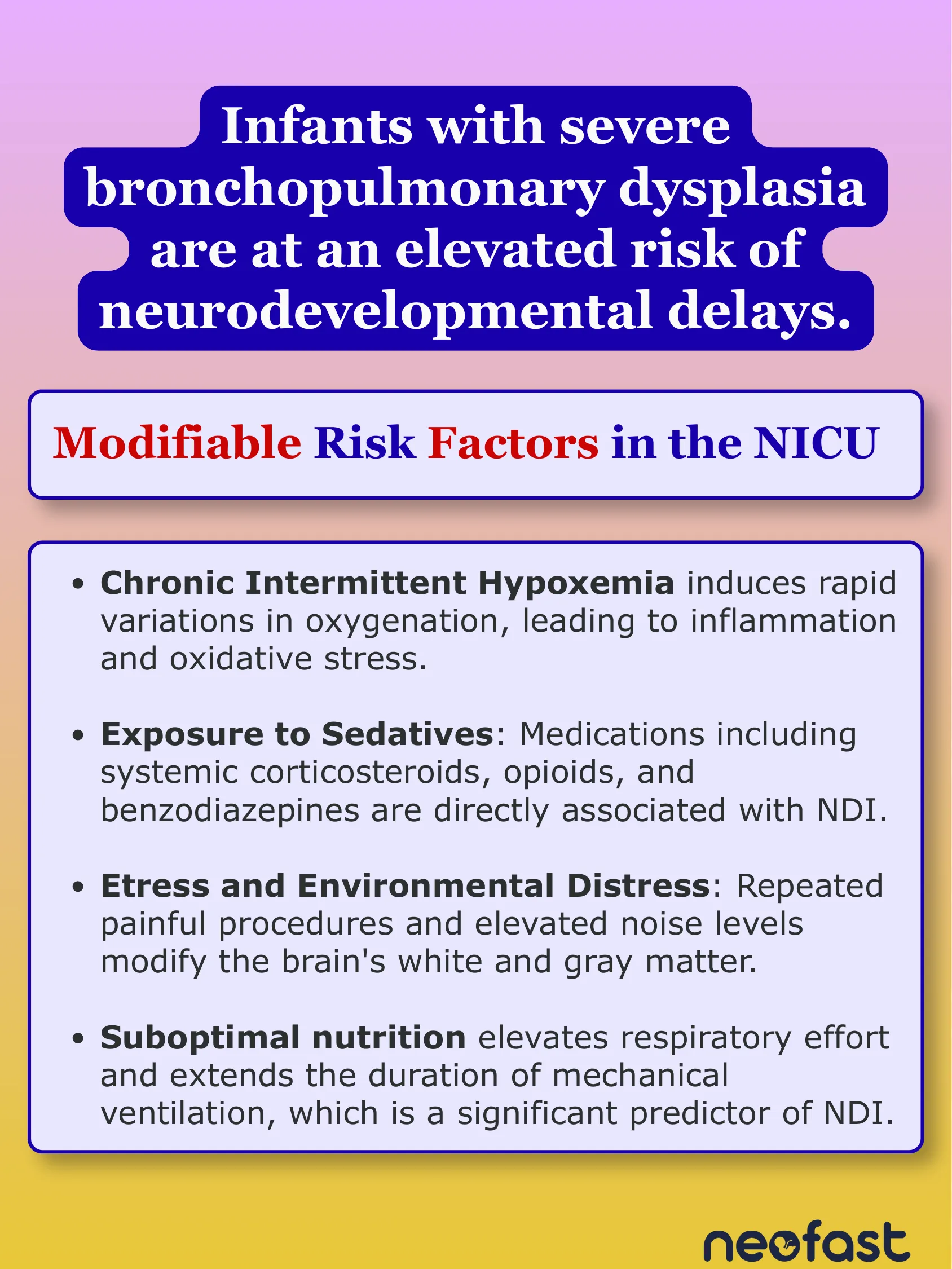
Infants with severe bronchopulmonary dysplasia are at an elevated risk of neurodevelopmental delays.
Modifiable Risk Factors in the NICU
- Chronic Intermittent Hypoxemia induces rapid variations in oxygenation, leading to inflammation and oxidative stress.
- Exposure to Sedatives: Medications including systemic corticosteroids, opioids, and benzodiazepines are directly associated with NDI.
- Stress and Environmental Distress: Repeated painful procedures and elevated noise levels modify the brain’s white and gray matter.
- Suboptimal nutrition elevates respiratory effort and extends the duration of mechanical ventilation, which is a significant predictor of NDI.
Conventional Acute Model (Avoid)
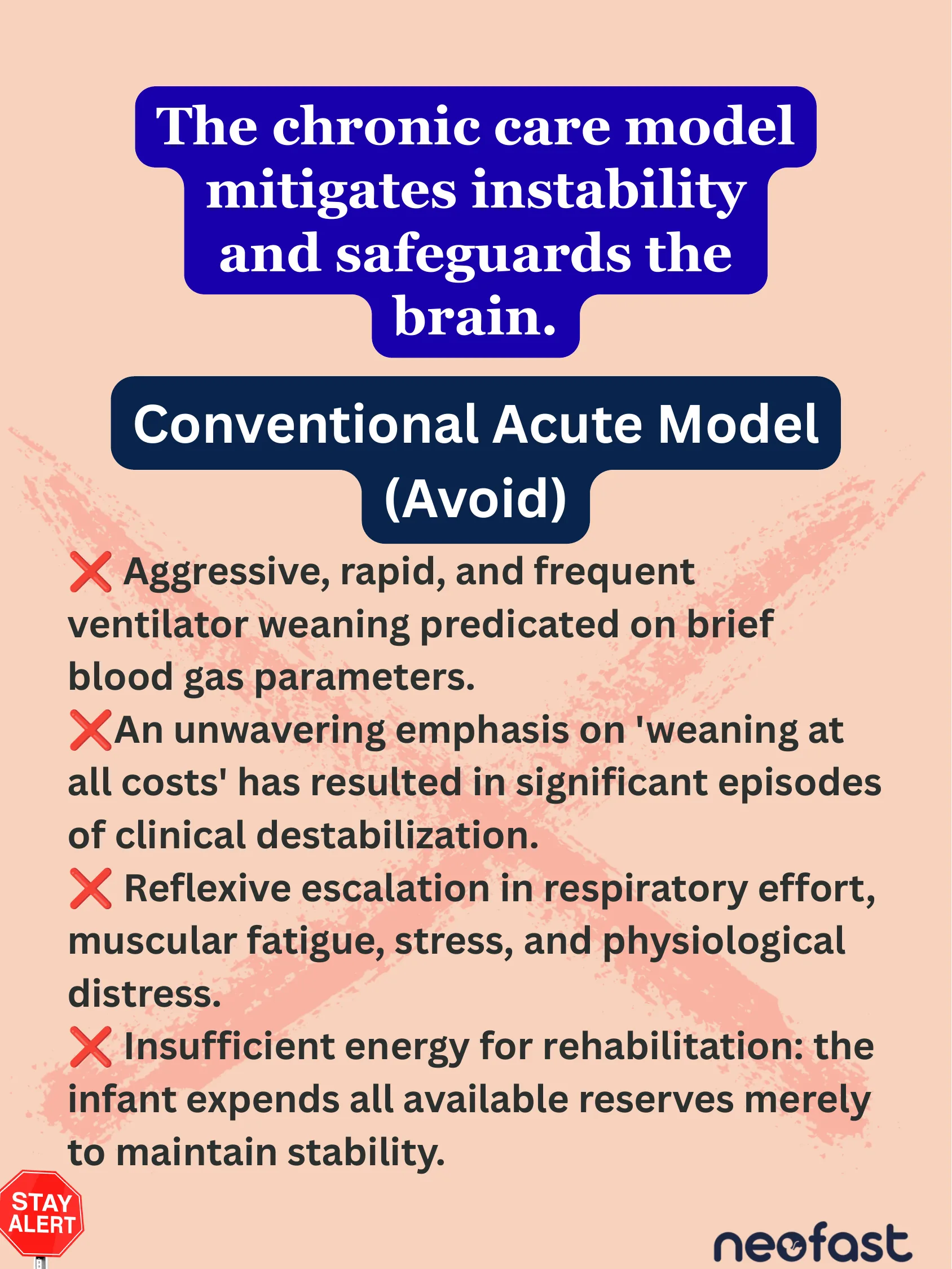
The chronic care model mitigates instability and safeguards the brain.
Conventional Acute Model (Avoid)
- Aggressive, rapid, and frequent ventilator weaning predicated on brief blood gas parameters.
- An unwavering emphasis on ‘weaning at all costs’ has resulted in significant episodes of clinical destabilization.
- Reflexive escalation in respiratory effort, muscular fatigue, stress, and physiological distress.
- Insufficient energy for rehabilitation: the infant expends all available reserves merely to maintain stability.
Chronic Care Framework Recommendations
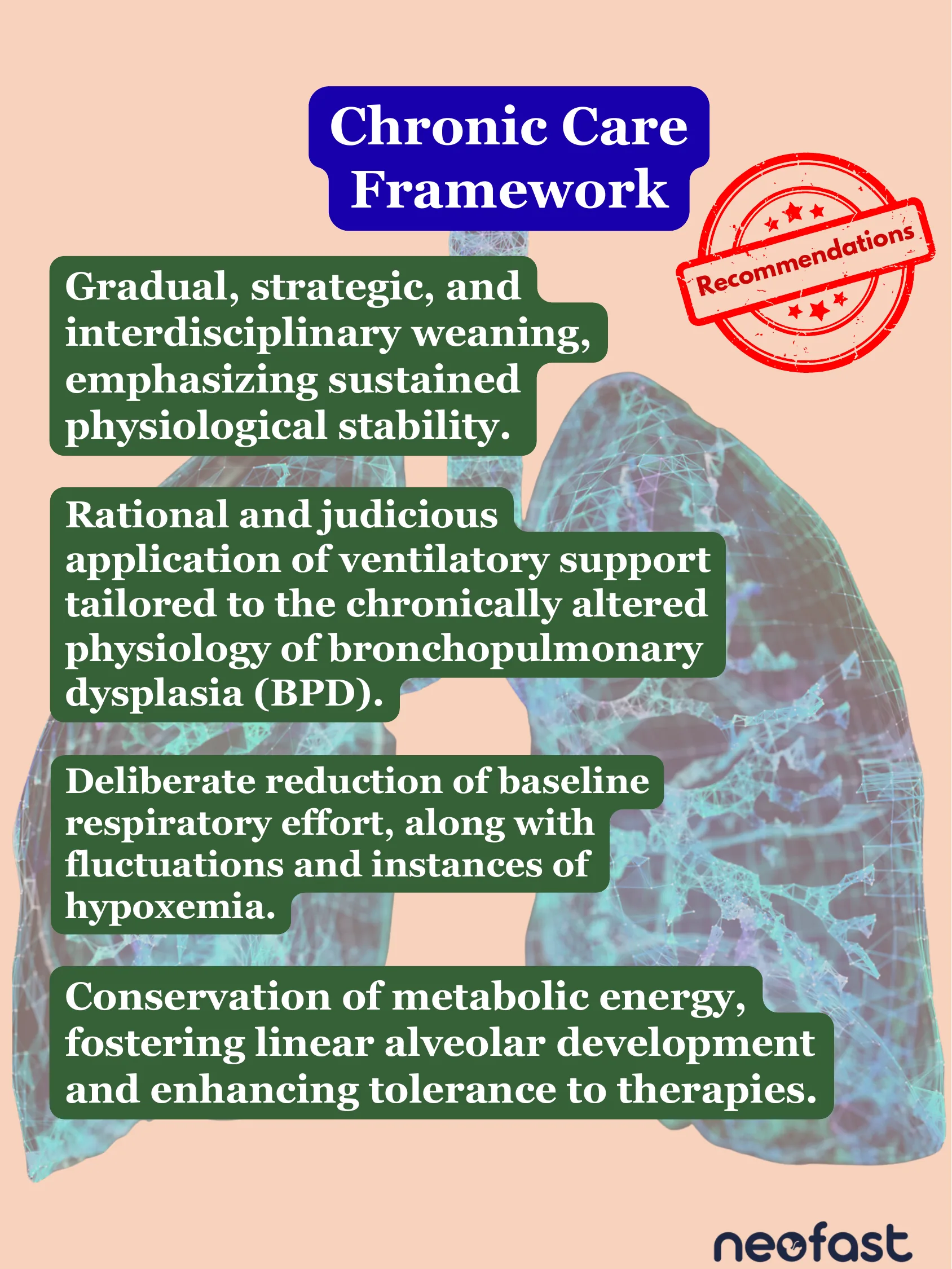
Chronic Care Framework
- Gradual, strategic, and interdisciplinary weaning, emphasizing sustained physiological stability.
- Rational and judicious application of ventilatory support tailored to the chronically altered physiology of bronchopulmonary dysplasia (BPD).
- Deliberate reduction of baseline respiratory effort, along with fluctuations and instances of hypoxemia.
- Conservation of metabolic energy, fostering linear alveolar development and enhancing tolerance to therapies.
BSRI Scale: Assessing Respiratory Tolerance
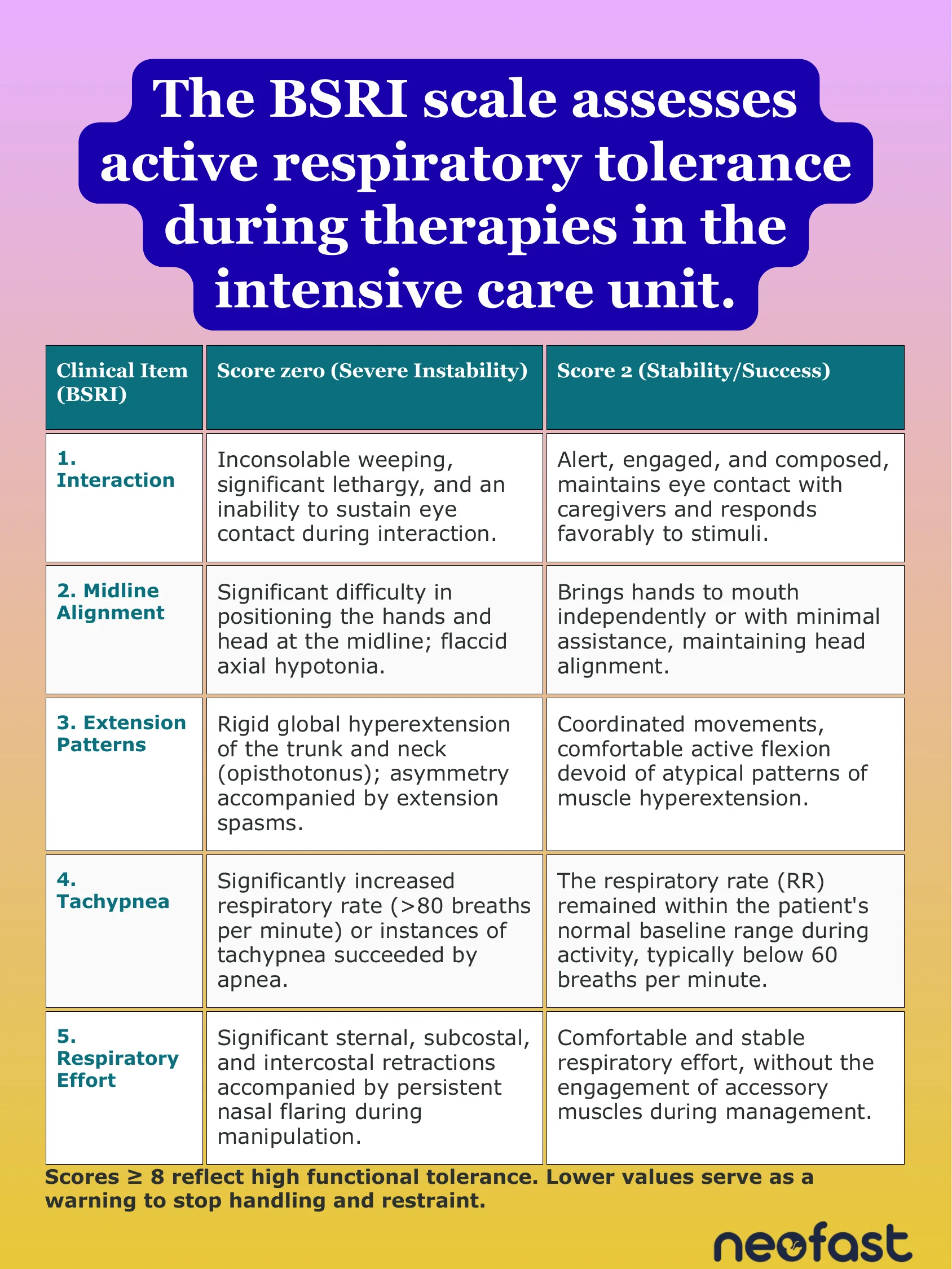
The BSRI scale assesses active respiratory tolerance during therapies in the intensive care unit.
| Clinical Item (BSRI) | Score zero (Severe Instability) | Score 2 (Stability/Success) |
|---|---|---|
| 1. Interaction | Inconsolable weeping, significant lethargy, and an inability to sustain eye contact during interaction. | Alert, engaged, and composed, maintains eye contact with caregivers and responds favorably to stimuli. |
| 2. Midline Alignment | Significant difficulty in positioning the hands and head at the midline; flaccid axial hypotonia. | Brings hands to mouth independently or with minimal assistance, maintaining head alignment. |
| 3. Extension Patterns | Rigid global hyperextension of the trunk and neck (opisthotonus); asymmetry accompanied by extension spasms. | Coordinated movements, comfortable active flexion devoid of atypical patterns of muscle hyperextension. |
| 4. Tachypnea | Significantly increased respiratory rate (>80 breaths per minute) or instances of tachypnea succeeded by apnea. | The respiratory rate (RR) remained within the patient’s normal baseline range during activity, typically below 60 breaths per minute. |
| 5. Respiratory Effort | Significant sternal, subcostal, and intercostal retractions accompanied by persistent nasal flaring during manipulation. | Comfortable and stable respiratory effort, without the engagement of accessory muscles during management. |
Scores ≥ 8 reflect high functional tolerance. Lower values serve as a warning to stop handling and restraint.
OSST Score: Multisystem Assessment Domains
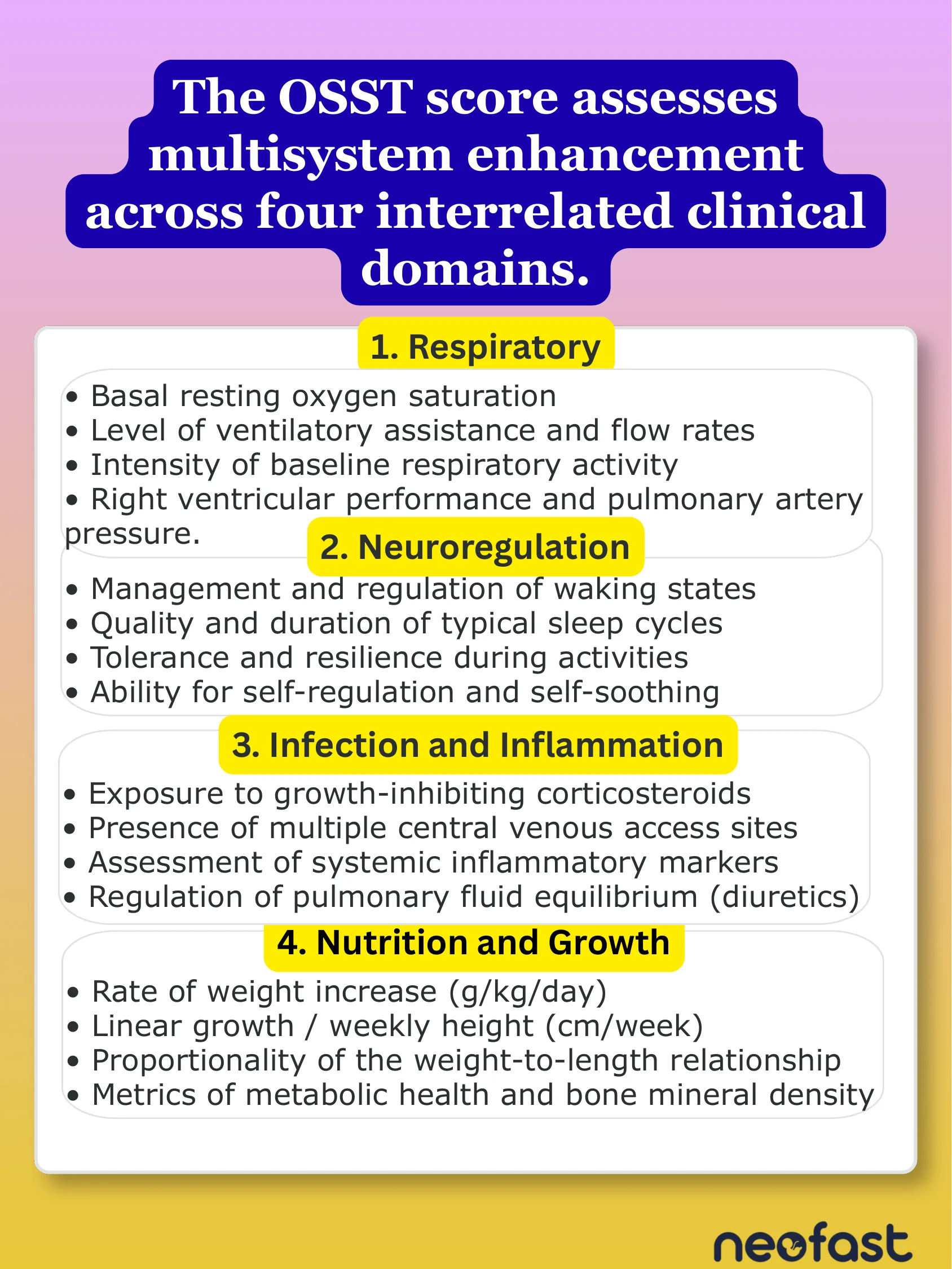
The OSST score assesses multisystem enhancement across four interrelated clinical domains.
1. Respiratory
- Basal resting oxygen saturation
- Level of ventilatory assistance and flow rates
- Intensity of baseline respiratory activity
- Right ventricular performance and pulmonary artery pressure.
2. Neuroregulation
- Management and regulation of waking states
- Quality and duration of typical sleep cycles
- Tolerance and resilience during activities
- Ability for self-regulation and self-soothing
3. Infection and Inflammation
- Exposure to growth-inhibiting corticosteroids
- Presence of multiple central venous access sites
- Assessment of systemic inflammatory markers
- Regulation of pulmonary fluid equilibrium (diuretics)
4. Nutrition and Growth
- Rate of weight increase (g/kg/day)
- Linear growth / weekly height (cm/week)
- Proportionality of the weight-to-length relationship
- Metrics of metabolic health and bone mineral density
Clinical Impacts of the Interdisciplinary Model
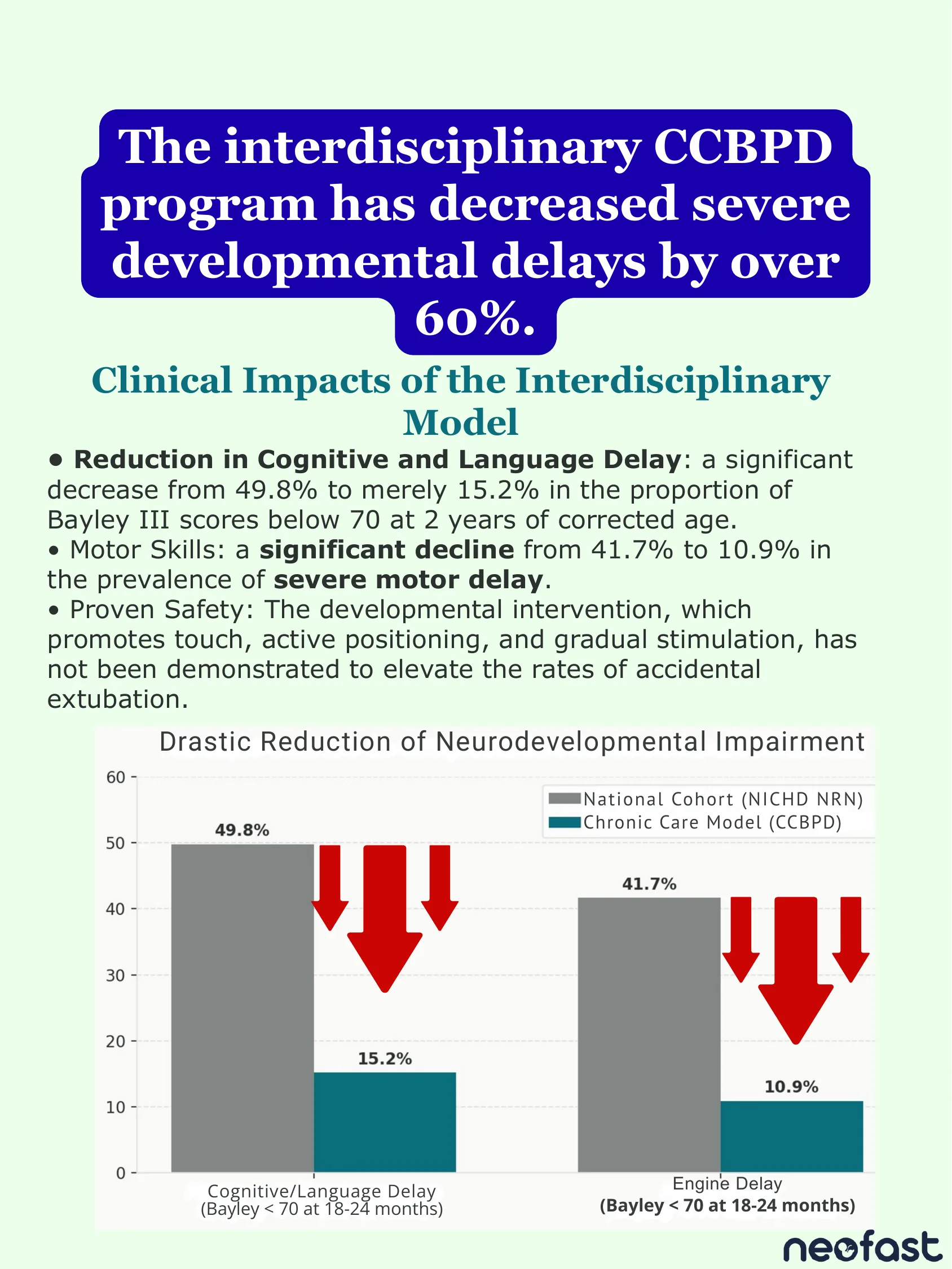
The interdisciplinary CCBPD program has decreased severe developmental delays by over 60%.
Clinical Impacts of the Interdisciplinary Model
- Reduction in Cognitive and Language Delay: a significant decrease from 49.8% to merely 15.2% in the proportion of Bayley III scores below 70 at 2 years of corrected age.
- Motor Skills: a significant decline from 41.7% to 10.9% in the prevalence of severe motor delay.
- Proven Safety: The developmental intervention, which promotes touch, active positioning, and gradual stimulation, has not been demonstrated to elevate the rates of accidental extubation.
Drastic Reduction of Neurodevelopmental Impairment
| Outcome Measure (Bayley < 70 at 18-24 months) | National Cohort (NICHD NRN) | Chronic Care Model (CCBPD) |
|---|---|---|
| Cognitive/Language Delay | 49.8% | 15.2% |
| Motor Delay | 41.7% | 10.9% |
Training, Standardization, and Clinical Determinations
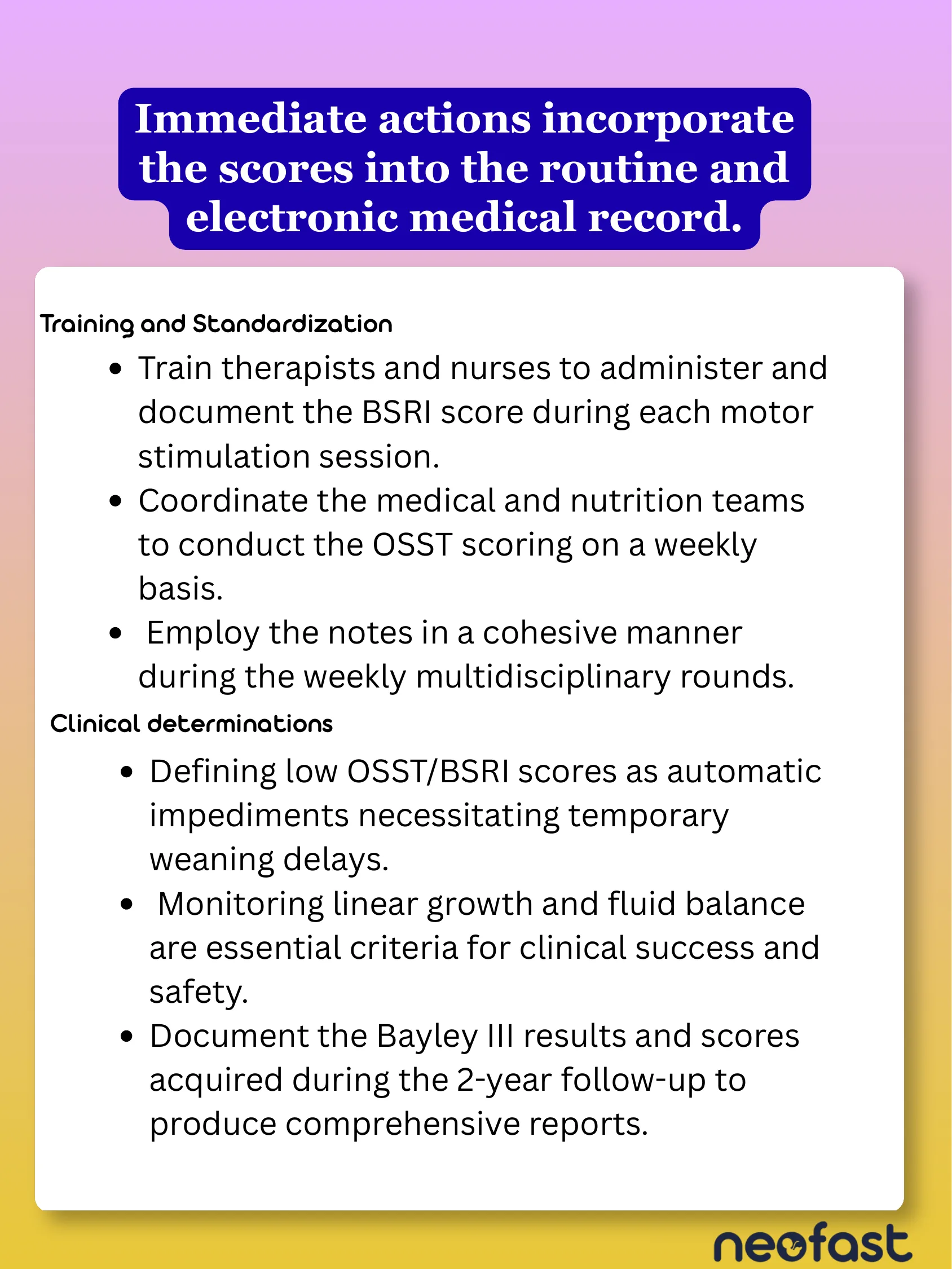
Immediate actions incorporate the scores into the routine and electronic medical record.
Training and Standardization
- Train therapists and nurses to administer and document the BSRI score during each motor stimulation session.
- Coordinate the medical and nutrition teams to conduct the OSST scoring on a weekly basis.
- Employ the notes in a cohesive manner during the weekly multidisciplinary rounds.
Clinical determinations
- Defining low OSST/BSRI scores as automatic impediments necessitating temporary weaning delays.
- Monitoring linear growth and fluid balance are essential criteria for clinical success and safety.
- Document the Bayley III results and scores acquired during the 2-year follow-up to produce comprehensive reports.
Explore Neofast

Explore it!
- Venous hydration
- Continuous medication
- Medicines
- Intubation
- Other calculations and scores
- Procedures
- Respiratory and hemodynamic monitoring
- Growth and Development
Download on the App Store
Get it on Google Play
Frequently asked questions
What does the BSRI score measure and what score indicates good tolerance?
The BSRI (Behavioral Signs of Respiratory Instability) scale assesses active respiratory tolerance during therapies in the NICU across five items: Interaction, Midline Alignment, Extension Patterns, Tachypnea, and Respiratory Effort. Scores ≥8 reflect high functional tolerance; lower values are a warning to stop handling and restraint.
What respiratory rate cutoff signals severe instability on the BSRI Tachypnea item?
A respiratory rate greater than 80 breaths per minute, or tachypnea followed by apnea, scores zero (severe instability) on the Tachypnea item, whereas a stable RR below 60 breaths per minute during activity scores 2 (stability/success).
What are the four domains assessed by the OSST score?
The OSST (Optimal State Scoring Tool) evaluates four interrelated clinical domains: Respiratory (oxygen saturation, ventilatory assistance, respiratory activity, right ventricular performance), Neuroregulation (waking states, sleep cycles, activity tolerance, self-soothing), Infection and Inflammation (corticosteroid exposure, central venous access, inflammatory markers, diuretic use), and Nutrition and Growth (weight gain in g/kg/day, linear growth in cm/week, weight-to-length proportionality, bone mineral density).
How much did the CCBPD chronic care model improve neurodevelopmental outcomes compared to the national cohort?
Compared to the NICHD NRN national cohort, the CCBPD model reduced Bayley III scores below 70 at 18-24 months from 49.8% to 15.2% for cognitive/language delay and from 41.7% to 10.9% for severe motor delay, an overall reduction in severe developmental delays of over 60%.
What are the modifiable risk factors for neurodevelopmental impairment in severe BPD listed in the source?
The modifiable risk factors are chronic intermittent hypoxemia (causing inflammation and oxidative stress), exposure to sedatives (systemic corticosteroids, opioids, benzodiazepines), stress and environmental distress (painful procedures, noise), and suboptimal nutrition, which elevates respiratory effort and prolongs mechanical ventilation.