Key takeaways
- The Finnegan score uses 21 weighted signs across CNS, metabolic/vasomotor/respiratory, and gastrointestinal domains, and chronically opioid-exposed infants should be observed for at least 72 h per AAP 2020.
- Medication should be considered with a Finnegan score ≥ 8 on 3 consecutive scores or ≥ 12 on 2 consecutive scores, but diagnosis remains clinical and sepsis, hypoglycemia, hypocalcemia and CNS disorders must be ruled out.
- First-line oral morphine dosing is 0.05 mg/kg/dose every 4 h, with IV morphine converted at a 3 PO : 1 IV ratio (0.015 mg/kg/dose every 4 h) because of first-pass metabolism.
- Phenobarbital is an adjunct for opioid withdrawal uncontrolled on maximum opioid dose or for sedative exposure, with a loading dose of 20 mg/kg and maintenance of 3 mg/kg/day divided q12h.
- In the ESC-NOW trial (NEJM 2023, 1,305 infants ≥36 weeks), Eat-Sleep-Console reduced time to discharge readiness to 8.2 days versus 14.9 days with usual Finnegan-based care, and cut opioid treatment to 19.5% versus 52.0%.
References
- Finnegan LP et al. Neonatal abstinence syndrome: assessment and management. Addict Dis. 1975;2:141-58.
- Patrick SW et al.; AAP. Neonatal opioid withdrawal syndrome. Pediatrics. 2020;146(5):e2020029074.
- Hudak ML, Tan RC; AAP. Neonatal drug withdrawal. Pediatrics. 2012;129(2):e540-60.
- Kocherlakota P. Neonatal abstinence syndrome. Pediatrics. 2014;134(2):e547-61.
- Young LW et al. Eat, Sleep, Console approach or usual care for neonatal opioid withdrawal. N Engl J Med. 2023;388:2326-37.
- Grossman MR et al. An initiative to improve the quality of care of infants with NAS. Pediatrics. 2017;139(6):e20163360.
- Lipsitz PJ. A proposed narcotic withdrawal score for use with newborn infants. Clin Pediatr. 1975;14:592-4.
- Children’s Hospital of Philadelphia. NAS/NOWS clinical pathway: pharmacologic management.
- Ministry of Health, Labour and Welfare, Japan. Manual for serious adverse drug reactions: neonatal drug withdrawal syndrome. 2010 (rev. 2021).
- Isohata H et al. Non-opioid psychotropic medications in pregnancy and short-term neonatal outcomes. Sci Rep. 2025;15:30853.
- ESC-NOW · N Engl J Med 2023
Neonatal Abstinence Syndrome
The Finnegan score in 2026
For neonatologists
How to use it, how to treat, and why practice is moving to Eat, Sleep, Console (ESC).
Finnegan Score: What it is and when to use it
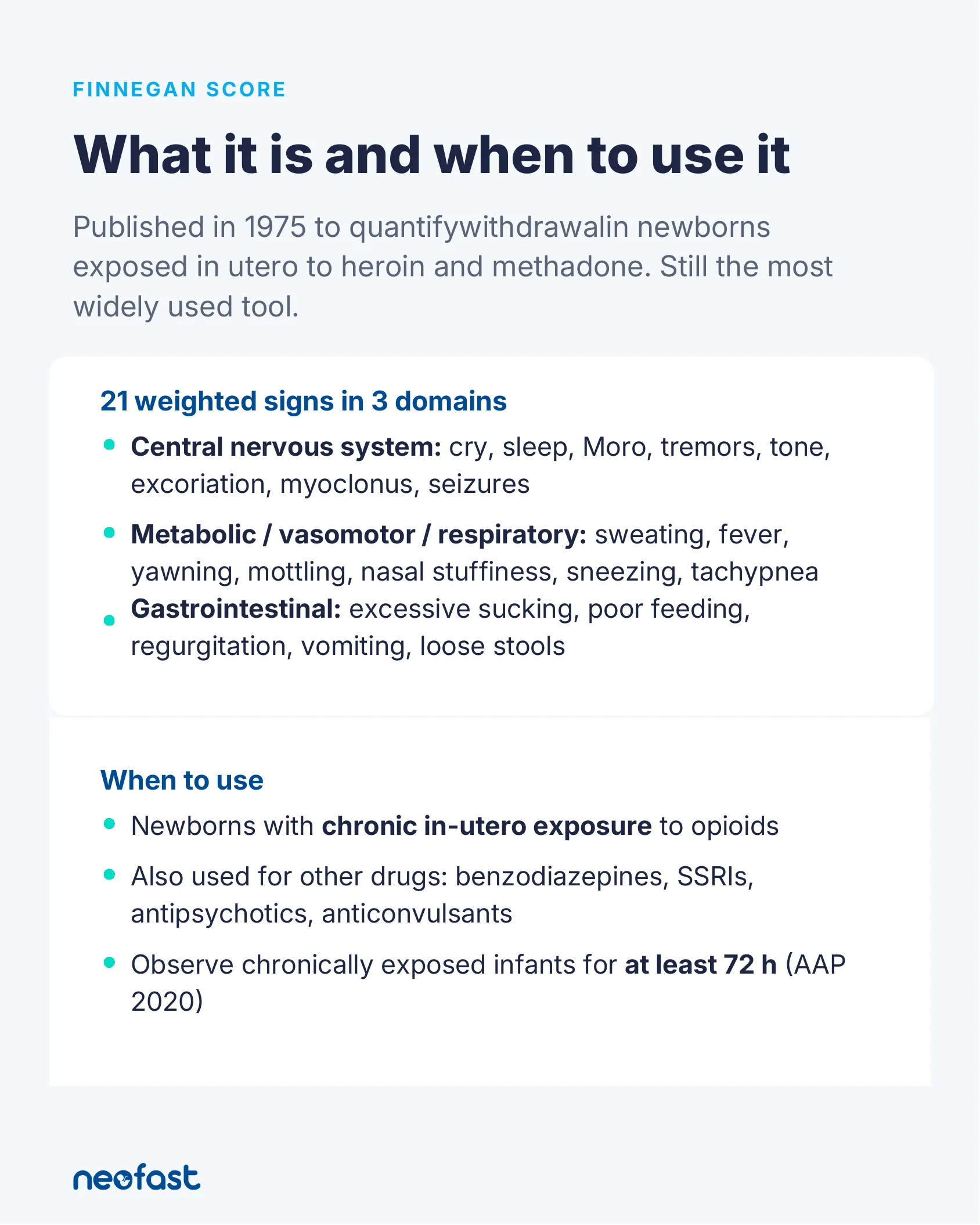
Published in 1975 to quantify withdrawal in newborns exposed in utero to heroin and methadone. Still the most widely used tool.
21 weighted signs in 3 domains
- Central nervous system: cry, sleep, Moro, tremors, tone, excoriation, myoclonus, seizures
- Metabolic / vasomotor / respiratory: sweating, fever, yawning, mottling, nasal stuffiness, sneezing, tachypnea
- Gastrointestinal: excessive sucking, poor feeding, regurgitation, vomiting, loose stools
When to use
- Newborns with chronic in-utero exposure to opioids
- Also used for other drugs: benzodiazepines, SSRIs, antipsychotics, anticonvulsants
- Observe chronically exposed infants for at least 72 h (AAP 2020)
Finnegan Score: How to apply it
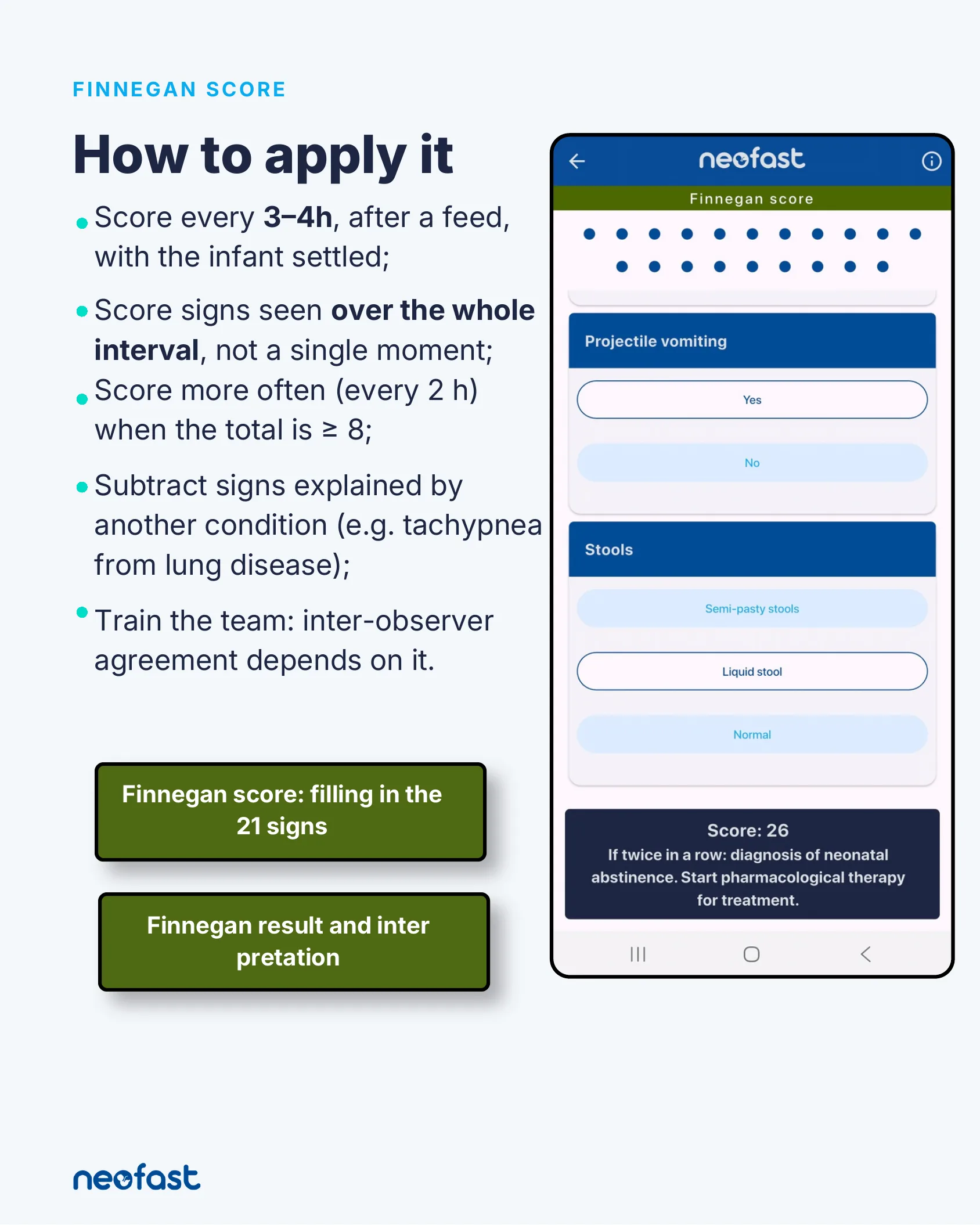
- Score every 3–4h, after a feed, with the infant settled;
- Score signs seen over the whole interval, not a single moment;
- Score more often (every 2 h) when the total is ≥ 8;
- Subtract signs explained by another condition (e.g. tachypnea from lung disease);
- Train the team: inter-observer agreement depends on it.
Finnegan score: filling in the 21 signs
Finnegan result and interpretation
Finnegan Score: How to interpret it
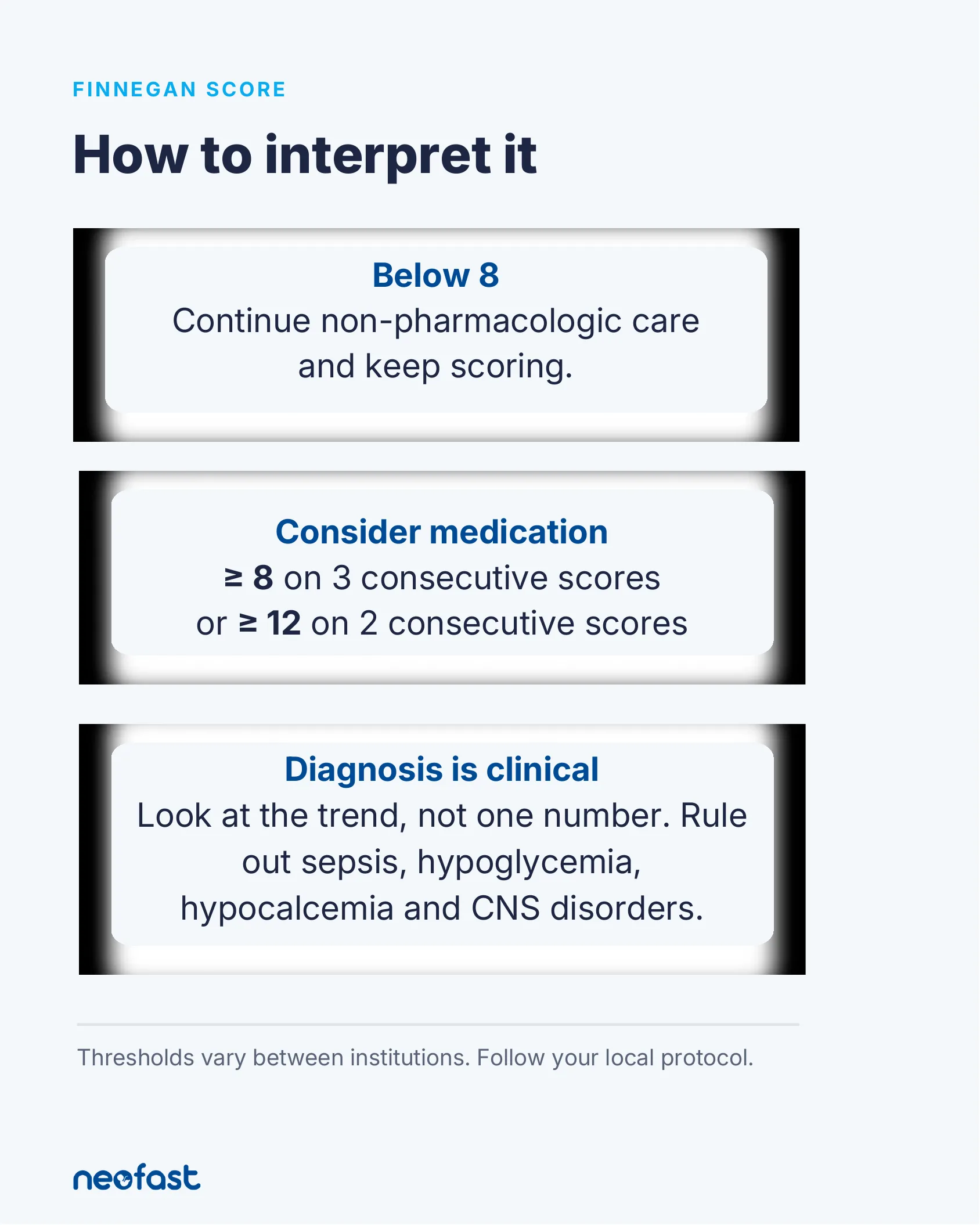
Below 8
Continue non-pharmacologic care and keep scoring.
Consider medication
≥ 8 on 3 consecutive scores or ≥ 12 on 2 consecutive scores
Diagnosis is clinical
Look at the trend, not one number. Rule out sepsis, hypoglycemia, hypocalcemia and CNS disorders.
Thresholds vary between institutions. Follow your local protocol.
Treatment: Non-pharmacologic care
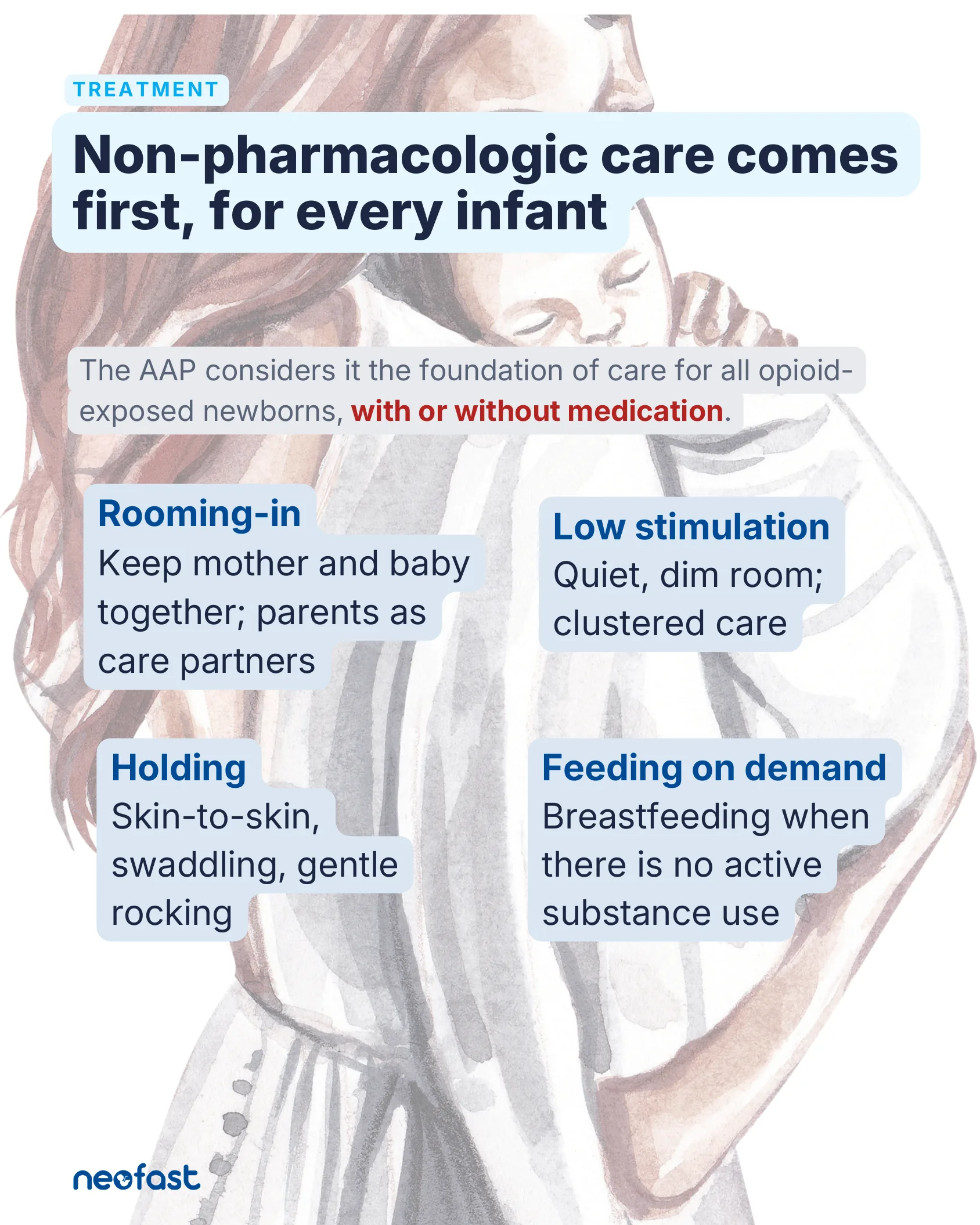
Non-pharmacologic care comes first, for every infant
The AAP considers it the foundation of care for all opioid-exposed newborns, with or without medication.
Rooming-in
Keep mother and baby together; parents as care partners
Low stimulation
Quiet, dim room; clustered care
Holding
Skin-to-skin, swaddling, gentle rocking
Feeding on demand
Breastfeeding when there is no active substance use
Pharmacologic Treatment: Oral morphine
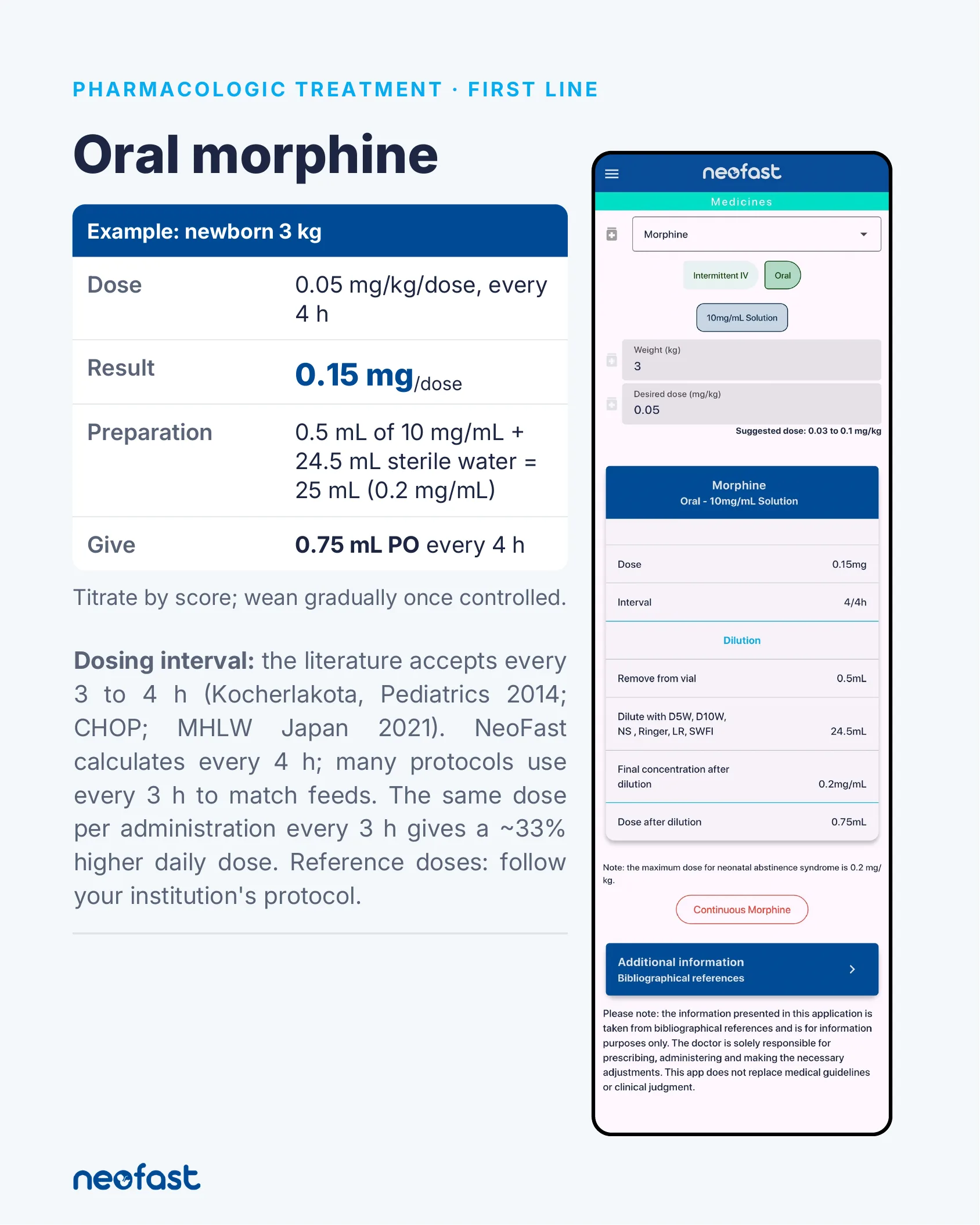
First line
Oral morphine
| Example: newborn 3 kg | |
|---|---|
| Dose | 0.05 mg/kg/dose, every 4 h |
| Result | 0.15 mg/dose |
| Preparation | 0.5 mL of 10 mg/mL + 24.5 mL sterile water = 25 mL (0.2 mg/mL) |
| Give | 0.75 mL PO every 4 h |
Titrate by score; wean gradually once controlled.
Dosing interval: the literature accepts every 3 to 4 h (Kocherlakota, Pediatrics 2014; CHOP; MHLW Japan 2021). NeoFast calculates every 4 h; many protocols use every 3 h to match feeds. The same dose per administration every 3 h gives a ~33% higher daily dose. Reference doses: follow your institution’s protocol.
Pharmacologic Treatment: IV morphine
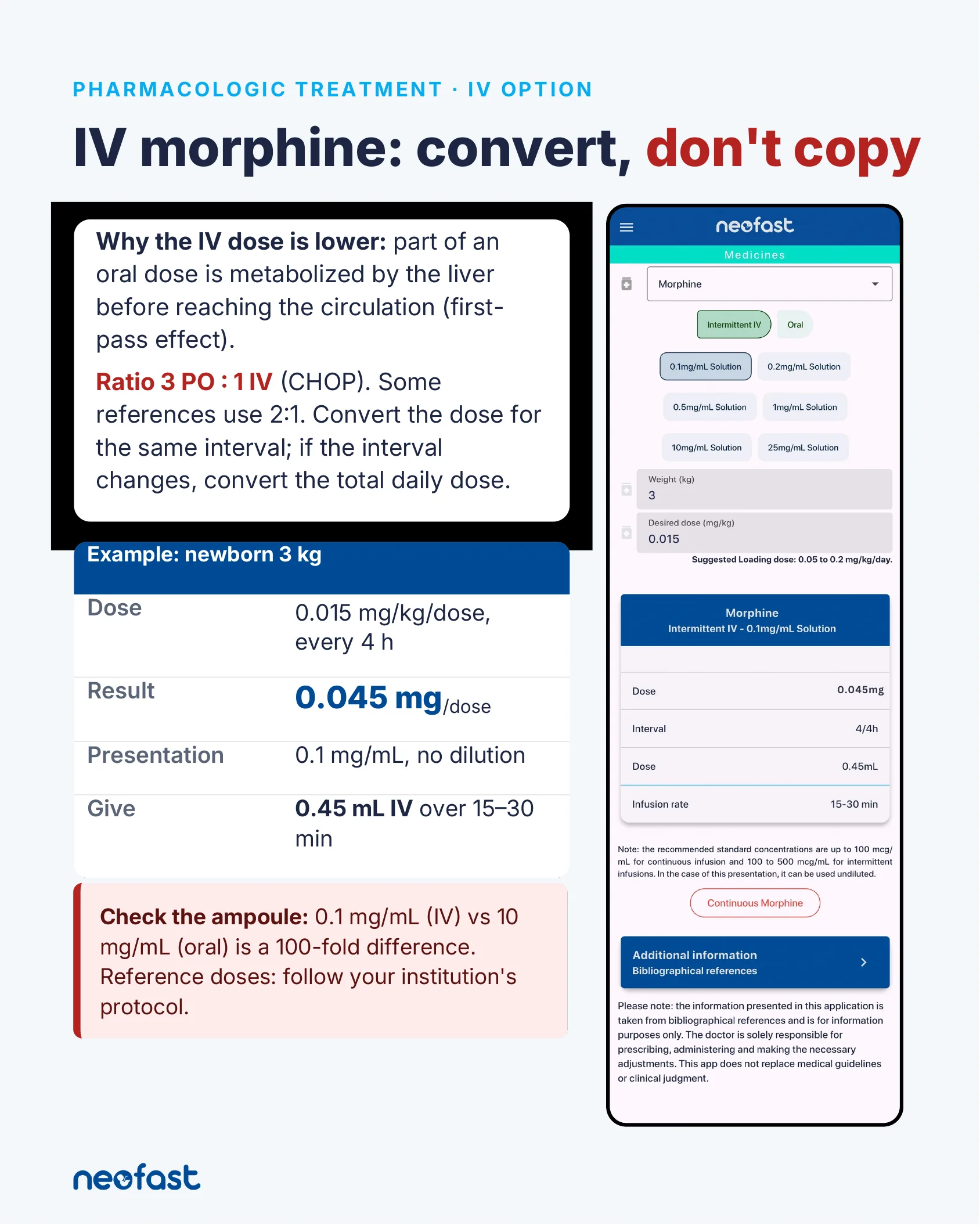
IV option
IV morphine: convert, don’t copy
Why the IV dose is lower: part of an oral dose is metabolized by the liver before reaching the circulation (first-pass effect).
Ratio 3 PO : 1 IV (CHOP). Some references use 2:1. Convert the dose for the same interval; if the interval changes, convert the total daily dose.
| Example: newborn 3 kg | |
|---|---|
| Dose | 0.015 mg/kg/dose, every 4 h |
| Result | 0.045 mg/dose |
| Presentation | 0.1 mg/mL, no dilution |
| Give | 0.45 mL IV over 15–30 min |
Check the ampoule: 0.1 mg/mL (IV) vs 10 mg/mL (oral) is a 100-fold difference. Reference doses: follow your institution’s protocol.
Pharmacologic Treatment: Phenobarbital
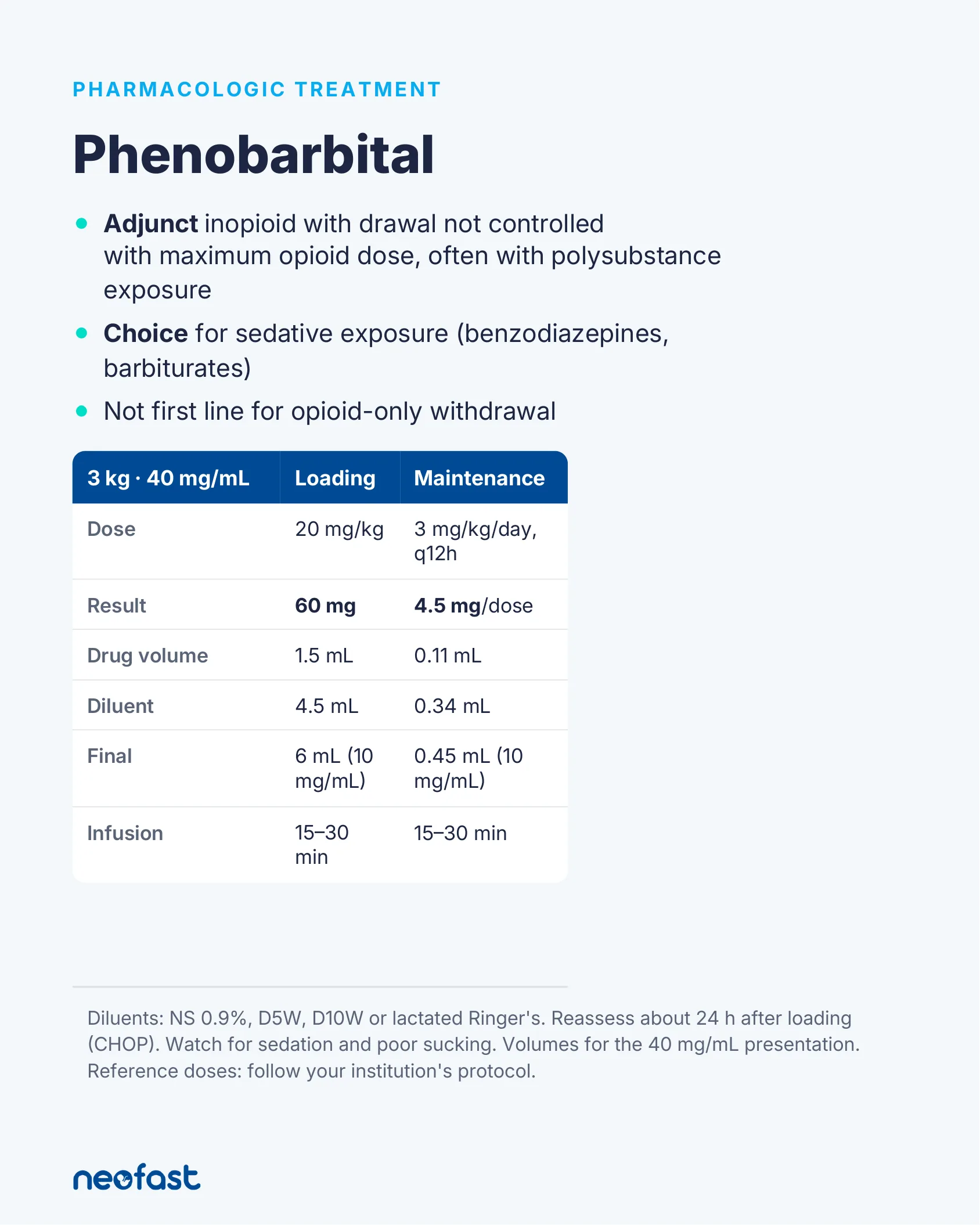
- Adjunct in opioid withdrawal not controlled with maximum opioid dose, often with polysubstance exposure
- Choice for sedative exposure (benzodiazepines, barbiturates)
- Not first line for opioid-only withdrawal
| 3 kg · 40 mg/mL | Loading | Maintenance |
|---|---|---|
| Dose | 20 mg/kg | 3 mg/kg/day, q12h |
| Result | 60 mg | 4.5 mg/dose |
| Drug volume | 1.5 mL | 0.11 mL |
| Diluent | 4.5 mL | 0.34 mL |
| Final | 6 mL (10 mg/mL) | 0.45 mL (10 mg/mL) |
| Infusion | 15–30 min | 15–30 min |
Diluents: NS 0.9%, D5W, D10W or lactated Ringer’s. Reassess about 24 h after loading (CHOP). Watch for sedation and poor sucking. Volumes for the 40 mg/mL presentation. Reference doses: follow your institution’s protocol.
Neofast App: Loading vs Maintenance Dosing
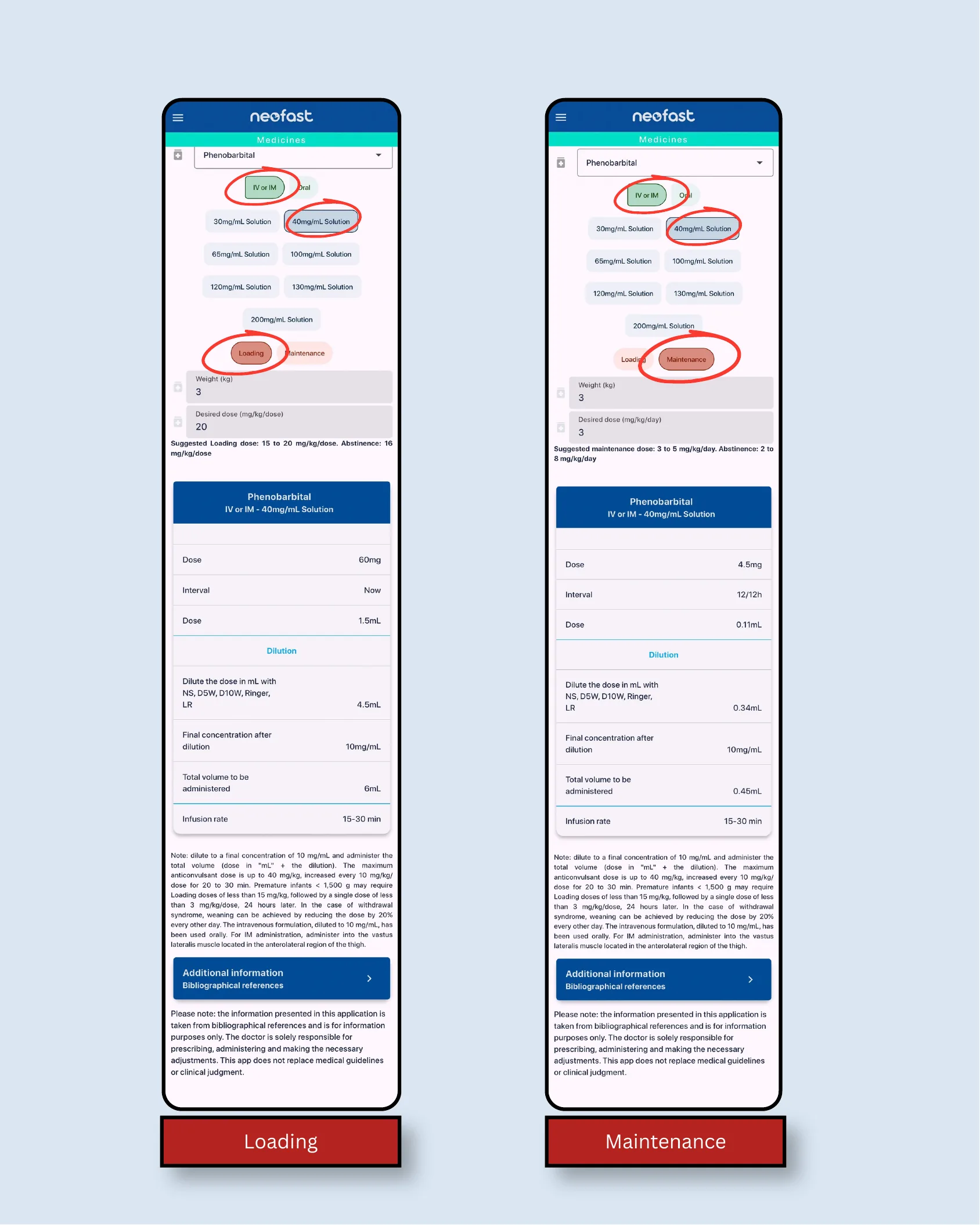
Loading
- Medicine: Phenobarbital
- Route: IV or IM
- Concentration: 40mg/mL Solution
- Dosing type: Loading
- Weight (kg): 3
- Desired dose (mg/kg/dose): 20
- Suggested Loading dose: 15 to 20 mg/kg/dose. Abstinence: 16 mg/kg/dose
Phenobarbital IV or IM – 40mg/mL Solution
| Dose | 60mg |
| Interval | Now |
| Dose | 1.5mL |
Dilution
| Dilute the dose in mL with NS, D5W, D10W, Ringer, LR | 4.5mL |
| Final concentration after dilution | 10mg/mL |
| Total volume to be administered | 6mL |
| Infusion rate | 15-30 min |
Note: dilute to a final concentration of 10 mg/mL and administer the total volume (dose in “mL” + the dilution). The maximum anticonvulsant dose is up to 40 mg/kg, increased every 10 mg/kg/dose for 20 to 30 min. Premature infants < 1,500 g may require Loading doses of less than 15 mg/kg, followed by a single dose of less than 3 mg/kg/dose, 24 hours later. In the case of withdrawal syndrome, weaning can be achieved by reducing the dose by 20% every other day. The intravenous formulation, diluted to 10 mg/mL, has been used orally. For IM administration, administer into the vastus lateralis muscle located in the anterolateral region of the thigh.
Additional information – Bibliographical references
Please note: the information presented in this application is taken from bibliographical references and is for information purposes only. The doctor is solely responsible for prescribing, administering and making the necessary adjustments. This app does not replace medical guidelines or clinical judgment.
Maintenance
- Medicine: Phenobarbital
- Route: IV or IM
- Concentration: 40mg/mL Solution
- Dosing type: Maintenance
- Weight (kg): 3
- Desired dose (mg/kg/day): 3
- Suggested maintenance dose: 3 to 5 mg/kg/day. Abstinence: 2 to 8 mg/kg/day
Phenobarbital IV or IM – 40mg/mL Solution
| Dose | 4.5mg |
| Interval | 12/12h |
| Dose | 0.11mL |
Dilution
| Dilute the dose in mL with NS, D5W, D10W, Ringer, LR | 0.34mL |
| Final concentration after dilution | 10mg/mL |
| Total volume to be administered | 0.45mL |
| Infusion rate | 15-30 min |
Note: dilute to a final concentration of 10 mg/mL and administer the total volume (dose in “mL” + the dilution). The maximum anticonvulsant dose is up to 40 mg/kg, increased every 10 mg/kg/dose for 20 to 30 min. Premature infants < 1,500 g may require Loading doses of less than 15 mg/kg, followed by a single dose of less than 3 mg/kg/dose, 24 hours later. In the case of withdrawal syndrome, weaning can be achieved by reducing the dose by 20% every other day. The intravenous formulation, diluted to 10 mg/mL, has been used orally. For IM administration, administer into the vastus lateralis muscle located in the anterolateral region of the thigh.
Additional information – Bibliographical references
Please note: the information presented in this application is taken from bibliographical references and is for information purposes only. The doctor is solely responsible for prescribing, administering and making the necessary adjustments. This app does not replace medical guidelines or clinical judgment.
Limitations, and why practice is changing
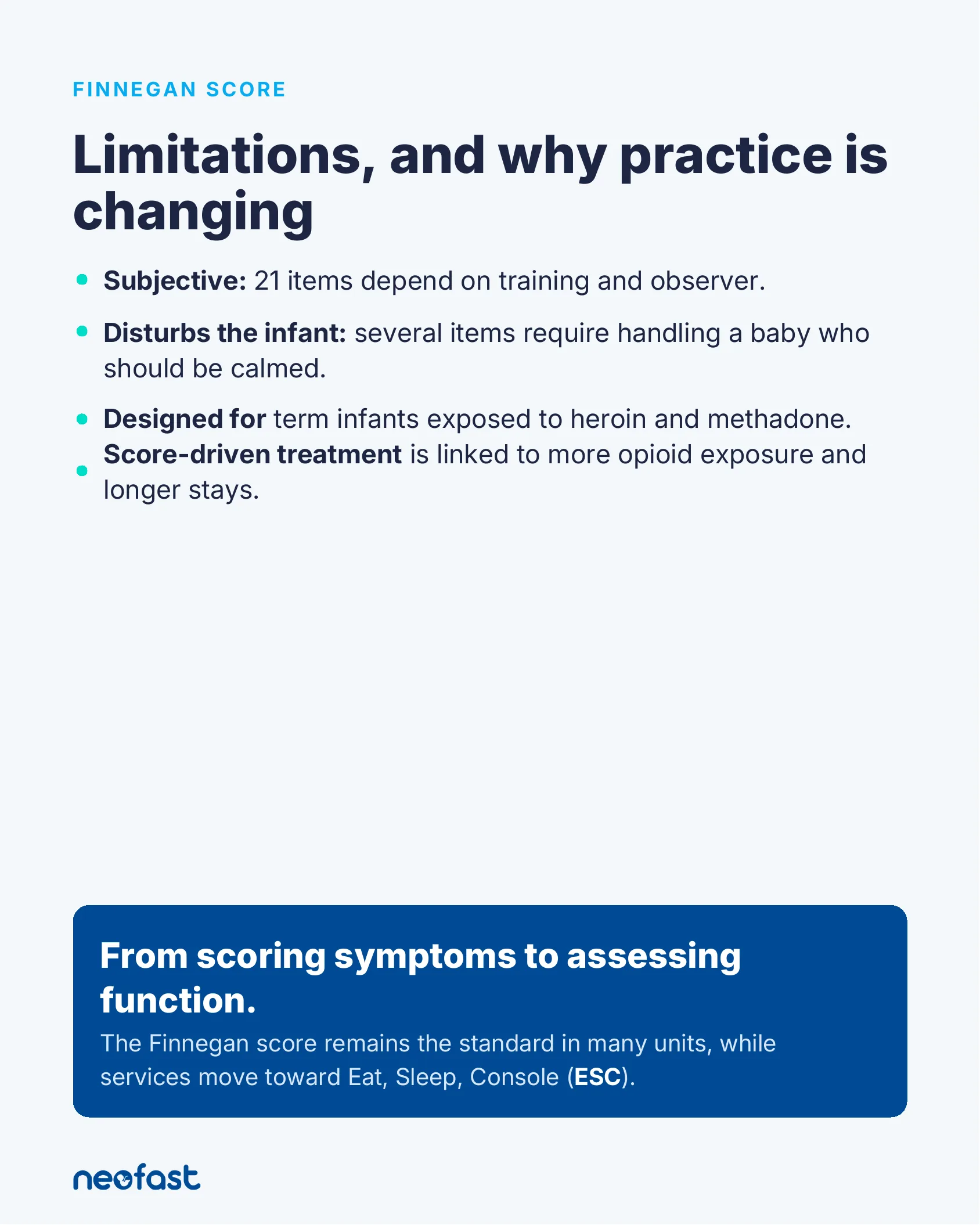
Finnegan Score
- Subjective: 21 items depend on training and observer.
- Disturbs the infant: several items require handling a baby who should be calmed.
- Designed for term infants exposed to heroin and methadone.
- Score-driven treatment is linked to more opioid exposure and longer stays.
From scoring symptoms to assessing function.
The Finnegan score remains the standard in many units, while services move toward Eat, Sleep, Console (ESC).
What ESC is
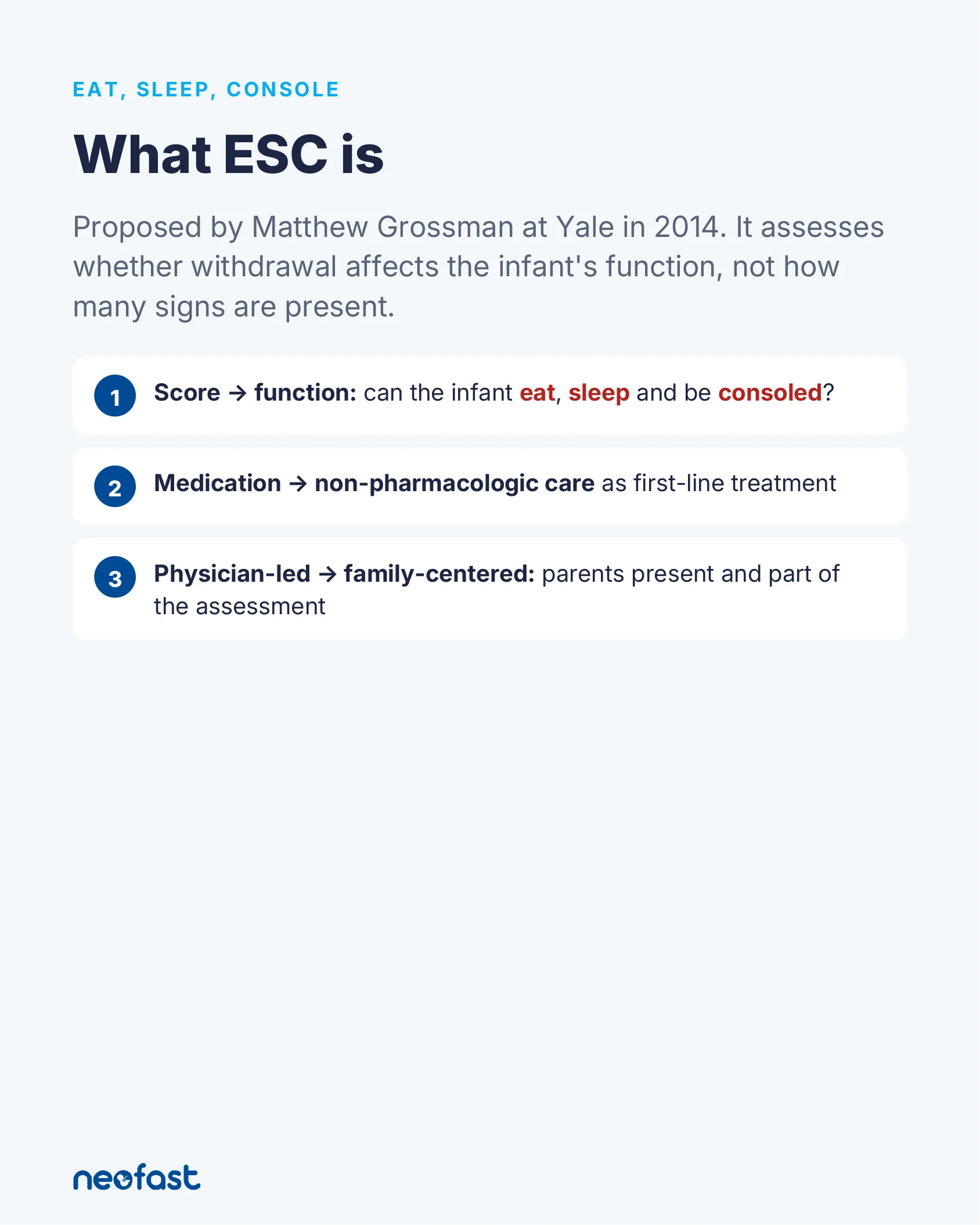
Eat, Sleep, Console
Proposed by Matthew Grossman at Yale in 2014. It assesses whether withdrawal affects the infant’s function, not how many signs are present.
- Score → function: can the infant eat, sleep and be consoled?
- Medication → non-pharmacologic care as first-line treatment
- Physician-led → family-centered: parents present and part of the assessment
Three questions after each feed
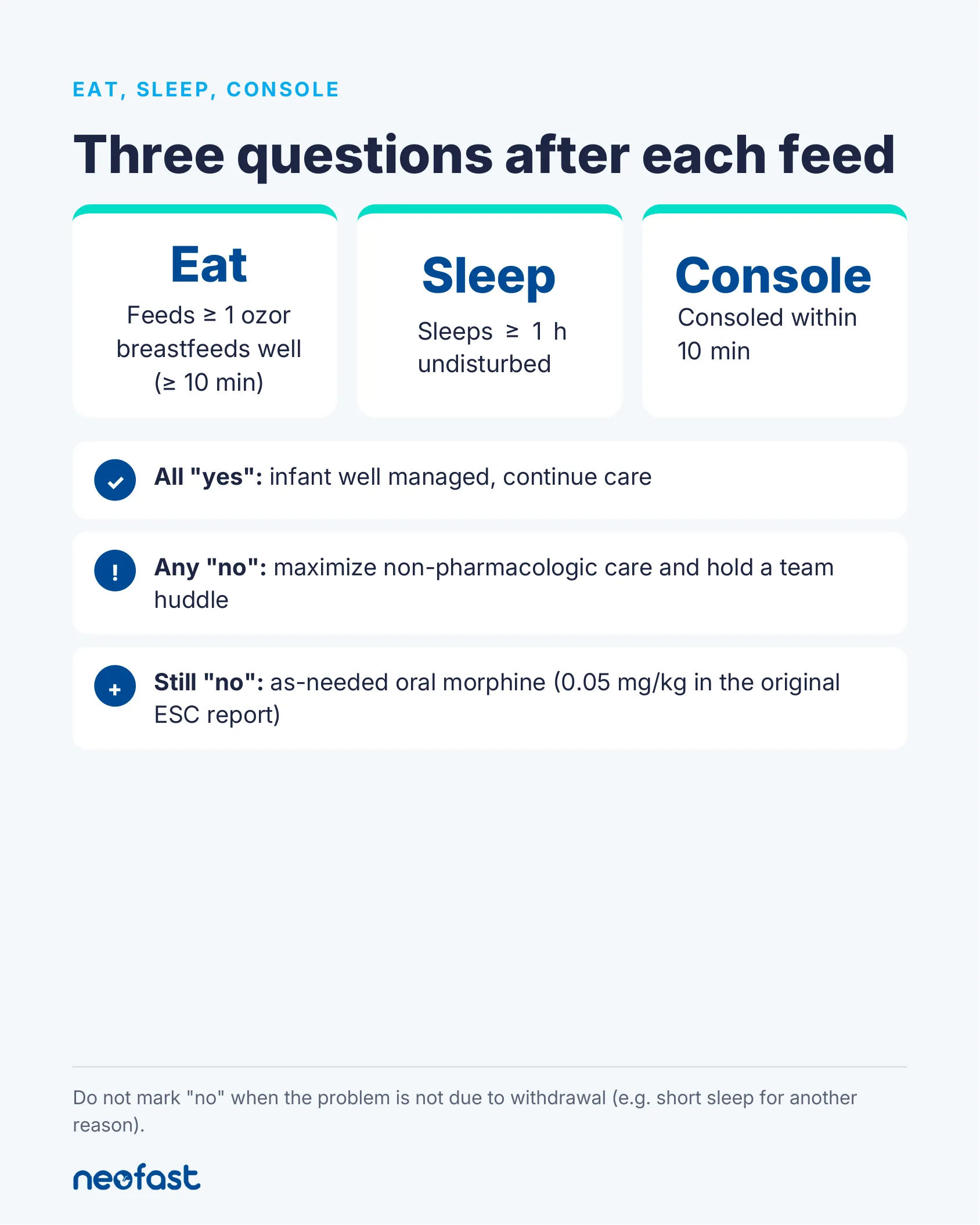
Eat, Sleep, Console
| Eat | Sleep | Console |
|---|---|---|
| Feeds ≥ 1 oz or breastfeeds well (≥ 10 min) | Sleeps ≥ 1 h undisturbed | Consoled within 10 min |
- All “yes”: infant well managed, continue care
- Any “no”: maximize non-pharmacologic care and hold a team huddle
- Still “no”: as-needed oral morphine (0.05 mg/kg in the original ESC report)
Do not mark “no” when the problem is not due to withdrawal (e.g. short sleep for another reason).
Evidence and limits
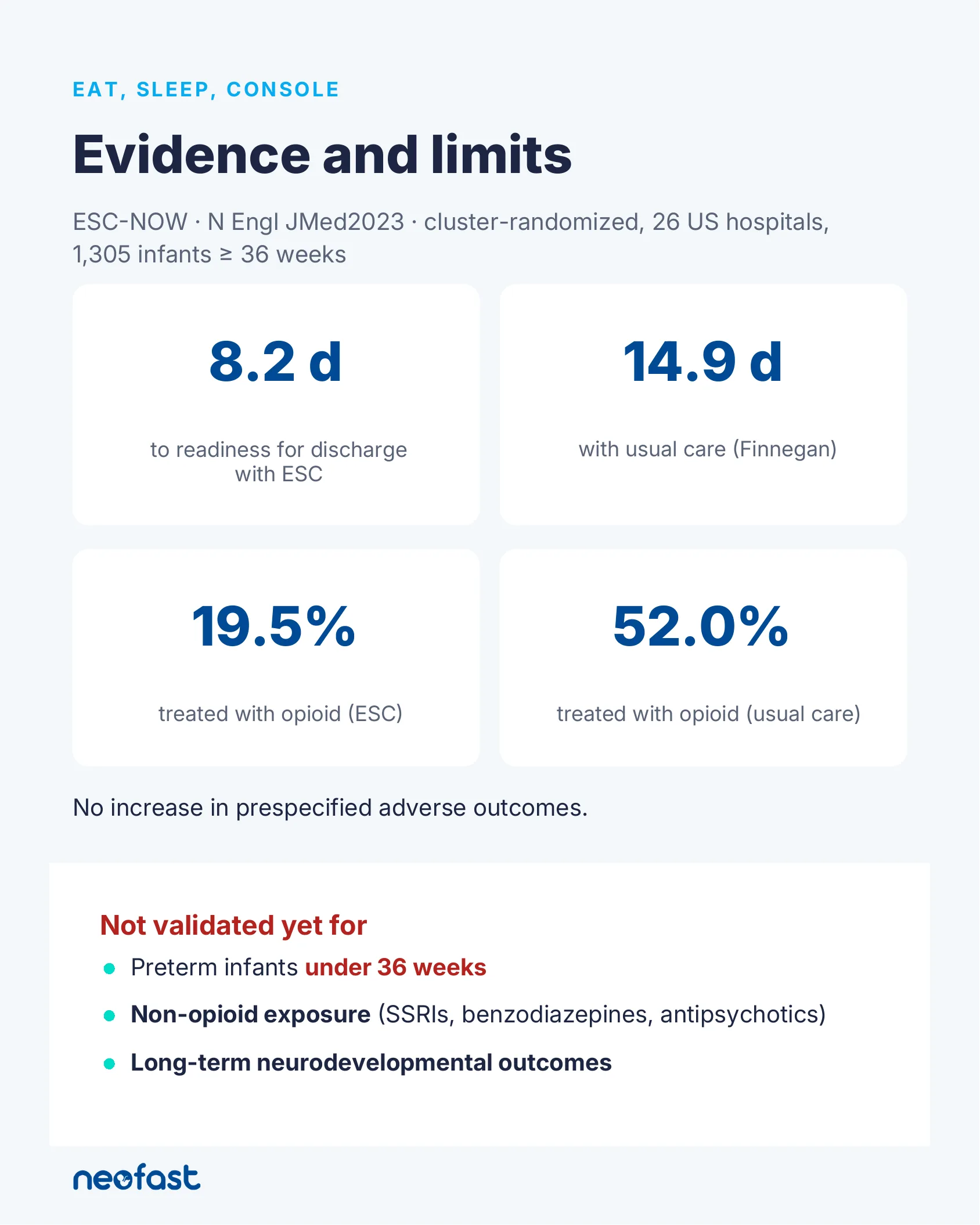
Eat, Sleep, Console
ESC-NOW · N Engl J Med 2023 · cluster-randomized, 26 US hospitals, 1,305 infants ≥ 36 weeks
- 8.2 d to readiness for discharge with ESC
- 14.9 d with usual care (Finnegan)
- 19.5% treated with opioid (ESC)
- 52.0% treated with opioid (usual care)
No increase in prespecified adverse outcomes.
Not validated yet for
- Preterm infants under 36 weeks
- Non-opioid exposure (SSRIs, benzodiazepines, antipsychotics)
- Long-term neurodevelopmental outcomes
Finnegan × Lipsitz × ESC
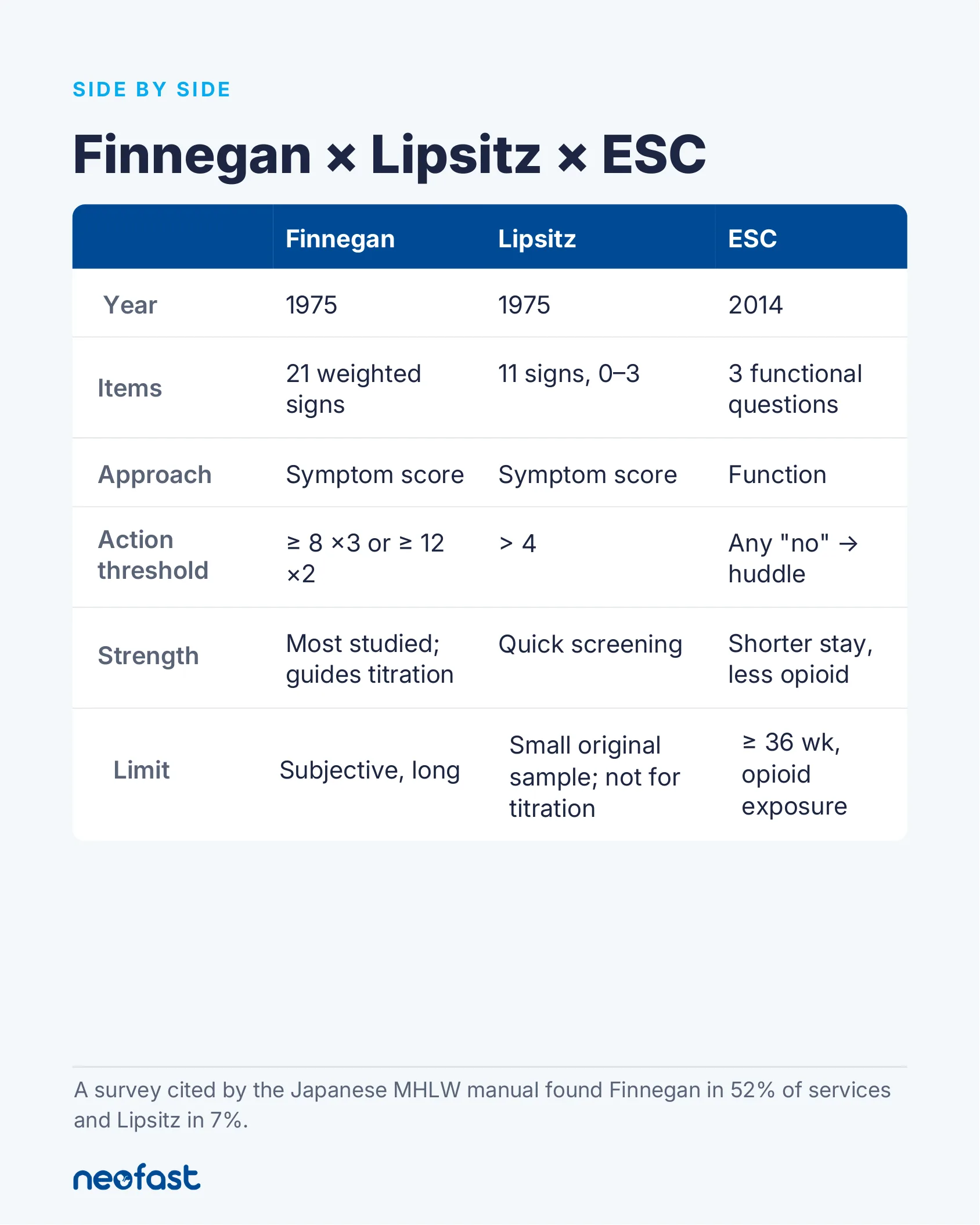
Side by Side
| Finnegan | Lipsitz | ESC | |
|---|---|---|---|
| Year | 1975 | 1975 | 2014 |
| Items | 21 weighted signs | 11 signs, 0–3 | 3 functional questions |
| Approach | Symptom score | Symptom score | Function |
| Action threshold | ≥ 8 ×3 or ≥ 12 ×2 | > 4 | Any “no” → huddle |
| Strength | Most studied; guides titration | Quick screening | Shorter stay, less opioid |
| Limit | Subjective, long | Small original sample; not for titration | ≥ 36 wk, opioid exposure |
A survey cited by the Japanese MHLW manual found Finnegan in 52% of services and Lipsitz in 7%.
Which tool for which newborn?
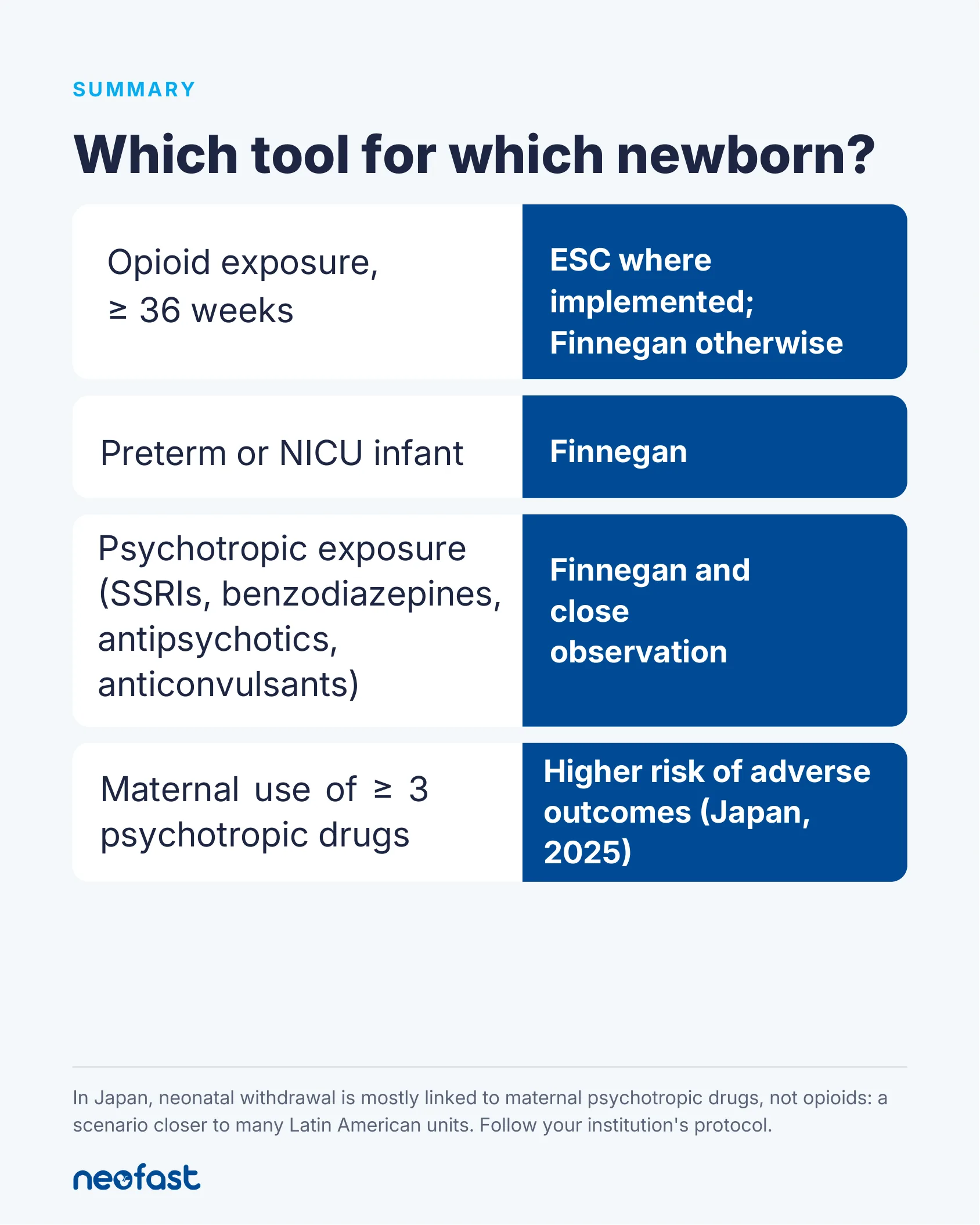
Summary
| Scenario | Recommended tool |
|---|---|
| Opioid exposure, ≥ 36 weeks | ESC where implemented; Finnegan otherwise |
| Preterm or NICU infant | Finnegan |
| Psychotropic exposure (SSRIs, benzodiazepines, antipsychotics, anticonvulsants) | Finnegan and close observation |
| Maternal use of ≥ 3 psychotropic drugs | Higher risk of adverse outcomes (Japan, 2025) |
In Japan, neonatal withdrawal is mostly linked to maternal psychotropic drugs, not opioids: a scenario closer to many Latin American units. Follow your institution’s protocol.
Finnegan score and dose calculations in your pocket
Score, interpretation, and morphine and phenobarbital doses with preparation and volume in mL.
Out Now! Download on the App Store. Get it on Google Play.
Clinical support tool. It does not replace clinical judgment or institutional protocols.
Frequently asked questions
What is the Finnegan score used for in neonatal abstinence syndrome?
Published in 1975, it quantifies withdrawal in newborns chronically exposed in utero to opioids (and also used for benzodiazepines, SSRIs, antipsychotics, anticonvulsants) using 21 weighted signs across CNS, metabolic/vasomotor/respiratory, and GI domains; chronically exposed infants should be observed for at least 72 h (AAP 2020).
When should pharmacologic treatment be started based on the Finnegan score?
Consider medication when the score is ≥ 8 on 3 consecutive scores or ≥ 12 on 2 consecutive scores, scoring every 3–4 h (every 2 h if total is ≥ 8), looking at the trend rather than a single number, and after ruling out sepsis, hypoglycemia, hypocalcemia and CNS disorders.
What is the first-line medication and dose for neonatal opioid withdrawal?
Oral morphine is first line at 0.05 mg/kg/dose every 4 h (literature accepts every 3 to 4 h); for a 3 kg infant this is 0.15 mg/dose, titrated by score and weaned gradually once controlled. IV morphine is dosed lower (0.015 mg/kg/dose every 4 h) using a 3 PO : 1 IV conversion ratio due to first-pass metabolism.
When is phenobarbital used in NAS, and what are the doses?
Phenobarbital is an adjunct when opioid withdrawal is not controlled with maximum opioid dose (often with polysubstance exposure) and is the choice for sedative exposure (benzodiazepines, barbiturates), not first line for opioid-only withdrawal. Loading dose is 20 mg/kg; maintenance is 3 mg/kg/day given q12h, with reassessment about 24 h after loading.
What is Eat, Sleep, Console (ESC) and how does it compare to the Finnegan score?
Proposed by Matthew Grossman at Yale in 2014, ESC assesses infant function (eating ≥1 oz or breastfeeding ≥10 min, sleeping ≥1 h undisturbed, being consoled within 10 min) rather than counting symptoms, prioritizes non-pharmacologic care, and involves parents. In the ESC-NOW trial (NEJM 2023, 1,305 infants ≥36 weeks), it reduced time to discharge readiness (8.2 vs 14.9 days) and opioid treatment rates (19.5% vs 52.0%) versus usual Finnegan-based care, but is not yet validated for preterm infants under 36 weeks, non-opioid exposure, or long-term neurodevelopmental outcomes.