Key takeaways
- The New Ballard Score uses 12 maturity criteria, 6 neuromuscular and 6 physical, summed into a total score ranging from -10 to 50 that converts to a gestational age of 20 to 44 weeks.
- The New Ballard Score was validated down to 20 weeks of gestation by extending the scoring scale to include values of -1 for extremely preterm infants.
- Mean agreement with confirmed menstrual dating in the validation cohort was ±1.5 weeks (0.15 ± 1.46 weeks).
- Timing of the exam matters: when performed before 12 hours of life, 97% of estimates were within 2 weeks of confirmed dating, compared with only 78% when performed after 12 hours.
- The New Ballard Score is indicated when gestational dating is unknown or unreliable, when clinical findings don’t match the obstetric estimate, or when gestational age is needed to classify birth weight as SGA, AGA, or LGA.
References
- Ballard JL, Khoury JC, Wedig K, Wang L, Eilers-Walsman BL, Lipp R. New Ballard Score, expanded to include extremely premature infants. J Pediatr. 1991;119(3):417-23.
New Ballard Score
GESTATIONAL AGE ASSESSMENT
New Ballard Score
12 maturity criteria. One estimated gestational age. Right at the bedside.
For neonatologists
What It Is
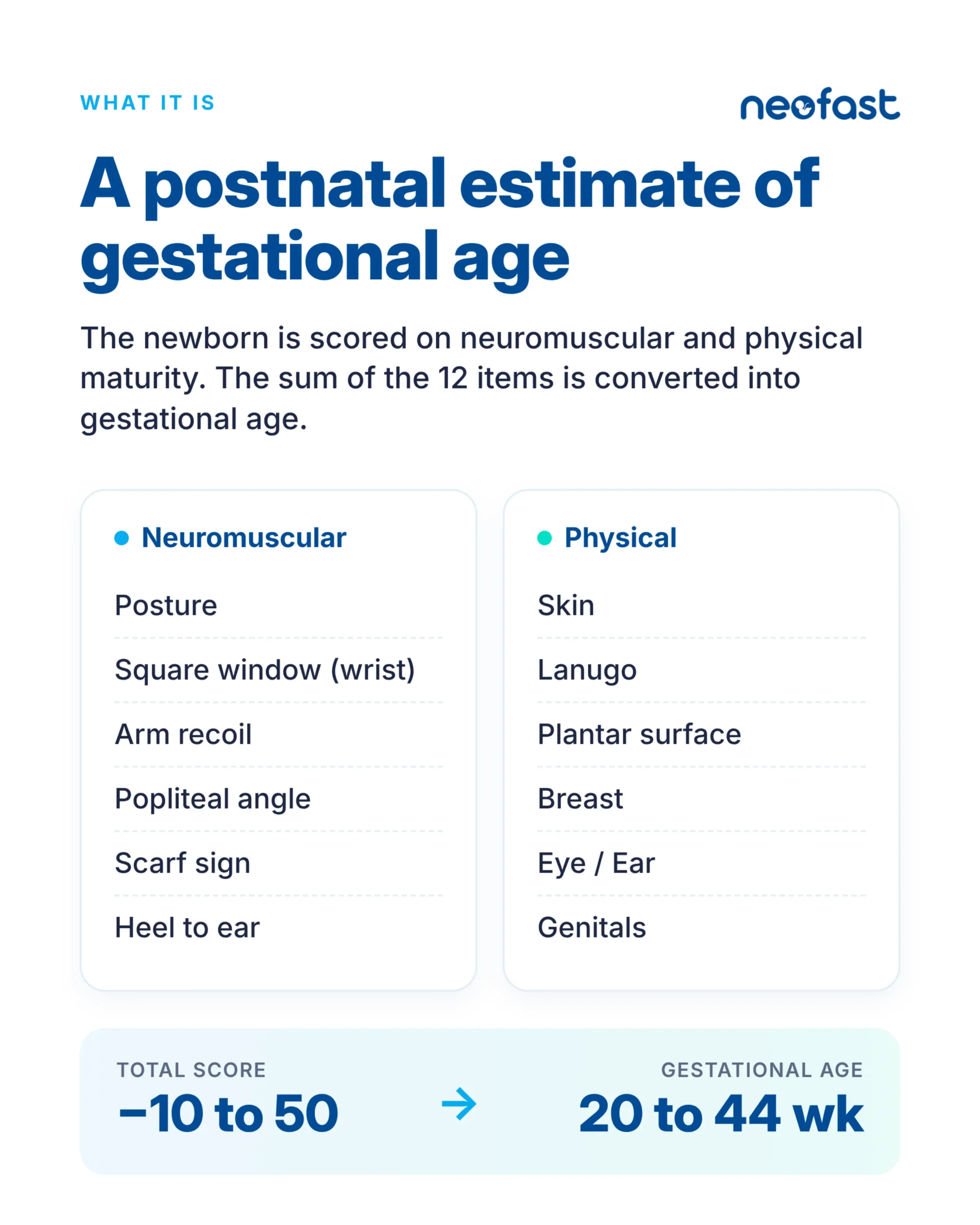
A postnatal estimate of gestational age
The newborn is scored on neuromuscular and physical maturity. The sum of the 12 items is converted into gestational age.
- Neuromuscular
- Posture
- Square window (wrist)
- Arm recoil
- Popliteal angle
- Scarf sign
- Heel to ear
- Physical
- Skin
- Lanugo
- Plantar surface
- Breast
- Eye / Ear
- Genitals
| Total Score | Gestational Age |
|---|---|
| -10 to 50 | 20 to 44 wk |
When To Use It
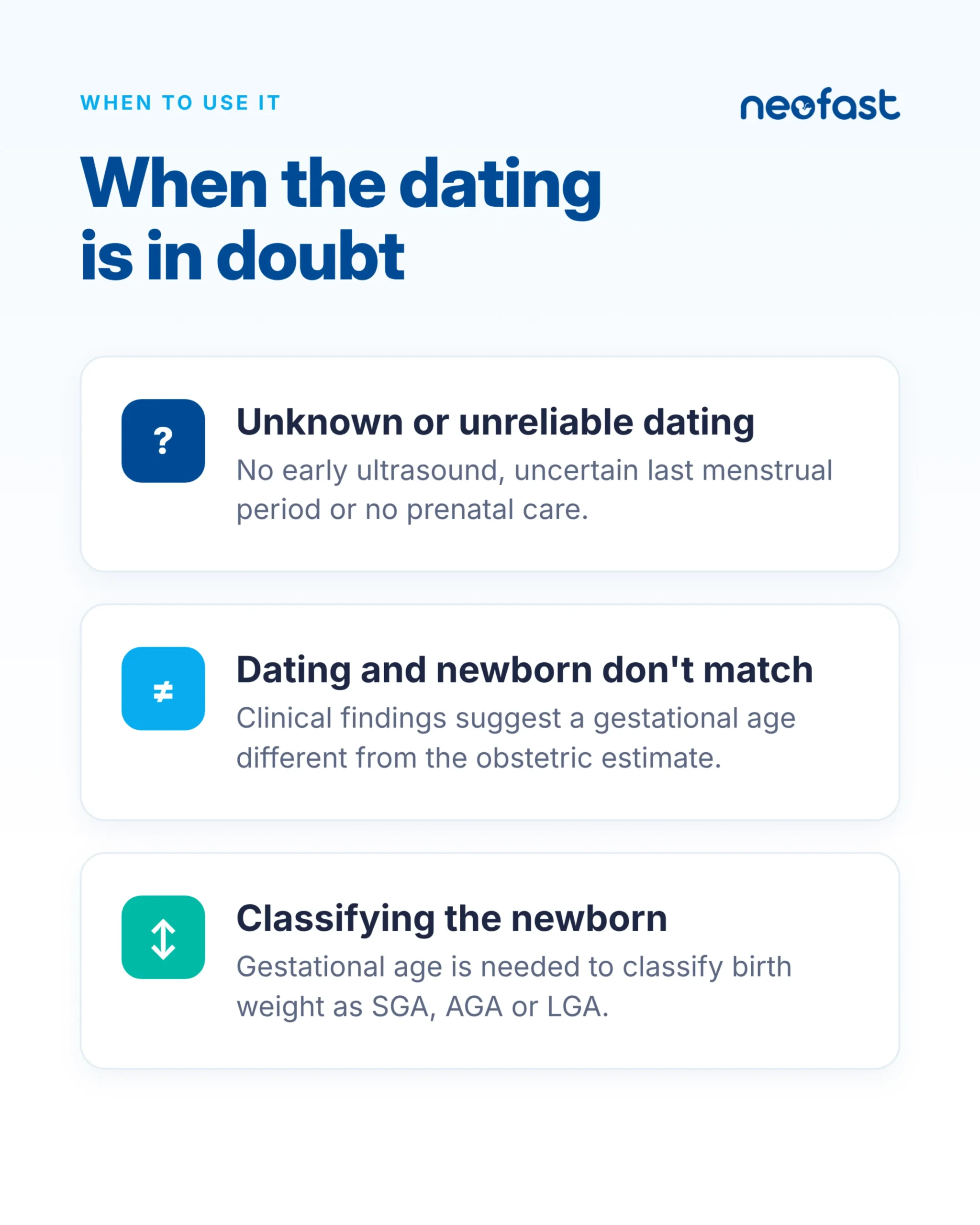
When the dating is in doubt
- Unknown or unreliable dating
No early ultrasound, uncertain last menstrual period or no prenatal care.
- Dating and newborn don’t match
Clinical findings suggest a gestational age different from the obstetric estimate.
- Classifying the newborn
Gestational age is needed to classify birth weight as SGA, AGA or LGA.
Accuracy and Timing
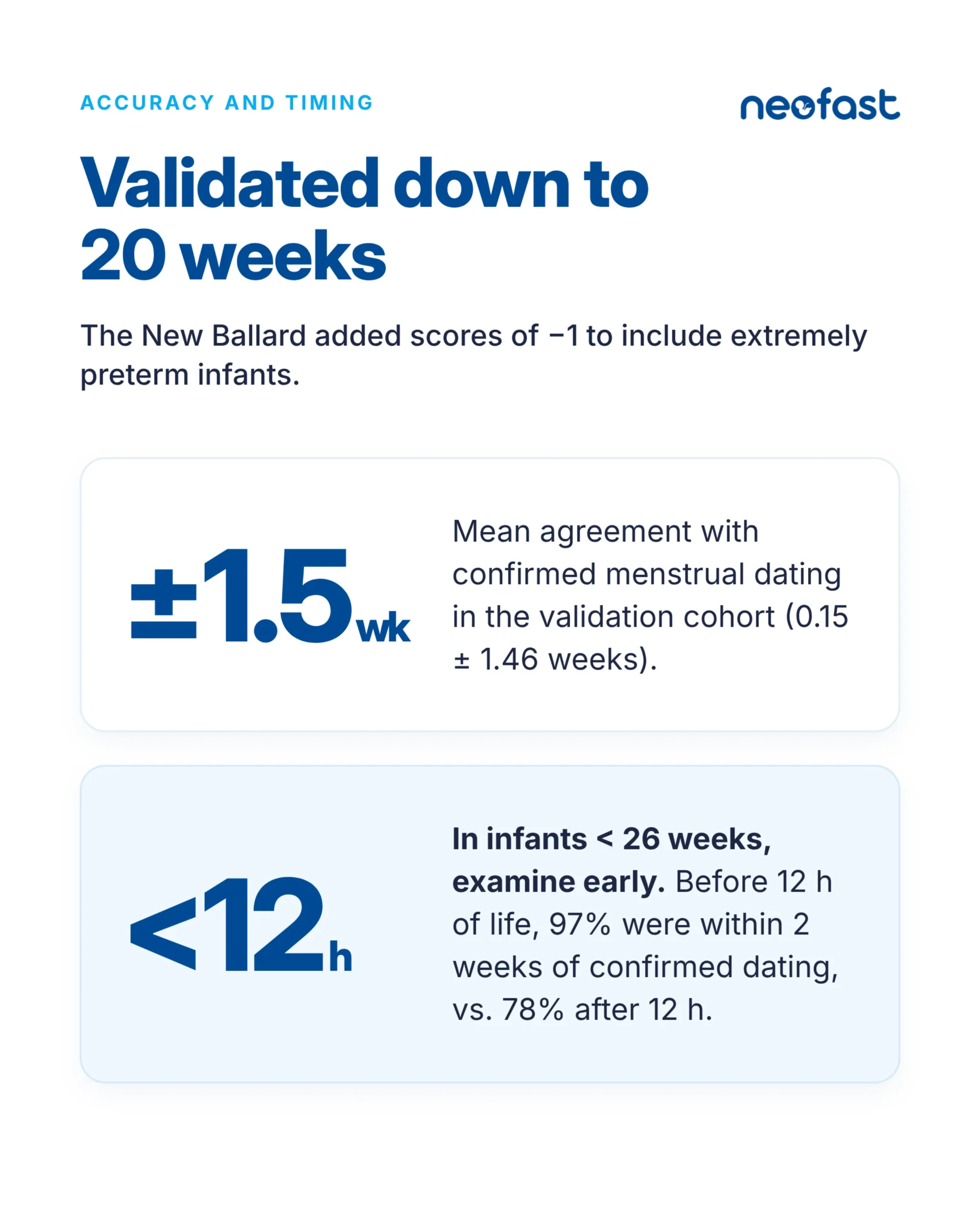
Validated down to 20 weeks
The New Ballard added scores of −1 to include extremely preterm infants.
| ±1.5 wk | Mean agreement with confirmed menstrual dating in the validation cohort (0.15 ± 1.46 weeks). |
| <12 h | In infants < 26 weeks, examine early. Before 12 h of life, 97% were within 2 weeks of confirmed dating, vs. 78% after 12 h. |
In NeoFast
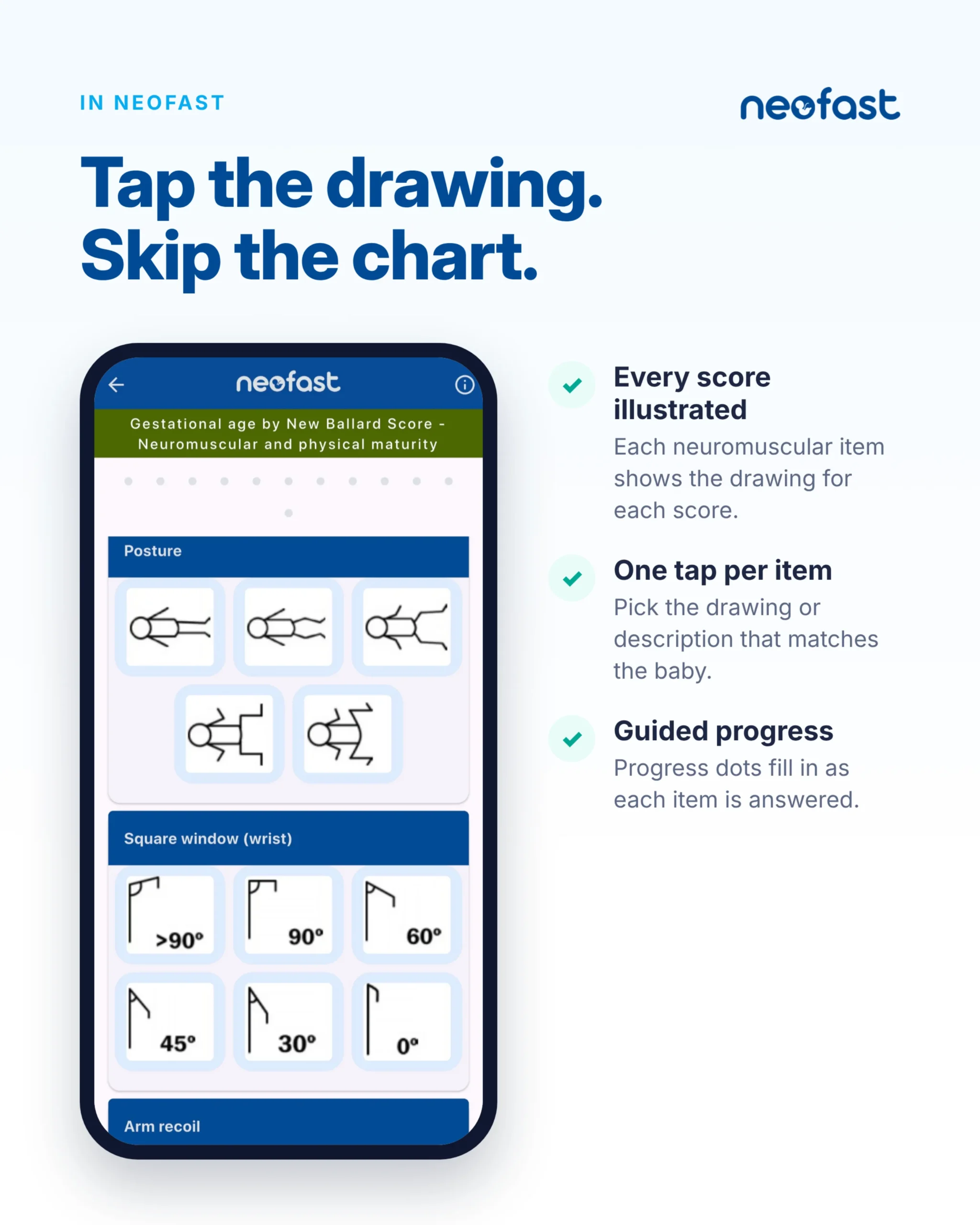
Tap the drawing. Skip the chart.
- Every score illustrated
Each neuromuscular item shows the drawing for each score.
- One tap per item
Pick the drawing or description that matches the baby.
- Guided progress
Progress dots fill in as each item is answered.
In NeoFast
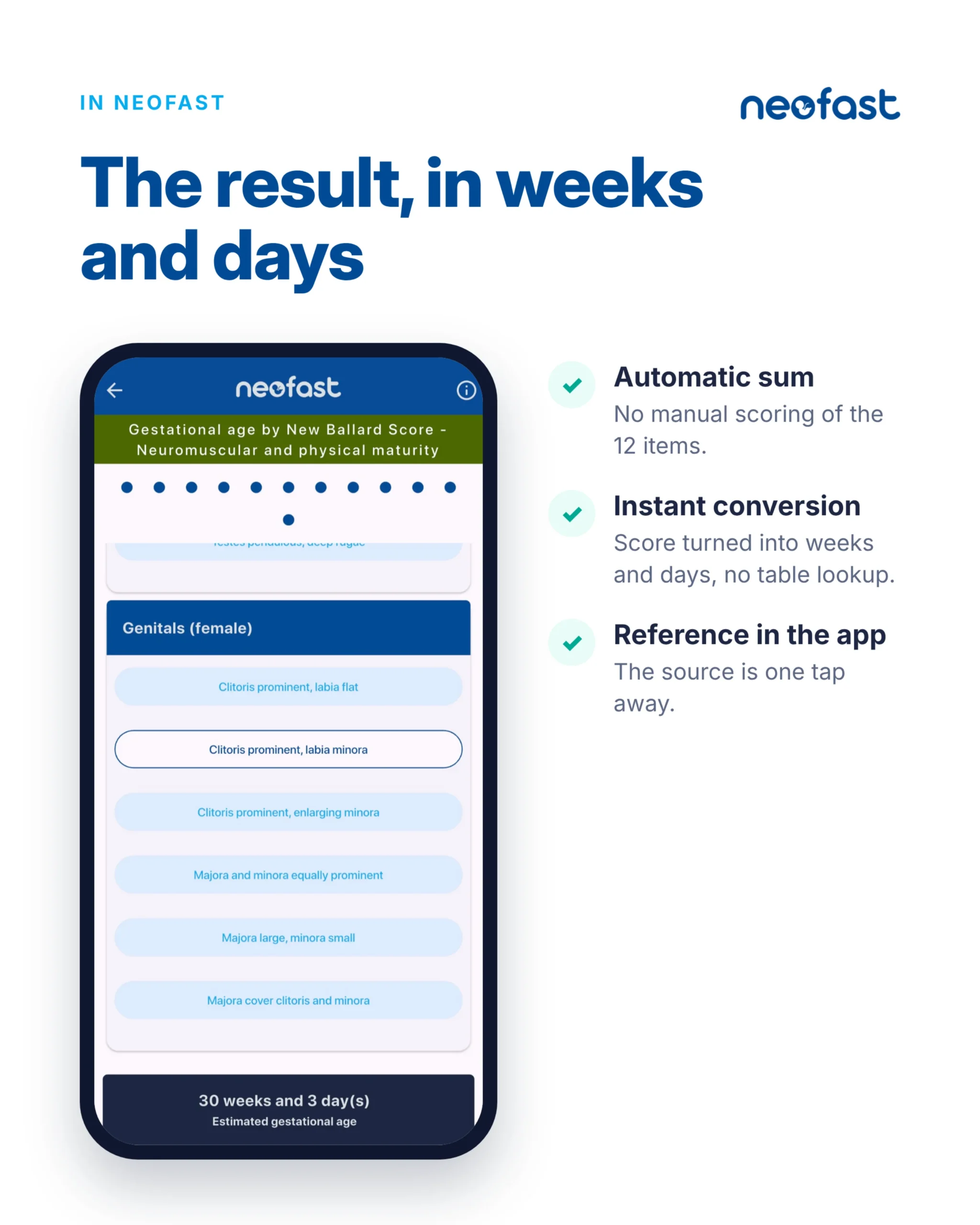
The result, in weeks and days
- Automatic sum
No manual scoring of the 12 items.
- Instant conversion
Score turned into weeks and days, no table lookup.
- Reference in the app
The source is one tap away.

Less time with charts. More time with the baby.
New Ballard and other neonatal calculations, in one app.
Download NeoFast
neofastapp.com
Frequently asked questions
What is the New Ballard Score used for?
It is a postnatal estimate of gestational age based on scoring the newborn’s neuromuscular and physical maturity. The sum of 12 items is converted into an estimated gestational age.
What are the 12 components of the New Ballard Score?
Six neuromuscular criteria (posture, square window/wrist, arm recoil, popliteal angle, scarf sign, heel to ear) and six physical criteria (skin, lanugo, plantar surface, breast, eye/ear, genitals).
What is the scoring range and corresponding gestational age range for the New Ballard Score?
The total score ranges from -10 to 50, corresponding to a gestational age range of 20 to 44 weeks.
How accurate is the New Ballard Score compared to confirmed menstrual dating?
In the validation cohort, mean agreement with confirmed menstrual dating was 0.15 ± 1.46 weeks, roughly ±1.5 weeks.
When should the New Ballard exam be performed for the best accuracy, especially in extremely preterm infants?
In infants under 26 weeks, the exam should be done early. Before 12 hours of life, 97% of estimates were within 2 weeks of confirmed dating, versus only 78% when done after 12 hours.
When is the New Ballard Score indicated in clinical practice?
It is used when dating is unknown or unreliable (no early ultrasound, uncertain LMP, or no prenatal care), when clinical findings suggest a different gestational age than the obstetric estimate, or when gestational age is needed to classify birth weight as SGA, AGA, or LGA.