Key takeaways
- The PROUDEST Study followed 254 infants exposed to SARS-CoV-2 in utero versus 15 healthy unexposed controls, assessing neurodevelopment with the Bayley-III scale at 6 and 12 months.
- Approximately 26% of exposed infants showed general developmental delay (Bayley-III scores below 85) across test periods, with all three domains (Cognitive, Language, Motor) significantly affected at 6 months.
- By 12 months, cognitive and motor domains showed some normalization, but language impairment persisted and was profound, with up to 28.2% of highly exposed subgroups showing altered language scores.
- The three key risk factors amplifying neurodevelopmental delay are acute maternal infection in the 3rd trimester or at delivery, severe maternal COVID-19 disease, and caregiver education level below university degree.
- Pediatric ultrasound elastography in exposed infants revealed reduced elasticity coefficients in deep white matter, reflecting mild myelin edema and disrupted connectivity in language-related brain networks.
References
- Motta F, Canellas-de-Castro ME, Fernandes GM, Sasaki LMP, de Araújo Júnior DA, Zaconeta AM, et al. Neuropsychomotor Development of Children Exposed to SARS-CoV-2 in Utero During COVID-19 Pandemic. Biomedicines 2025, 13, 2256.
In Utero SARS-COV-2 Exposure and Infant Neurodevelopment
Key findings from the PROUDEST Study on the impact of maternal COVID-19 on early childhood neuropsychomotor outcomes.
Study Overview & Methodology
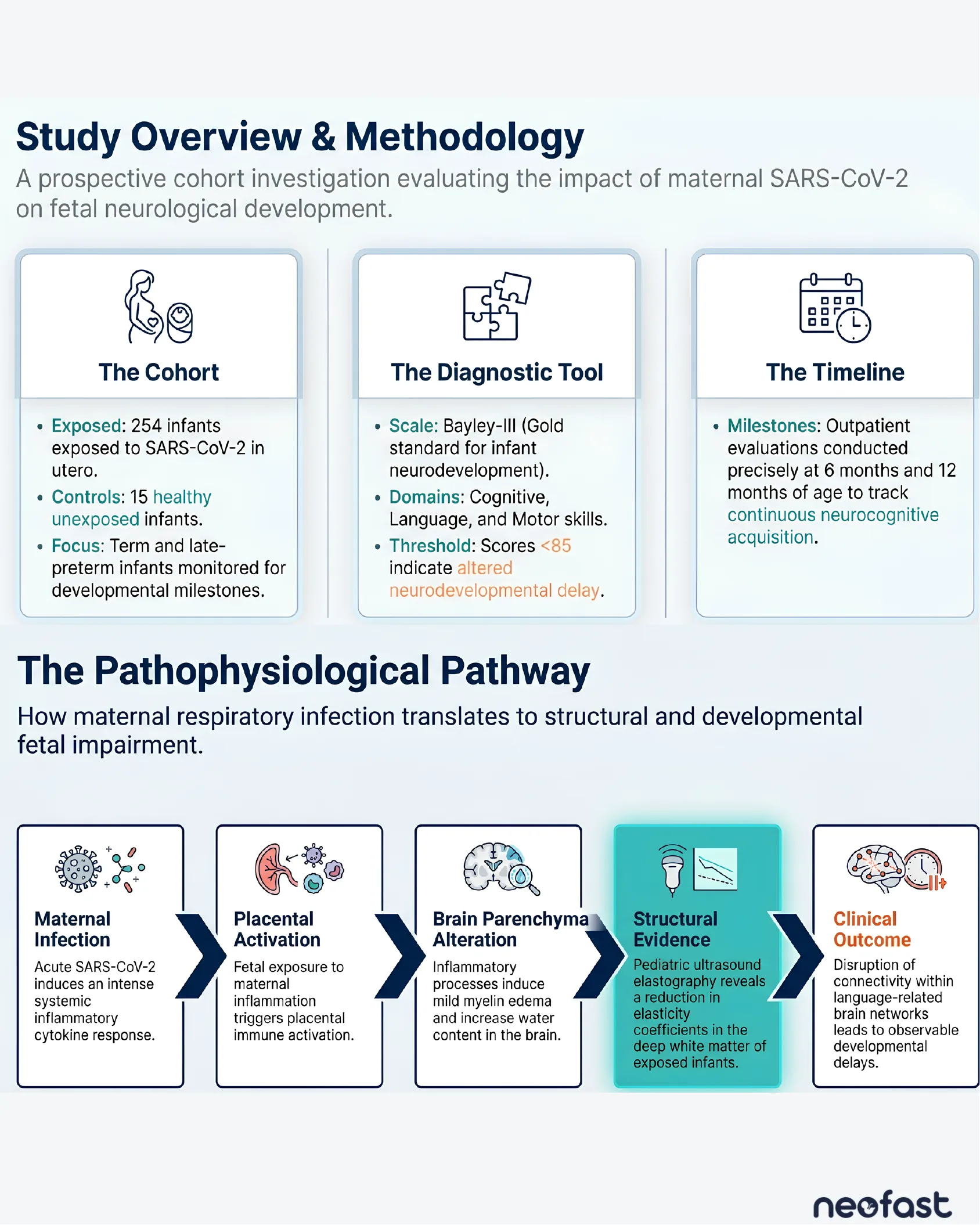
A prospective cohort investigation evaluating the impact of maternal SARS-CoV-2 on fetal neurological development.
The Cohort
- Exposed: 254 infants exposed to SARS-CoV-2 in utero.
- Controls: 15 healthy unexposed infants.
- Focus: Term and late-preterm infants monitored for developmental milestones.
The Diagnostic Tool
- Scale: Bayley-III (Gold standard for infant neurodevelopment).
- Domains: Cognitive, Language, and Motor skills.
- Threshold: Scores <85 indicate altered neurodevelopmental delay.
The Timeline
- Milestones: Outpatient evaluations conducted precisely at 6 months and 12 months of age to track continuous neurocognitive acquisition.
The Pathophysiological Pathway
How maternal respiratory infection translates to structural and developmental fetal impairment.
- Maternal Infection: Acute SARS-CoV-2 induces an intense systemic inflammatory cytokine response.
- Placental Activation: Fetal exposure to maternal inflammation triggers placental immune activation.
- Brain Parenchyma Alteration: Inflammatory processes induce mild myelin edema and increase water content in the brain.
- Structural Evidence: Pediatric ultrasound elastography reveals a reduction in elasticity coefficients in the deep white matter of exposed infants.
- Clinical Outcome: Disruption of connectivity within language-related brain networks leads to observable developmental delays.
Primary Clinical Outcomes: Bayley-III Evaluation
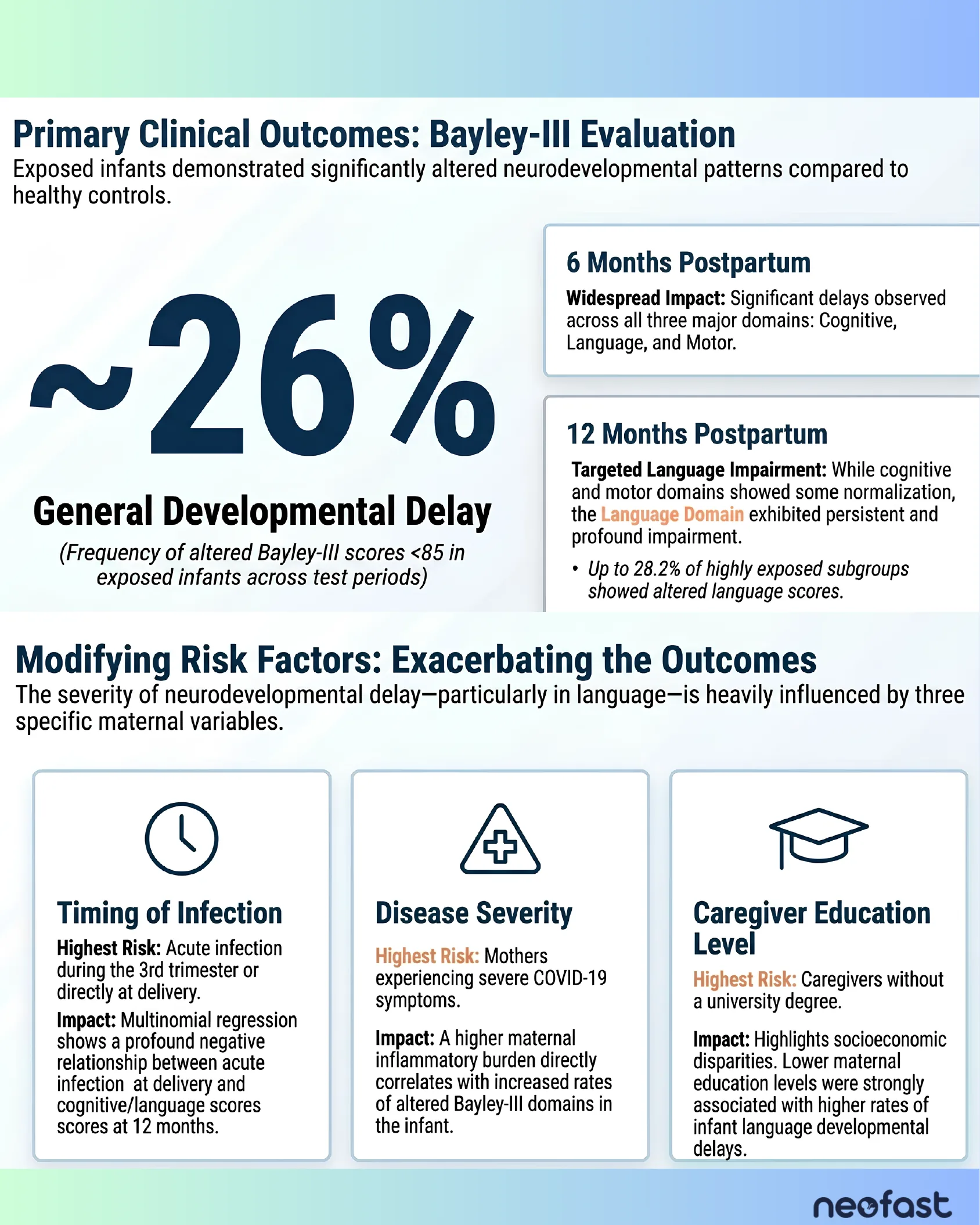
Exposed infants demonstrated significantly altered neurodevelopmental patterns compared to healthy controls.
~26% General Developmental Delay
(Frequency of altered Bayley-III scores <85 in exposed infants across test periods)
6 Months Postpartum
Widespread Impact: Significant delays observed across all three major domains: Cognitive, Language, and Motor.
12 Months Postpartum
Targeted Language Impairment: While cognitive and motor domains showed some normalization, the Language Domain exhibited persistent and profound impairment.
- Up to 28.2% of highly exposed subgroups showed altered language scores.
Modifying Risk Factors: Exacerbating the Outcomes
The severity of neurodevelopmental delay—particularly in language—is heavily influenced by three specific maternal variables.
Timing of Infection
Highest Risk: Acute infection during the 3rd trimester or directly at delivery.
Impact: Multinomial regression shows a profound negative relationship between acute infection at delivery and cognitive/language scores at 12 months.
Disease Severity
Highest Risk: Mothers experiencing severe COVID-19 symptoms.
Impact: A higher maternal inflammatory burden directly correlates with increased rates of altered Bayley-III domains in the infant.
Caregiver Education Level
Highest Risk: Caregivers without a university degree.
Impact: Highlights socioeconomic disparities. Lower maternal education levels were strongly associated with higher rates of infant language developmental delays.
The Path Forward: Clinical Relevance & Action
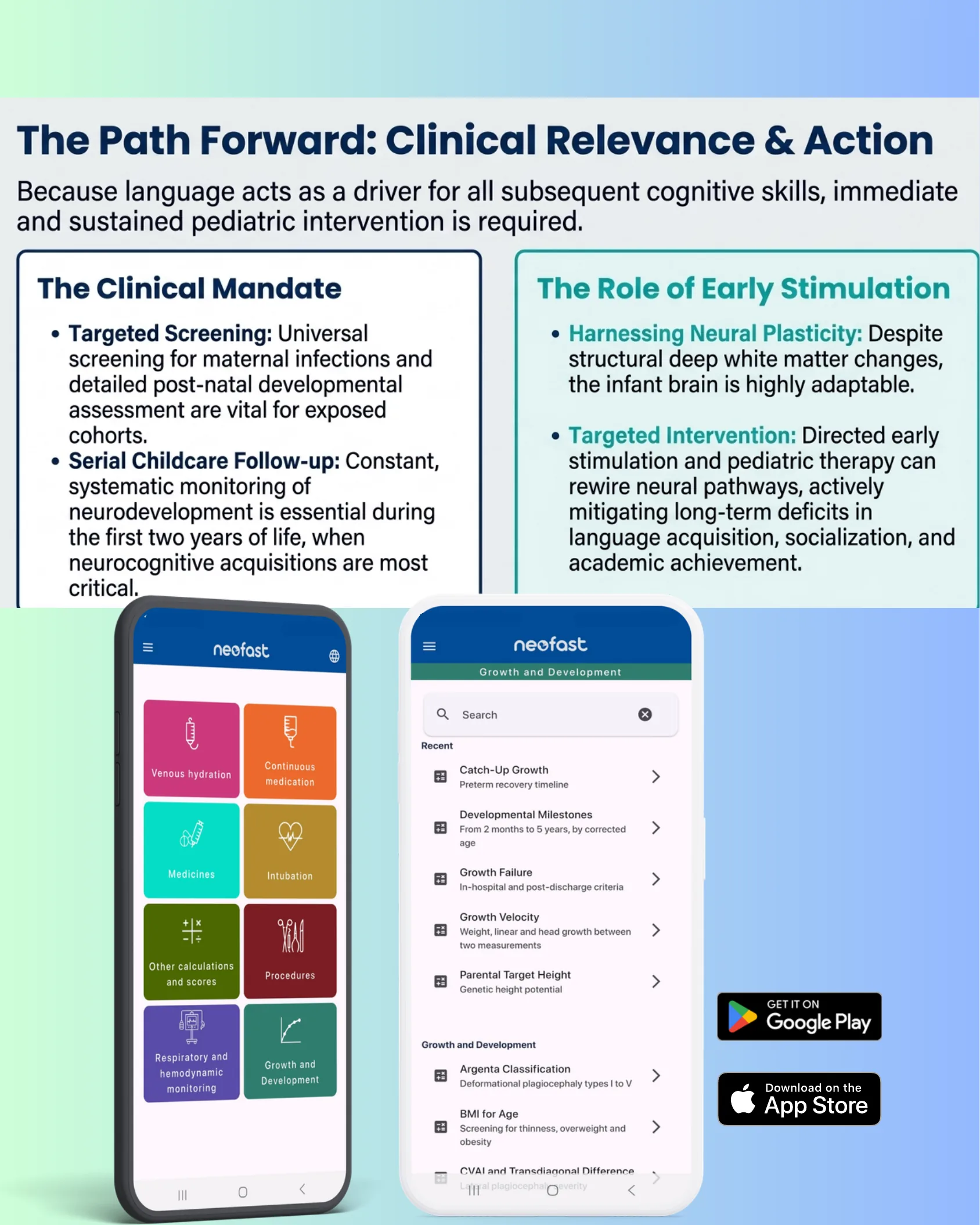
Because language acts as a driver for all subsequent cognitive skills, immediate and sustained pediatric intervention is required.
The Clinical Mandate
- Targeted Screening: Universal screening for maternal infections and detailed post-natal developmental assessment are vital for exposed cohorts.
- Serial Childcare Follow-up: Constant, systematic monitoring of neurodevelopment is essential during the first two years of life, when neurocognitive acquisitions are most critical.
The Role of Early Stimulation
- Harnessing Neural Plasticity: Despite structural deep white matter changes, the infant brain is highly adaptable.
- Targeted Intervention: Directed early stimulation and pediatric therapy can rewire neural pathways, actively mitigating long-term deficits in language acquisition, socialization, and academic achievement.
Neofast App
- Venous hydration
- Continuous medication
- Medicines
- Intubation
- Other calculations and scores
- Procedures
- Respiratory and hemodynamic monitoring
- Growth and Development
Growth and Development section includes:
- Catch-Up Growth – Preterm recovery timeline
- Developmental Milestones – From 2 months to 5 years, by corrected age
- Growth Failure – In-hospital and post-discharge criteria
- Growth Velocity – Weight, linear and head growth between two measurements
- Parental Target Height – Genetic height potential
- Argenta Classification – Deformational plagiocephaly types I to V
- BMI for Age – Screening for thinness, overweight and obesity
- CVAI and Transdiagonal Difference – Lateral plagiocephaly severity
Get it on Google Play. Download on the App Store.
Frequently asked questions
What is the PROUDEST Study and what did it evaluate?
The PROUDEST Study is a prospective cohort investigation evaluating the impact of maternal SARS-CoV-2 infection on fetal and infant neurological development, comparing 254 infants exposed to SARS-CoV-2 in utero to 15 healthy unexposed controls, with Bayley-III developmental assessments at 6 and 12 months.
What Bayley-III score threshold indicates neurodevelopmental delay in this study?
A Bayley-III score below 85 indicates altered neurodevelopmental delay in the Cognitive, Language, or Motor domains.
What percentage of SARS-CoV-2 exposed infants showed developmental delay?
Approximately 26% of exposed infants showed general developmental delay (Bayley-III scores less than 85) across test periods, and up to 28.2% of highly exposed subgroups showed altered language scores specifically.
Which maternal factors increase the risk of neurodevelopmental delay after in utero SARS-CoV-2 exposure?
The three modifying risk factors are: acute infection timing (highest risk during the 3rd trimester or at delivery), maternal disease severity (highest risk with severe COVID-19 symptoms), and caregiver education level (highest risk when caregivers lack a university degree).
What is the proposed pathophysiological pathway linking maternal COVID-19 to infant brain changes?
Acute maternal SARS-CoV-2 infection triggers a systemic inflammatory cytokine response that activates placental immune pathways; this fetal inflammatory exposure induces mild myelin edema and increased brain water content, and ultrasound elastography shows reduced elasticity coefficients in deep white matter, disrupting language-related brain network connectivity and causing developmental delays.