Key takeaways
- Antibiotics must be started within 1 hour of the decision to treat in septic shock, and within 3 hours for probable sepsis without shock; cultures should never delay treatment in an unstable neonate.
- Fluid resuscitation uses 10-20 mL/kg of isotonic crystalloid over the first hour, titrated to heart rate, capillary refill and urine output, stopping at the first signs of fluid overload.
- Epinephrine or norepinephrine (0.05-0.3 mcg/kg/min, up to 1-2) are first-line vasoactives for fluid-refractory shock; dopamine is no longer first line, and norepinephrine doses above 0.3 mcg/kg/min warrant considering added vasopressin.
- Empiric therapy is ampicillin (or benzylpenicillin) plus gentamicin for early-onset sepsis, and vancomycin plus a 3rd-generation cephalosporin or aminoglycoside for late-onset sepsis, with meropenem reserved for ESBL producers.
- For suspected early-onset sepsis, reassess at 36-48 hours and stop antibiotics if cultures are negative and the baby is well or improving; neonatal sepsis causes over 550,000 deaths worldwide each year.
References
- Orlandin EAS, Oharomari LK Jr, Gonçalves-Ferri WA. The management of neonatal sepsis and septic shock. Curr Treat Options Pediatr. 2026;12:19. doi:10.1007/s40746-026-00379-3
- 2026 Surviving Sepsis Campaign Pediatric Guidelines, as summarized in Orlandin et al., 2026.
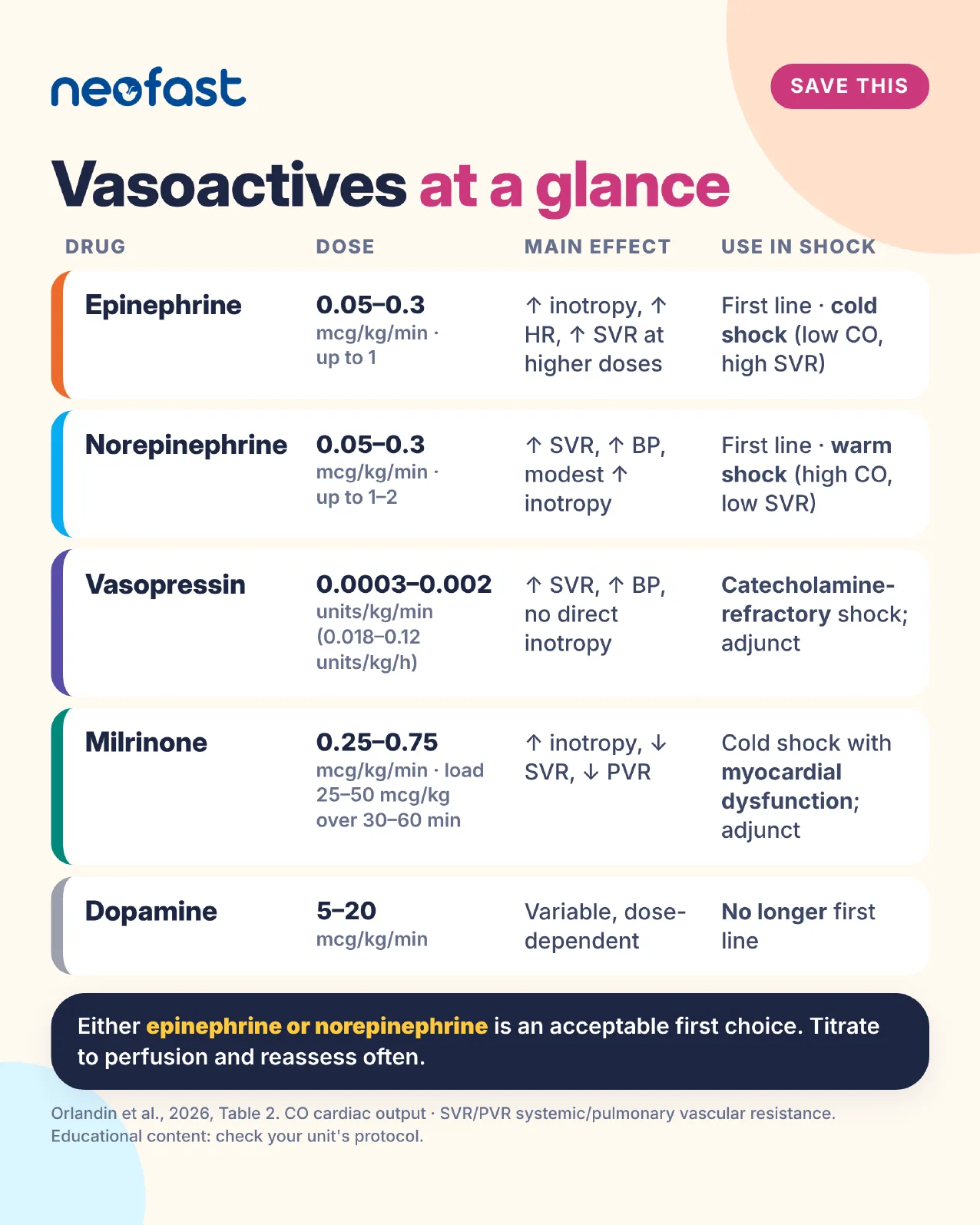
- Orlandin et al., 2026, Table 2. CO cardiac output · SVR/PVR systemic/pulmonary vascular resistance. Educational content: check your unit’s protocol.
- Orlandin et al., 2026
Neonatal Sepsis & Septic Shock

NEONATAL SEPSIS & SEPTIC SHOCK
The first-hour rules
What to do, when to do it and the vasoactive quick-reference table to keep in your pocket.
- Antibiotics
- Fluids
- Vasoactives
- Calculated in seconds
Swipe →
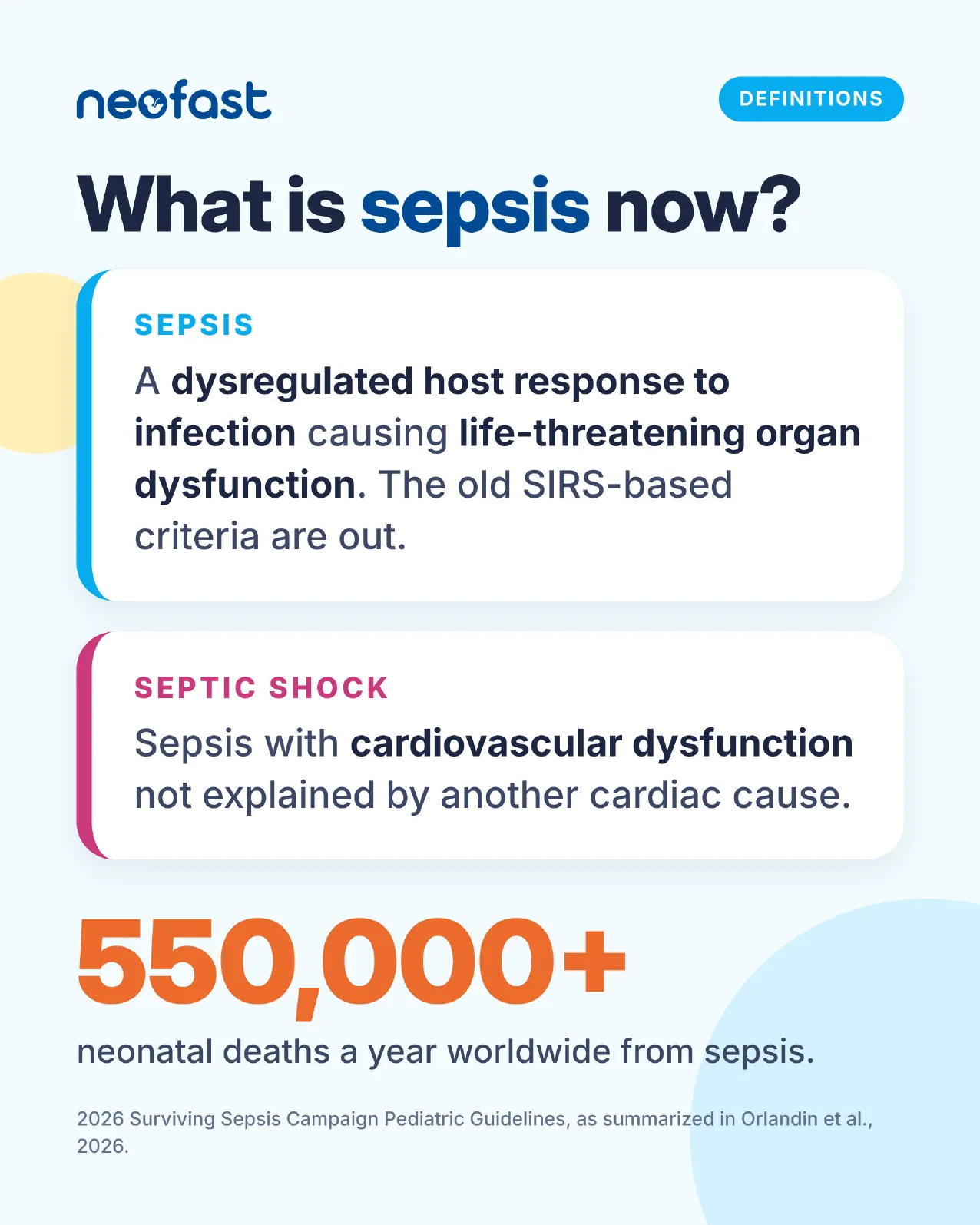
What is sepsis now?
SEPSIS
A dysregulated host response to infection causing life-threatening organ dysfunction. The old SIRS-based criteria are out.
SEPTIC SHOCK
Sepsis with cardiovascular dysfunction not explained by another cardiac cause.
550,000+ neonatal deaths a year worldwide from sepsis.
2026 Surviving Sepsis Campaign Pediatric Guidelines, as summarized in Orlandin et al., 2026.
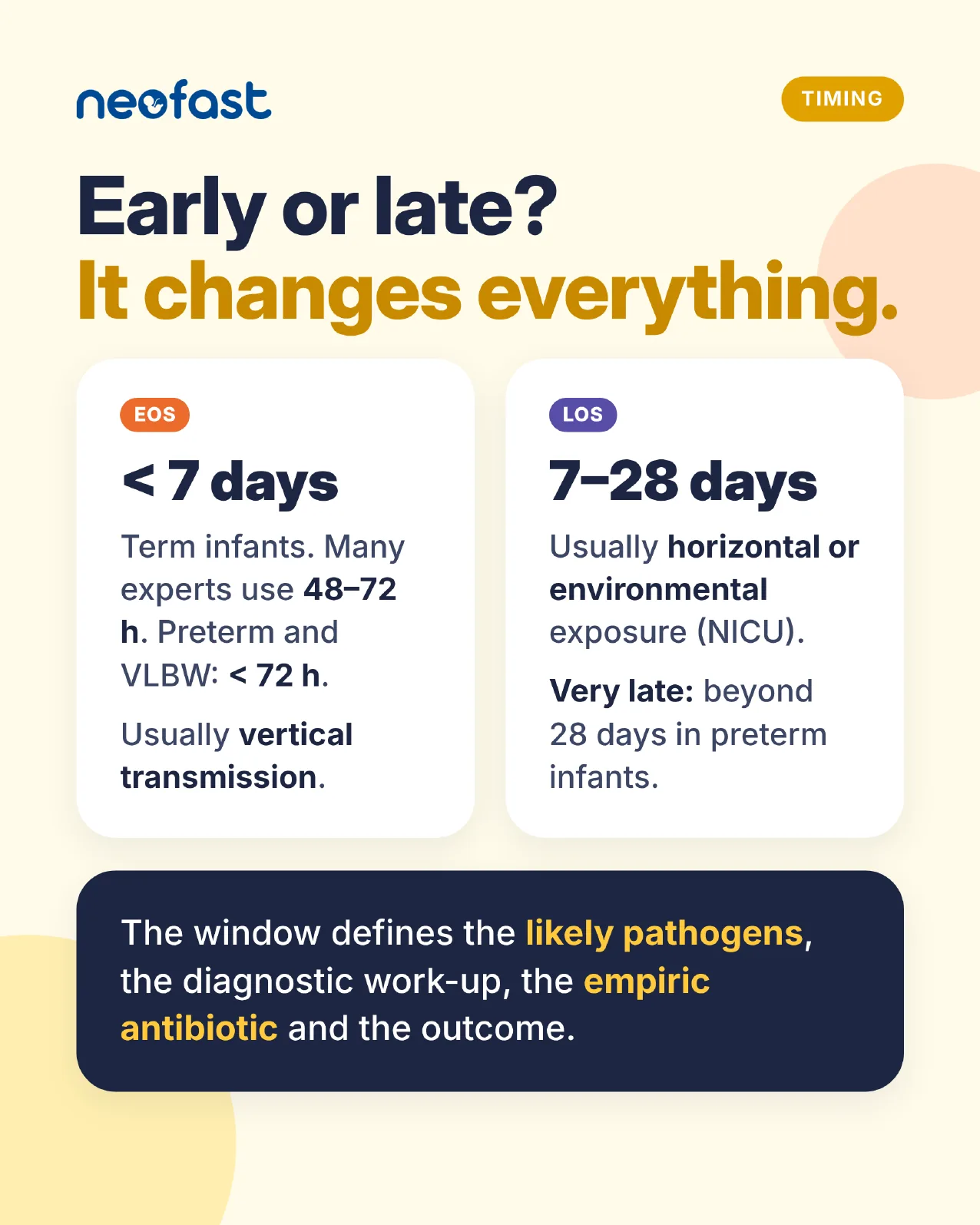
Early or late? It changes everything.
EOS
< 7 days
Term infants. Many experts use 48–72 h. Preterm and VLBW: < 72 h.
Usually vertical transmission.
LOS
7–28 days
Usually horizontal or environmental exposure (NICU).
Very late: beyond 28 days in preterm infants.
The window defines the likely pathogens, the diagnostic work-up, the empiric antibiotic and the outcome.
Subtle signs. Low threshold.
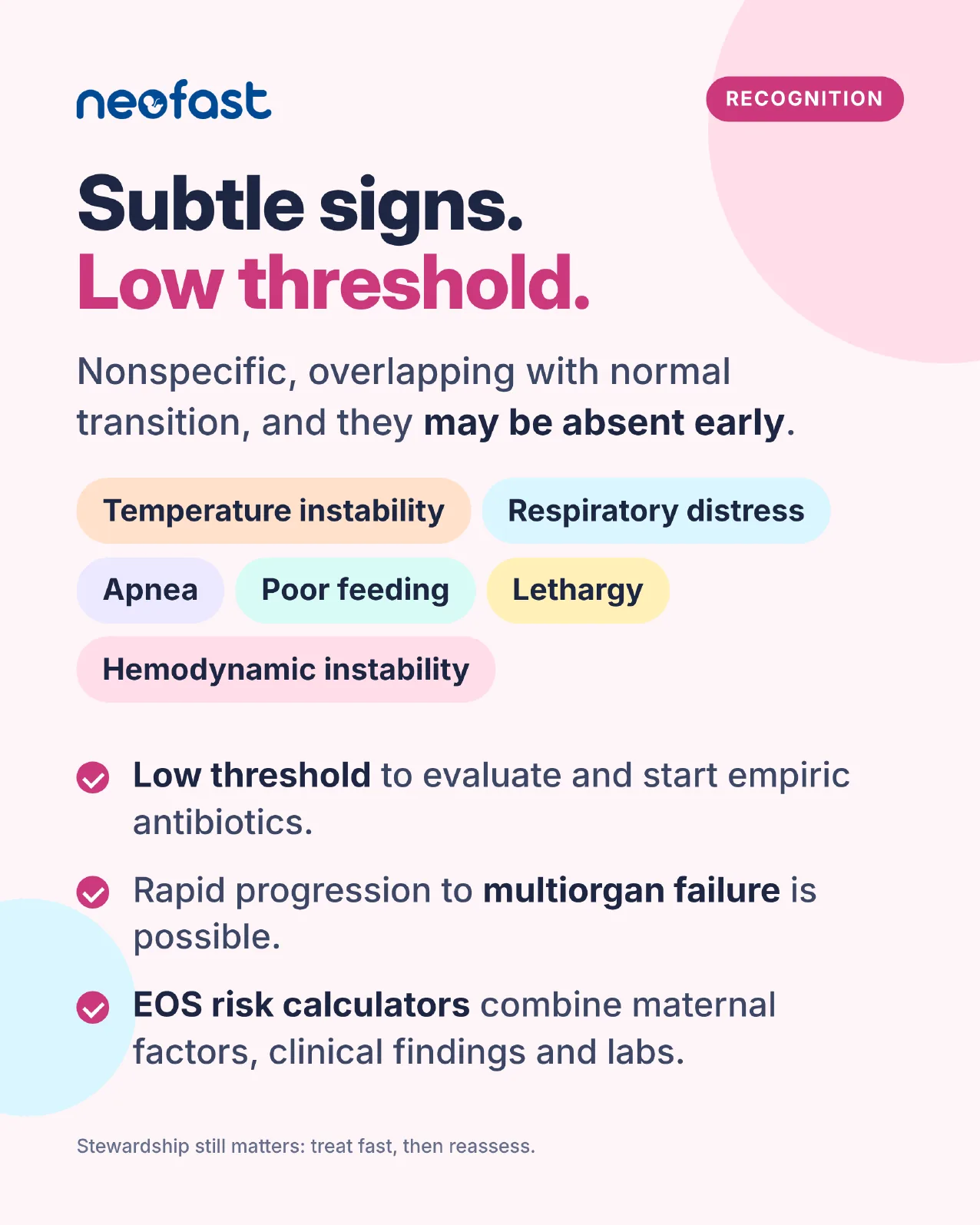
Nonspecific, overlapping with normal transition, and they may be absent early.
- Temperature instability
- Respiratory distress
- Apnea
- Poor feeding
- Lethargy
- Hemodynamic instability
- Low threshold to evaluate and start empiric antibiotics.
- Rapid progression to multiorgan failure is possible.
- EOS risk calculators combine maternal factors, clinical findings and labs.
Stewardship still matters: treat fast, then reassess.
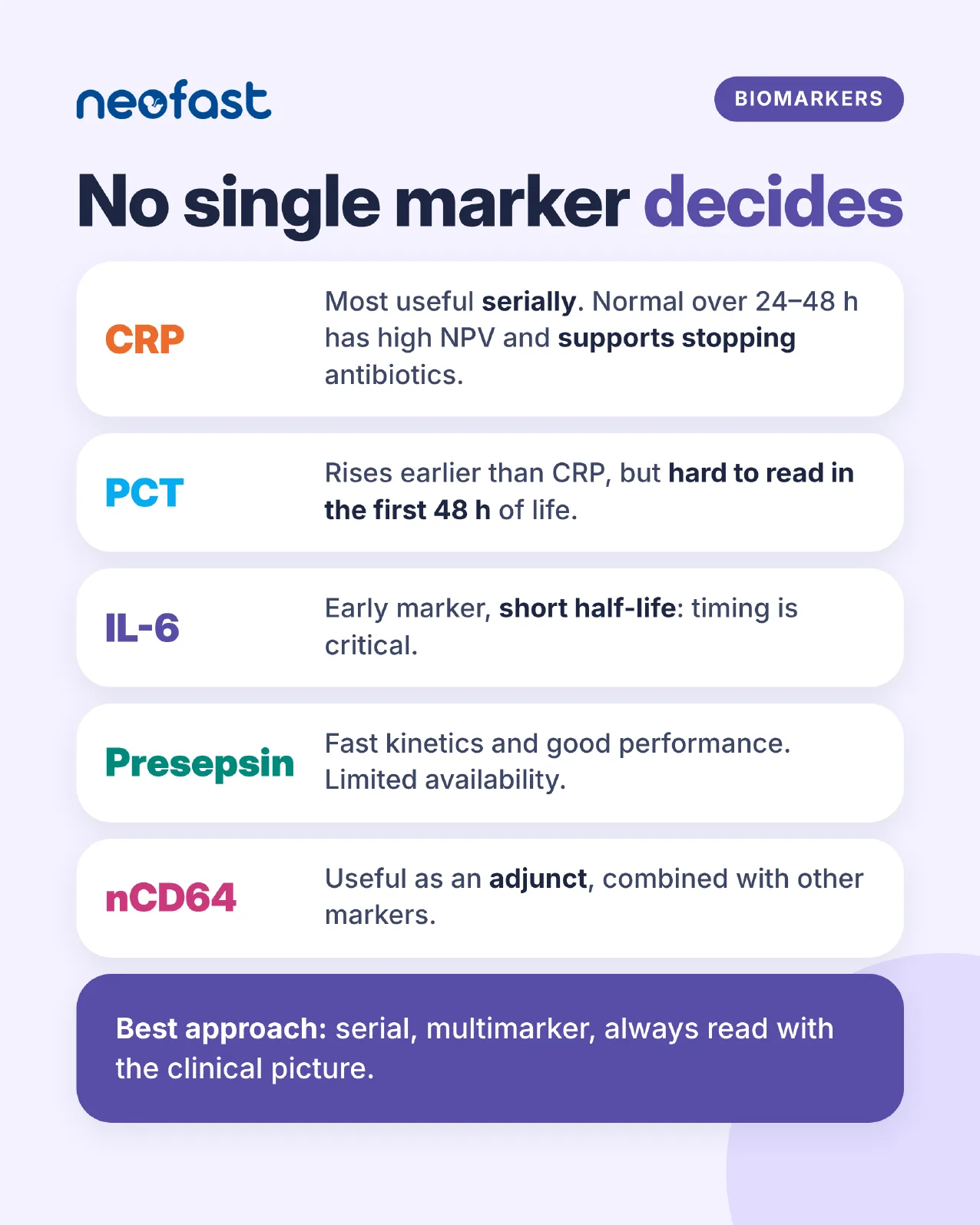
No single marker decides
| Marker | Notes |
|---|---|
| CRP | Most useful serially. Normal over 24–48 h has high NPV and supports stopping antibiotics. |
| PCT | Rises earlier than CRP, but hard to read in the first 48 h of life. |
| IL-6 | Early marker, short half-life: timing is critical. |
| Presepsin | Fast kinetics and good performance. Limited availability. |
| nCD64 | Useful as an adjunct, combined with other markers. |
Best approach: serial, multimarker, always read with the clinical picture.
Antibiotics in Septic Shock

≤1h from the decision to treat. Always.
≤3h
Probable sepsis without shock: brief focused evaluation, start as soon as possible, ideally within 3 h.
Cultures first?
Yes, when feasible. Never delay antibiotics in an unstable neonate to get them.
Right drug, right window
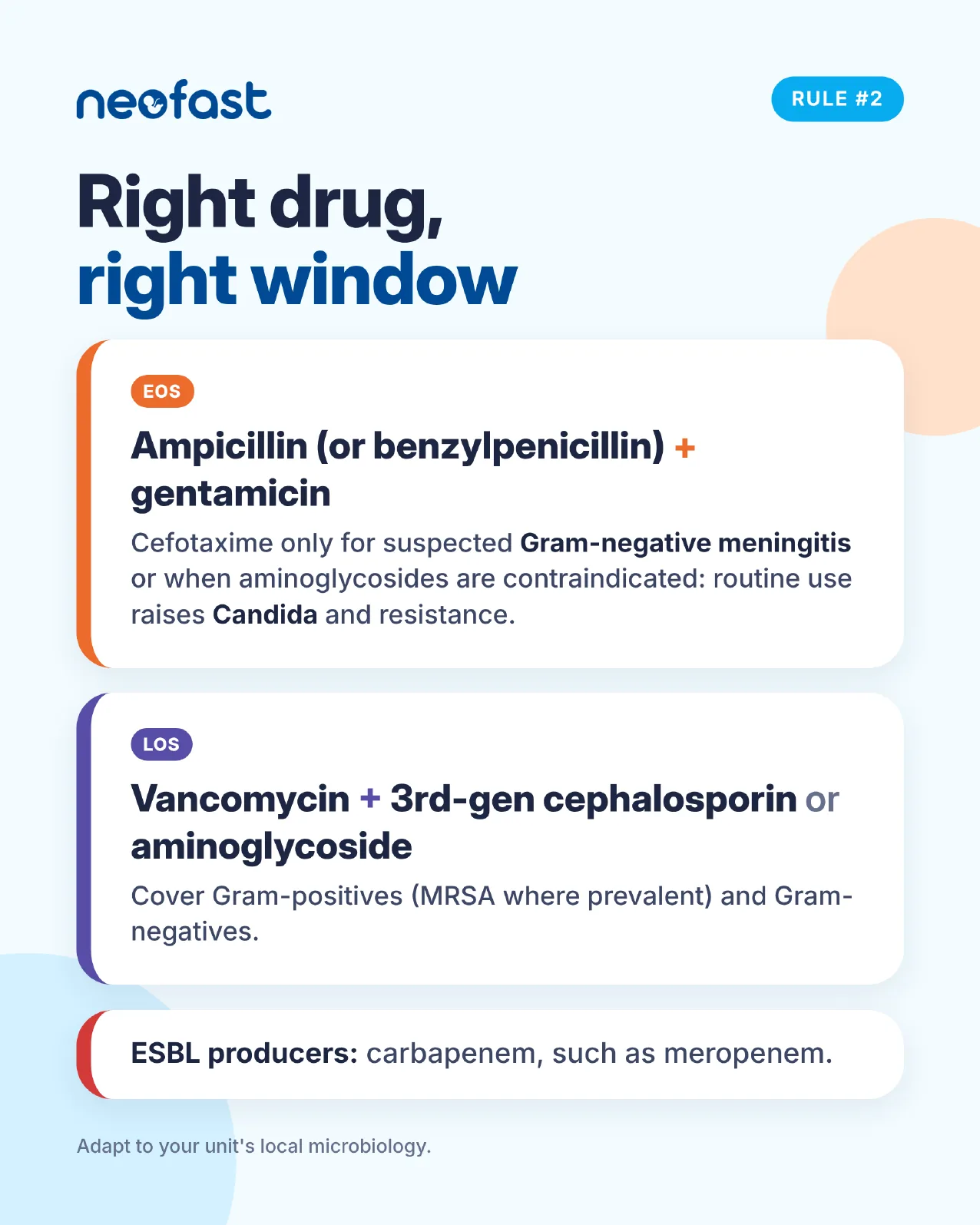
EOS
Ampicillin (or benzylpenicillin) + gentamicin
Cefotaxime only for suspected Gram-negative meningitis or when aminoglycosides are contraindicated: routine use raises Candida and resistance.
LOS
Vancomycin + 3rd-gen cephalosporin or aminoglycoside
Cover Gram-positives (MRSA where prevalent) and Gram-negatives.
ESBL producers: carbapenem, such as meropenem.
Adapt to your unit’s local microbiology.
Gentamicin in seconds
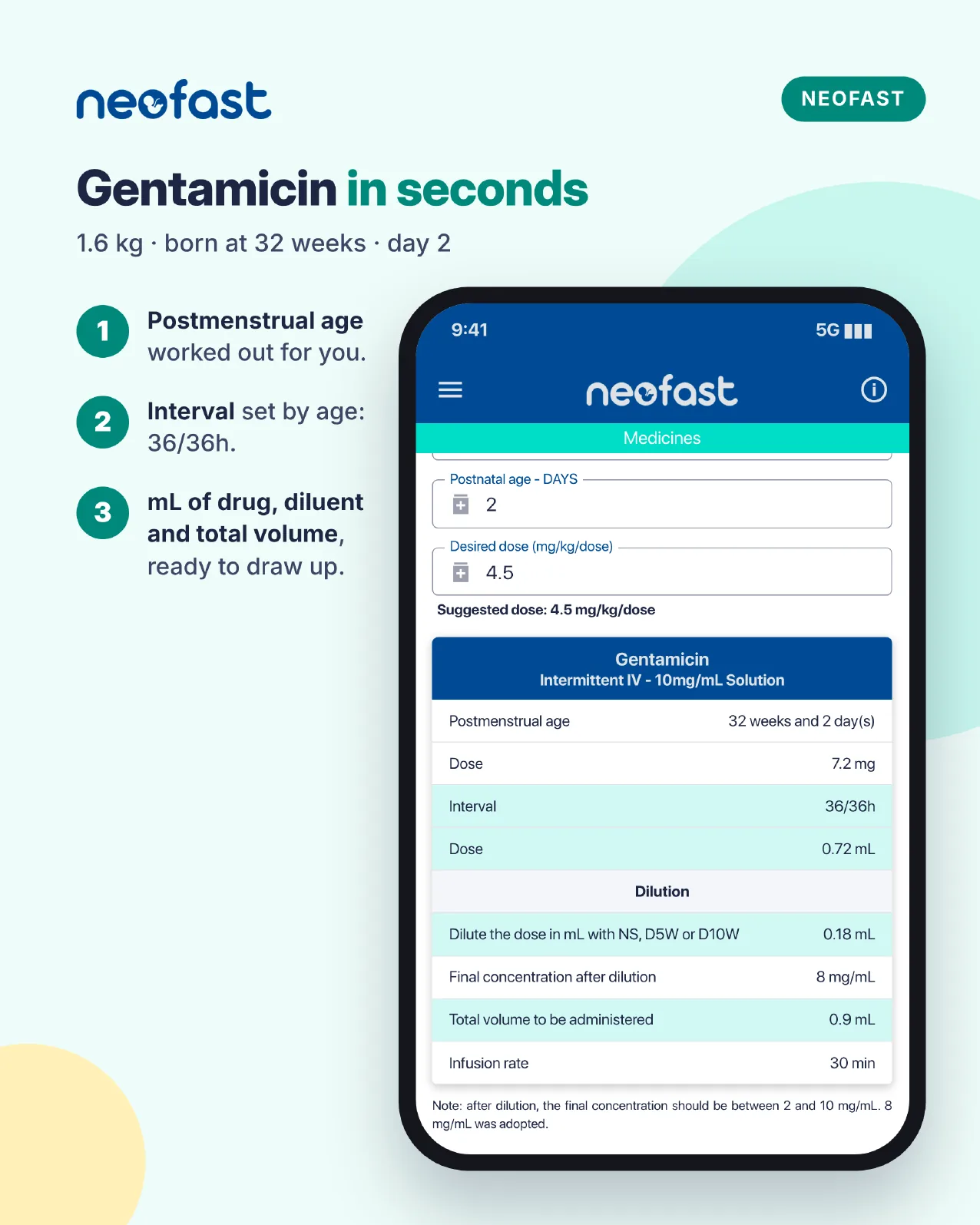
1.6 kg · born at 32 weeks · day 2
- Postmenstrual age worked out for you.
- Interval set by age: 36/36h.
- mL of drug, diluent and total volume, ready to draw up.
Gentamicin — Intermittent IV – 10mg/mL Solution
| Postnatal age – DAYS | 2 |
| Desired dose (mg/kg/dose) | 4.5 |
| Suggested dose | 4.5 mg/kg/dose |
| Postmenstrual age | 32 weeks and 2 day(s) |
| Dose | 7.2 mg |
| Interval | 36/36h |
| Dose | 0.72 mL |
| Dilute the dose in mL with NS, D5W or D10W | 0.18 mL |
| Final concentration after dilution | 8 mg/mL |
| Total volume to be administered | 0.9 mL |
| Infusion rate | 30 min |
Note: after dilution, the final concentration should be between 2 and 10 mg/mL. 8 mg/mL was adopted.
Start broad. Then step down.
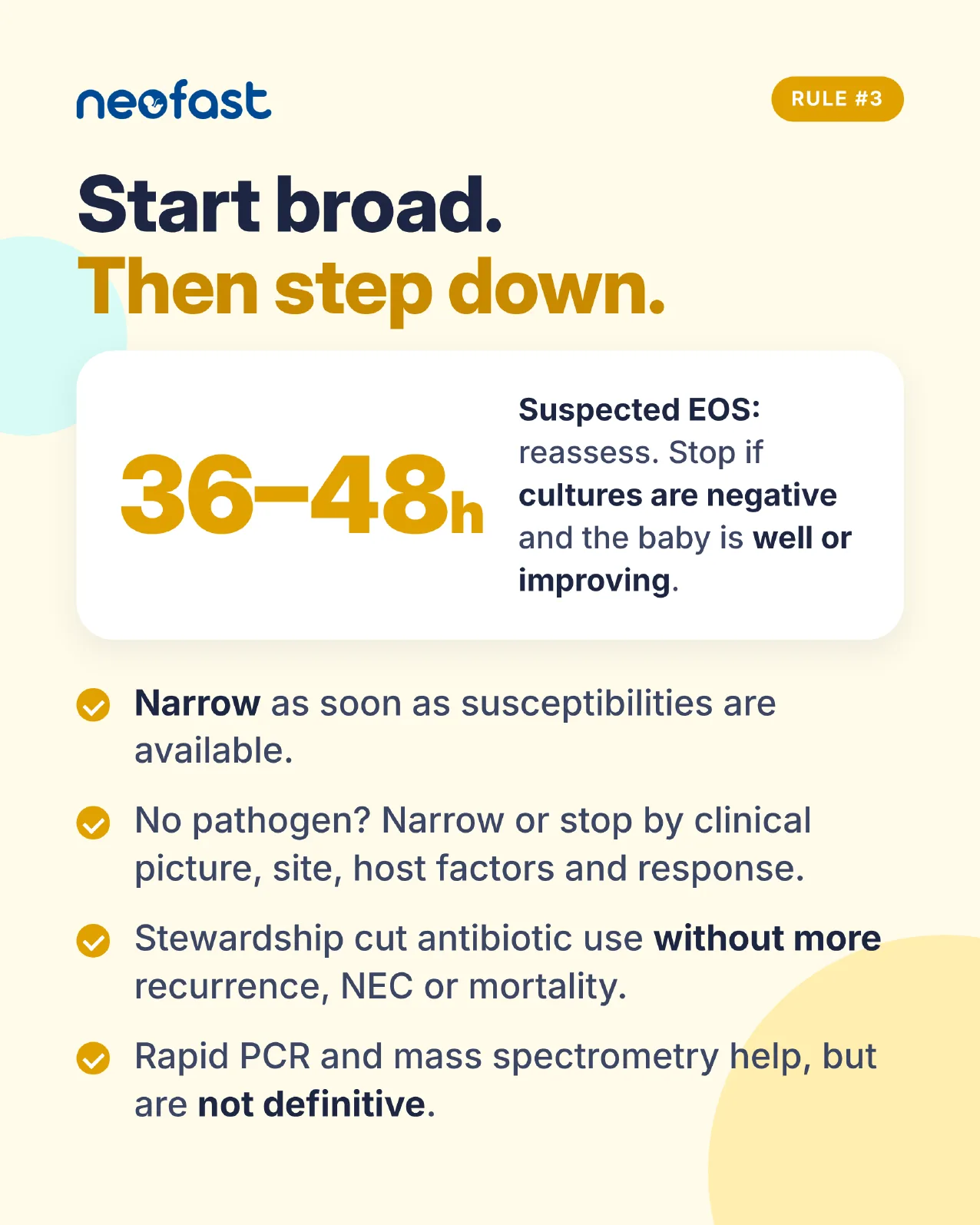
Rule #3
Start broad. Then step down.
36-48h
Suspected EOS: reassess. Stop if cultures are negative and the baby is well or improving.
- Narrow as soon as susceptibilities are available.
- No pathogen? Narrow or stop by clinical picture, site, host factors and response.
- Stewardship cut antibiotic use without more recurrence, NEC or mortality.
- Rapid PCR and mass spectrometry help, but are not definitive.
Fluids: small and reassessed
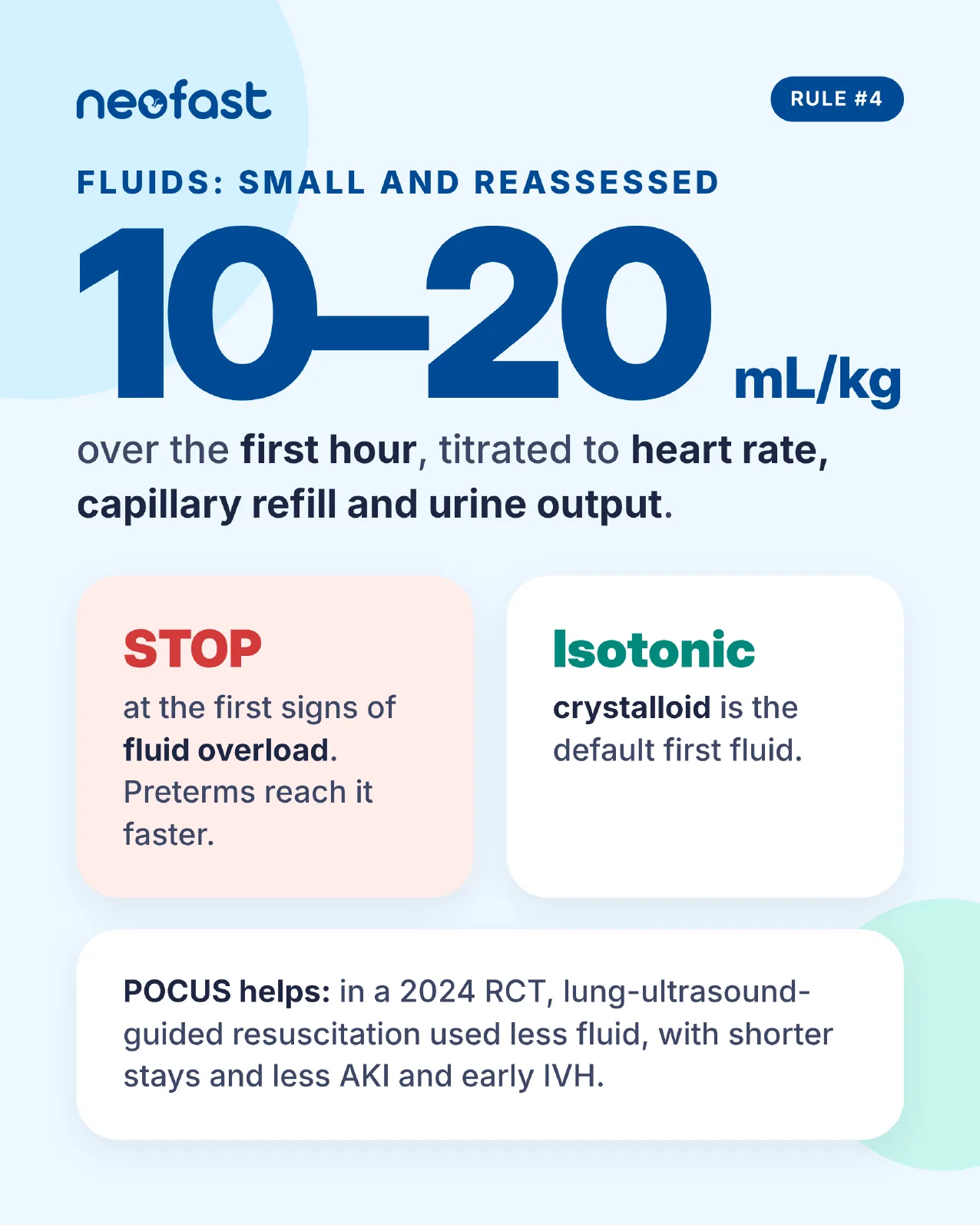
Rule #4
Fluids: small and reassessed
10-20 mL/kg over the first hour, titrated to heart rate, capillary refill and urine output.
STOP
at the first signs of fluid overload. Preterms reach it faster.
Isotonic
crystalloid is the default first fluid.
POCUS helps: in a 2024 RCT, lung-ultrasound-guided resuscitation used less fluid, with shorter stays and less AKI and early IVH.
Shock phenotypes
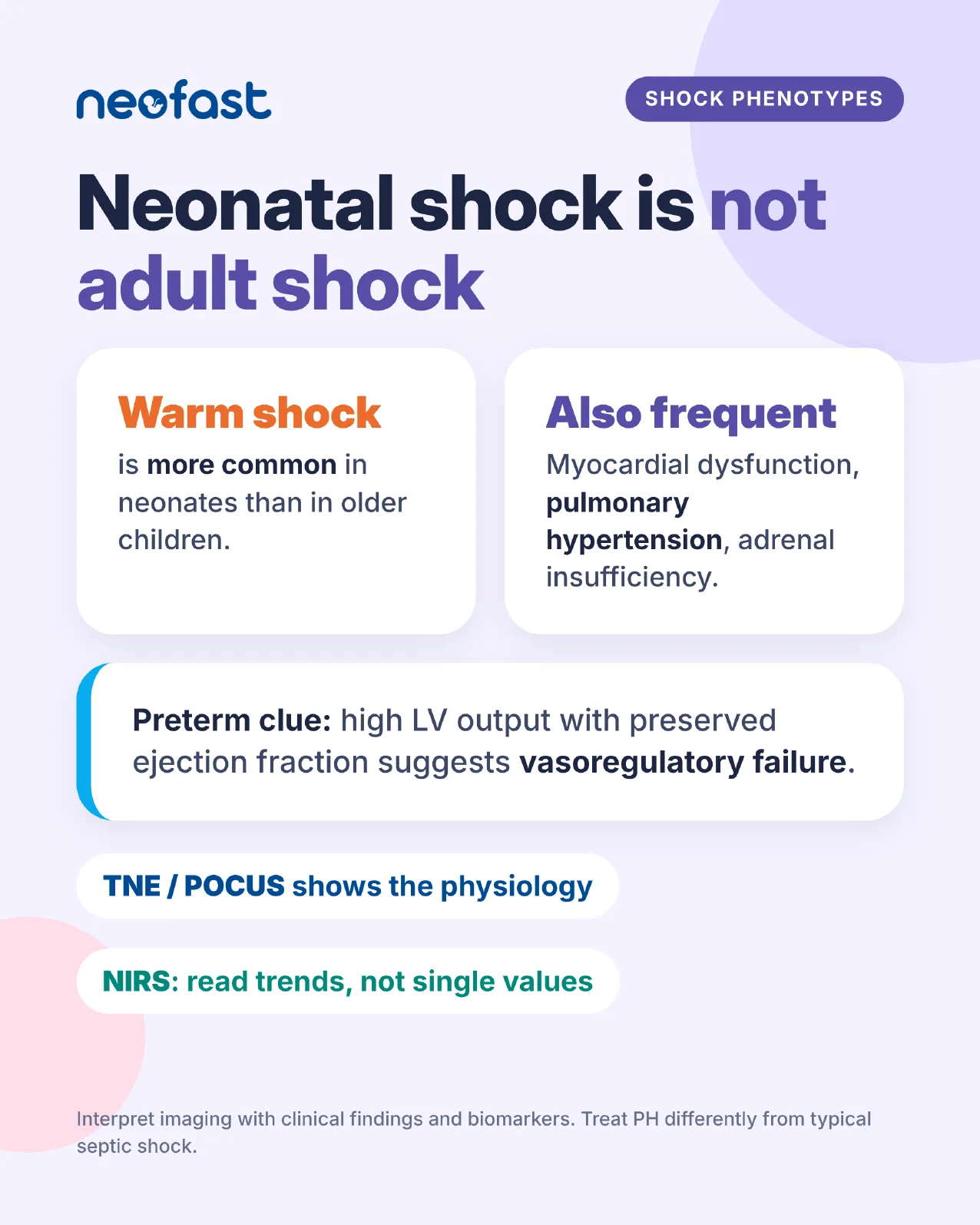
Shock Phenotypes
Neonatal shock is not adult shock
Warm shock
is more common in neonates than in older children.
Also frequent
Myocardial dysfunction, pulmonary hypertension, adrenal insufficiency.
Preterm clue: high LV output with preserved ejection fraction suggests vasoregulatory failure.
- TNE / POCUS shows the physiology
- NIRS: read trends, not single values
Interpret imaging with clinical findings and biomarkers. Treat PH differently from typical septic shock.
Fluids not enough? Start a vasoactive.
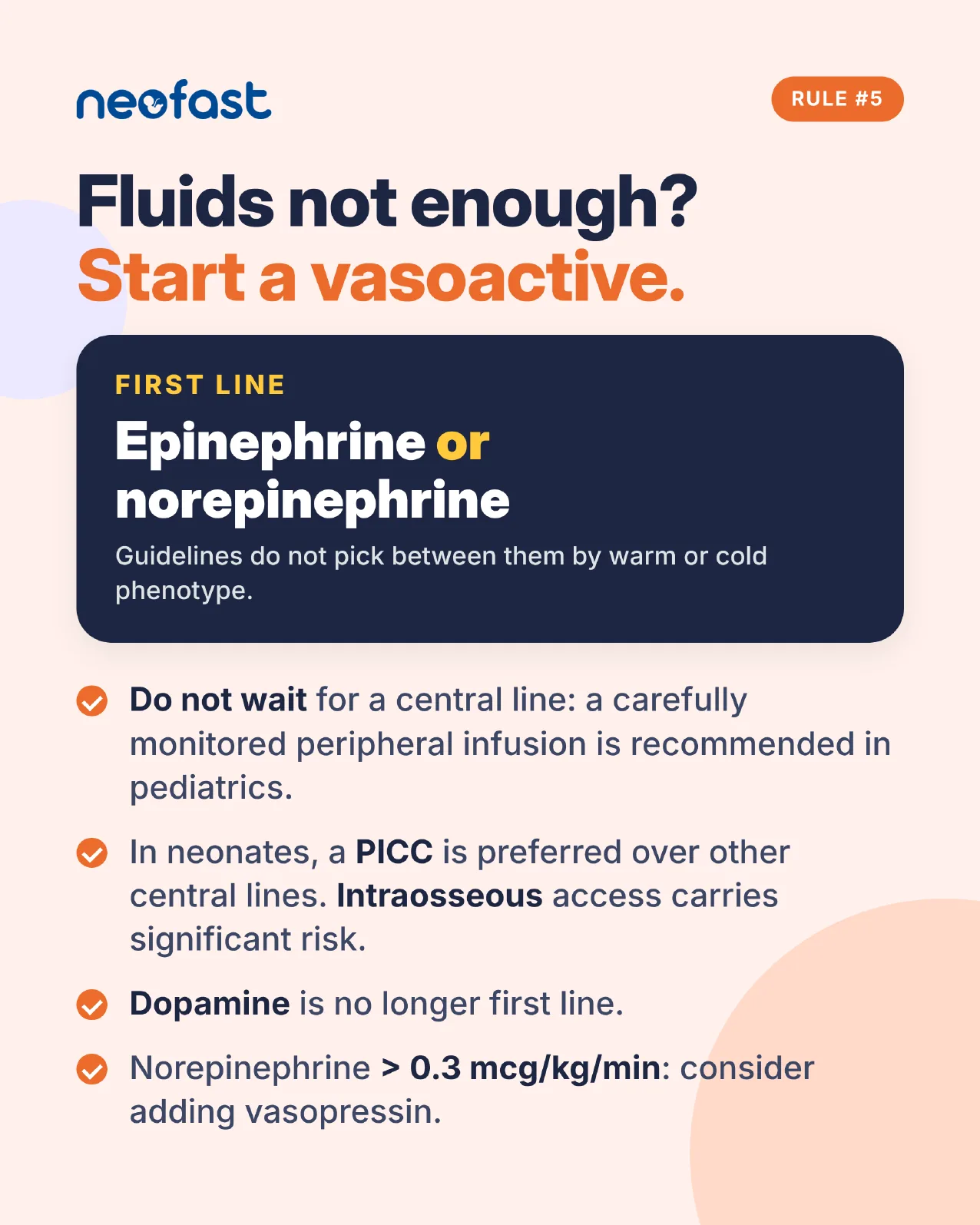
Rule #5
Fluids not enough? Start a vasoactive.
First line
Epinephrine or norepinephrine
Guidelines do not pick between them by warm or cold phenotype.
- Do not wait for a central line: a carefully monitored peripheral infusion is recommended in pediatrics.
- In neonates, a PICC is preferred over other central lines. Intraosseous access carries significant risk.
- Dopamine is no longer first line.
- Norepinephrine > 0.3 mcg/kg/min: consider adding vasopressin.
Vasoactives at a glance
Save This
Vasoactives at a glance
| Drug | Dose | Main Effect | Use in Shock |
|---|---|---|---|
| Epinephrine | 0.05-0.3 mcg/kg/min · up to 1 | ↑ inotropy, ↑ HR, ↑ SVR at higher doses | First line · cold shock (low CO, high SVR) |
| Norepinephrine | 0.05-0.3 mcg/kg/min · up to 1-2 | ↑ SVR, ↑ BP, modest ↑ inotropy | First line · warm shock (high CO, low SVR) |
| Vasopressin | 0.0003-0.002 units/kg/min (0.018-0.12 units/kg/h) | ↑ SVR, ↑ BP, no direct inotropy | Catecholamine-refractory shock; adjunct |
| Milrinone | 0.25-0.75 mcg/kg/min · load 25-50 mcg/kg over 30-60 min | ↑ inotropy, ↓ SVR, ↓ PVR | Cold shock with myocardial dysfunction; adjunct |
| Dopamine | 5-20 mcg/kg/min | Variable, dose-dependent | No longer first line |
Either epinephrine or norepinephrine is an acceptable first choice. Titrate to perfusion and reassess often.
The first-line pair: what to watch
First Line
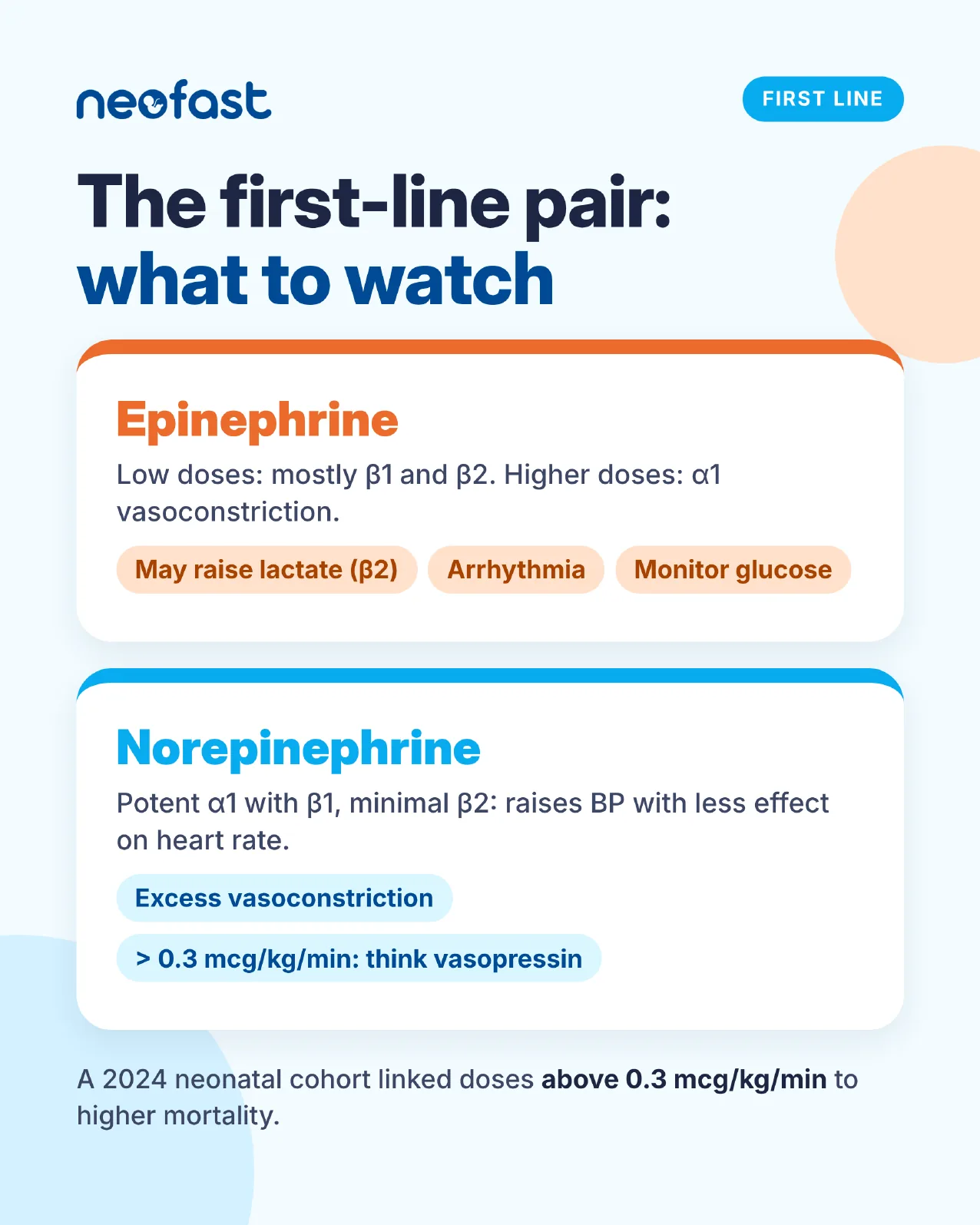
The first-line pair: what to watch
Epinephrine
Low doses: mostly β1 and β2. Higher doses: α1 vasoconstriction.
- May raise lactate (β2)
- Arrhythmia
- Monitor glucose
Norepinephrine
Potent α1 with β1, minimal β2: raises BP with less effect on heart rate.
- Excess vasoconstriction
- > 0.3 mcg/kg/min: think vasopressin
A 2024 neonatal cohort linked doses above 0.3 mcg/kg/min to higher mortality.
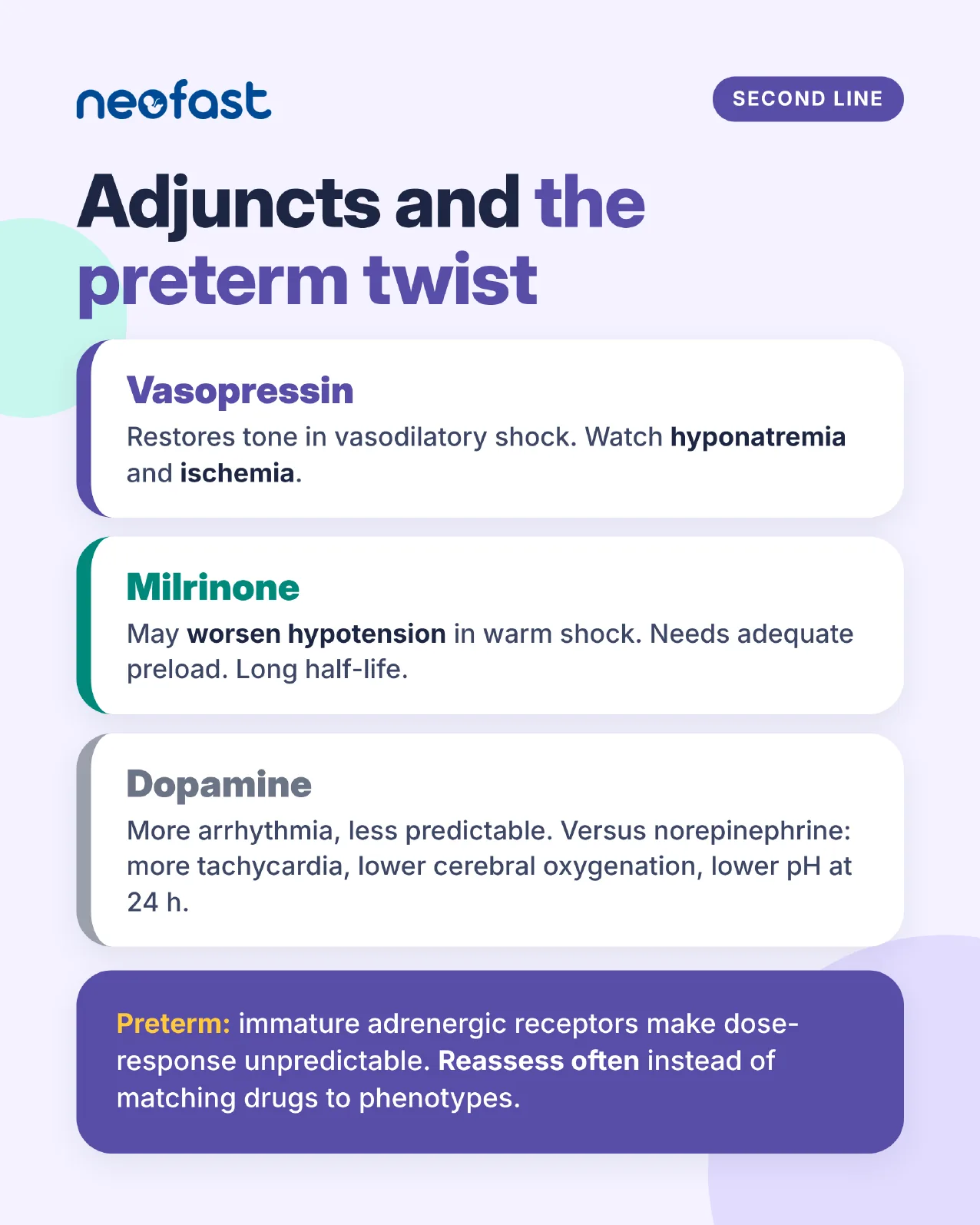
Adjuncts and the preterm twist
Second Line
Adjuncts and the preterm twist
Vasopressin
Restores tone in vasodilatory shock. Watch hyponatremia and ischemia.
Milrinone
May worsen hypotension in warm shock. Needs adequate preload. Long half-life.
Dopamine
More arrhythmia, less predictable. Versus norepinephrine: more tachycardia, lower cerebral oxygenation, lower pH at 24 h.
Preterm: immature adrenergic receptors make dose-response unpredictable. Reassess often instead of matching drugs to phenotypes.
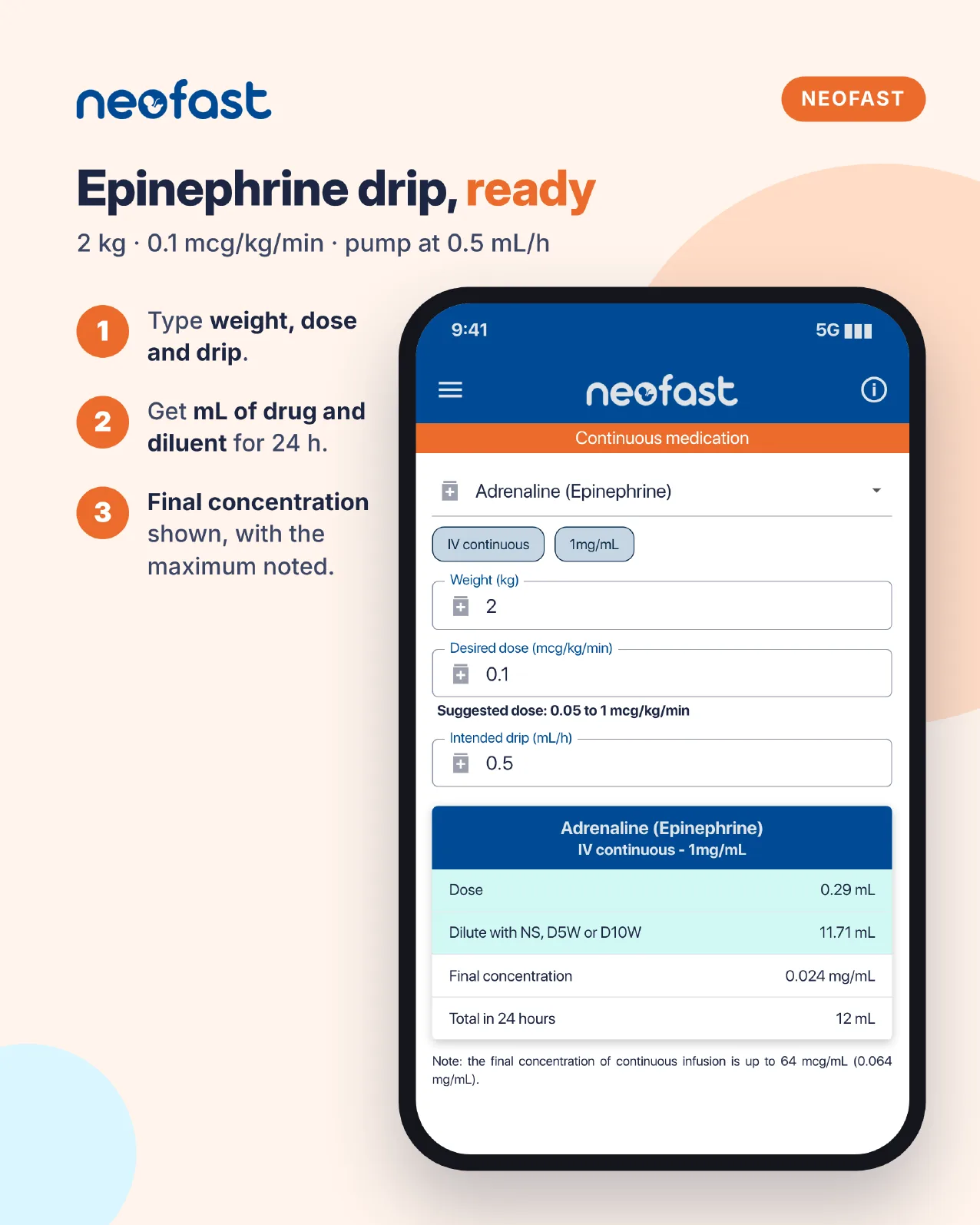
Epinephrine drip, ready
Neofast
Epinephrine drip, ready
2 kg · 0.1 mcg/kg/min · pump at 0.5 mL/h
- Type weight, dose and drip.
- Get mL of drug and diluent for 24 h.
- Final concentration shown, with the maximum noted.
Continuous medication
Adrenaline (Epinephrine)
IV continuous · 1mg/mL
Weight (kg): 2
Desired dose (mcg/kg/min): 0.1
Suggested dose: 0.05 to 1 mcg/kg/min
Intended drip (mL/h): 0.5
| Adrenaline (Epinephrine) IV continuous – 1mg/mL | |
|---|---|
| Dose | 0.29 mL |
| Dilute with NS, D5W or D10W | 11.71 mL |
| Final concentration | 0.024 mg/mL |
| Total in 24 hours | 12 mL |
Note: the final concentration of continuous infusion is up to 64 mcg/mL (0.064 mg/mL).
Norepinephrine, no mental math
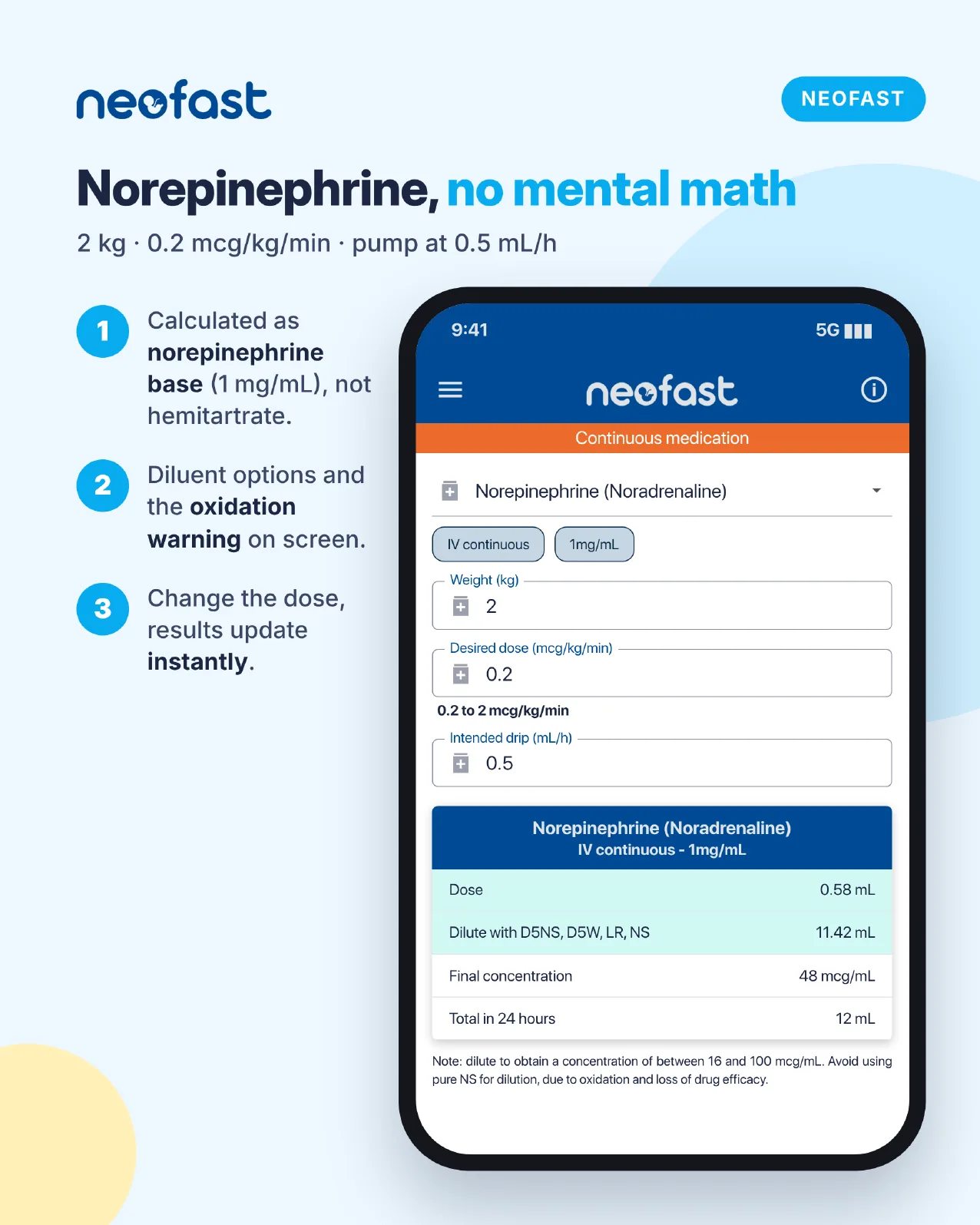
2 kg · 0.2 mcg/kg/min · pump at 0.5 mL/h
- 1. Calculated as norepinephrine base (1 mg/mL), not hemitartrate.
- 2. Diluent options and the oxidation warning on screen.
- 3. Change the dose, results update instantly.
App screen: Continuous medication
Norepinephrine (Noradrenaline)
- IV continuous
- 1 mg/mL
| Field | Value |
|---|---|
| Weight (kg) | 2 |
| Desired dose (mcg/kg/min) | 0.2 |
| Dose range | 0.2 to 2 mcg/kg/min |
| Intended drip (mL/h) | 0.5 |
Norepinephrine (Noradrenaline) — IV continuous – 1mg/mL
| Parameter | Result |
|---|---|
| Dose | 0.58 mL |
| Dilute with D5NS, D5W, LR, NS | 11.42 mL |
| Final concentration | 48 mcg/mL |
| Total in 24 hours | 12 mL |
Note: dilute to obtain a concentration of between 16 and 100 mcg/mL. Avoid using pure NS for dilution, due to oxidation and loss of drug efficacy.
Supportive care that counts
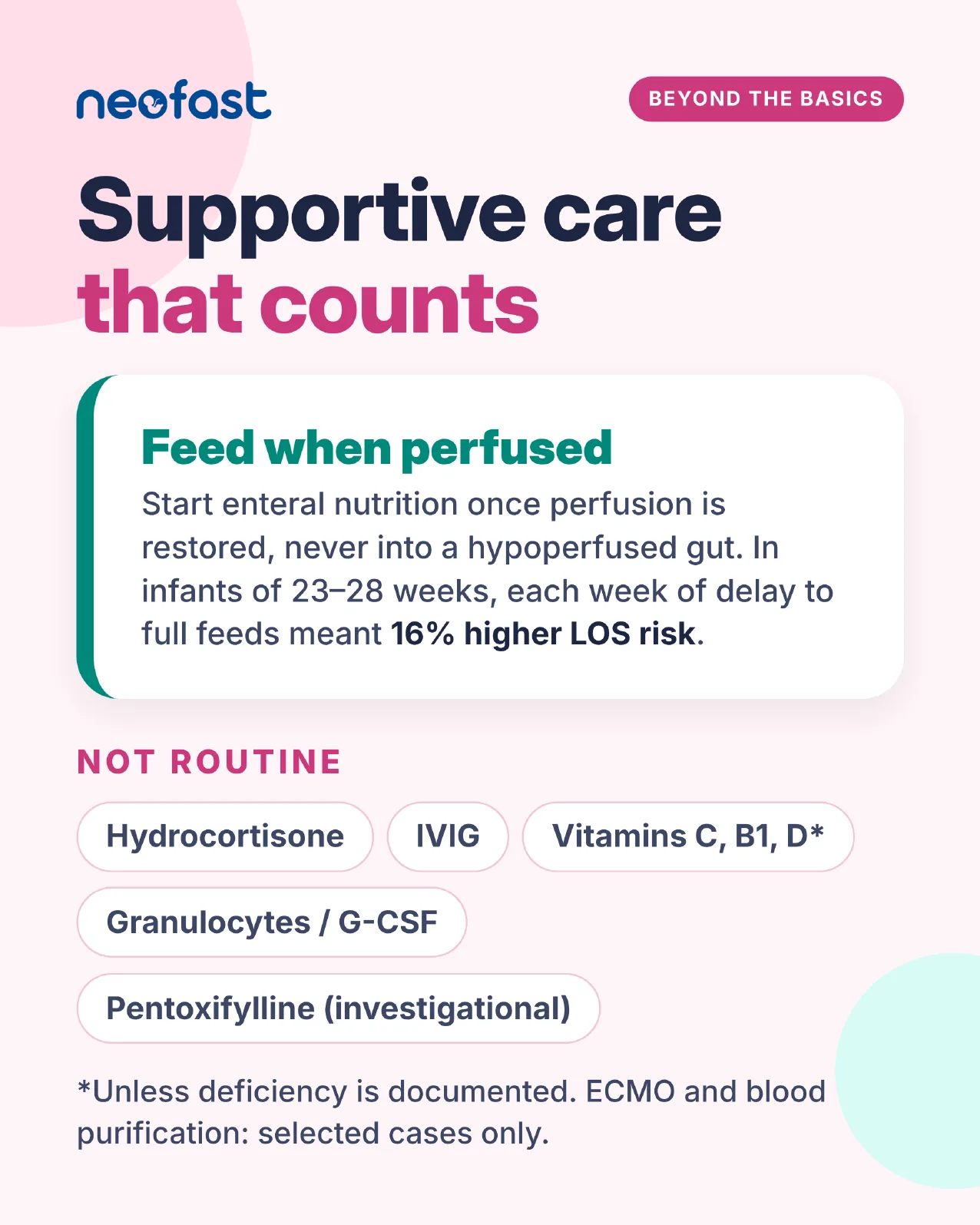
Feed when perfused
Start enteral nutrition once perfusion is restored, never into a hypoperfused gut. In infants of 23–28 weeks, each week of delay to full feeds meant 16% higher LOS risk.
Not routine
- Hydrocortisone
- IVIG
- Vitamins C, B1, D*
- Granulocytes / G-CSF
- Pentoxifylline (investigational)
*Unless deficiency is documented. ECMO and blood purification: selected cases only.
The pathway in one look
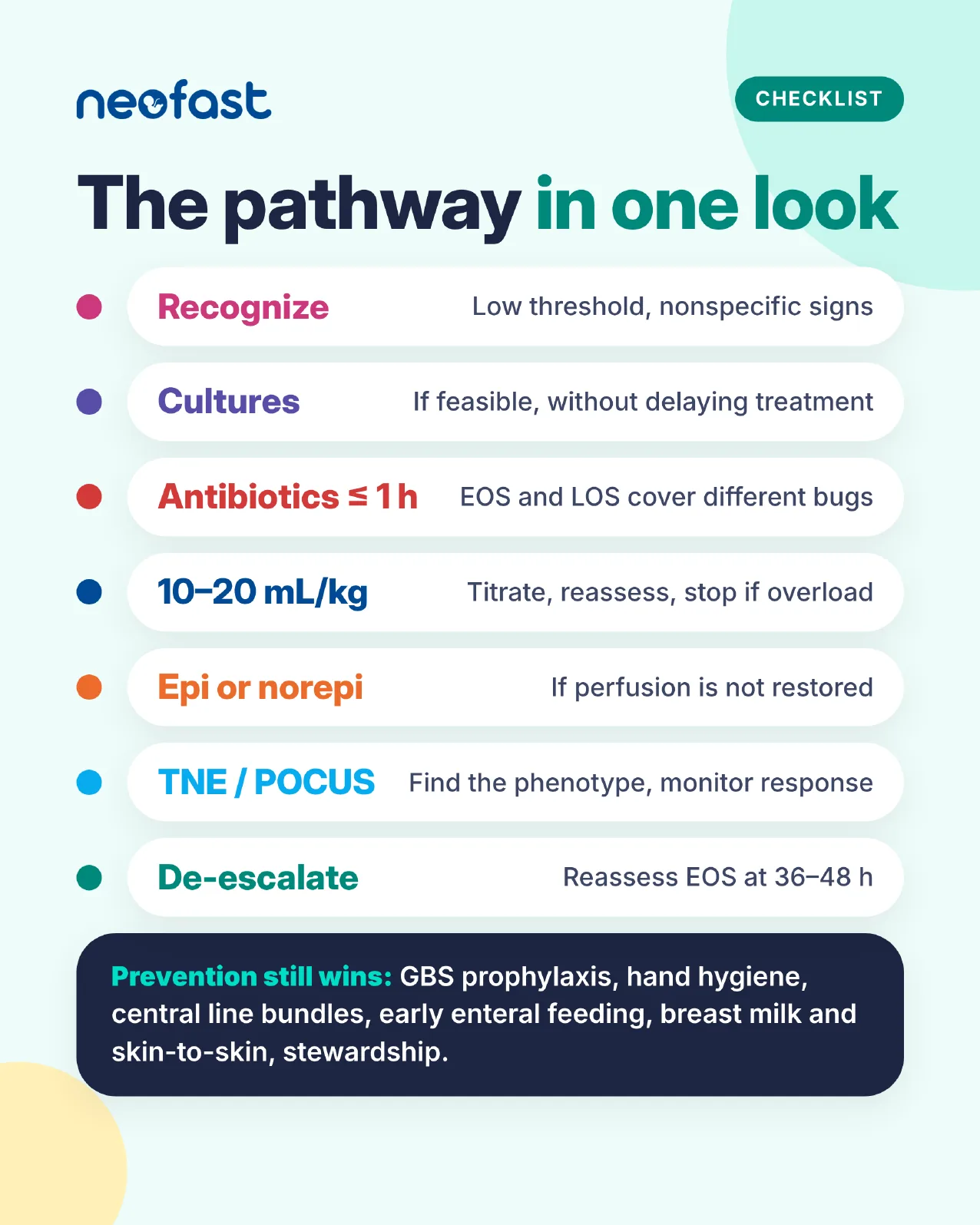
- Recognize — Low threshold, nonspecific signs
- Cultures — If feasible, without delaying treatment
- Antibiotics ≤ 1 h — EOS and LOS cover different bugs
- 10–20 mL/kg — Titrate, reassess, stop if overload
- Epi or norepi — If perfusion is not restored
- TNE / POCUS — Find the phenotype, monitor response
- De-escalate — Reassess EOS at 36–48 h
Prevention still wins: GBS prophylaxis, hand hygiene, central line bundles, early enteral feeding, breast milk and skin-to-skin, stewardship.
Made for neonatology. Built with you.

Made for neonatology. Built with you.
NeoFast is a calculator app built exclusively for neonatal care. Every dose in this post, calculated in seconds.
Help it grow
- ★ Rate it on the store
- ↗ Share with your NICU
- ⚑ Save this post
- ✉ Send us ideas
neofastapp.com
iOS and Android
Educational content. Doses from Orlandin et al., 2026; always check your unit’s protocol.
Frequently asked questions
What is the time target for starting antibiotics in neonatal septic shock?
Antibiotics should be given within 1 hour from the decision to treat in septic shock. For probable sepsis without shock, a brief focused evaluation is done and antibiotics started as soon as possible, ideally within 3 hours. Cultures should be obtained first only when feasible and must never delay antibiotics in an unstable neonate.
What is the empiric antibiotic regimen for early-onset versus late-onset neonatal sepsis?
For early-onset sepsis (EOS, <7 days in term infants, often defined as 48-72h, or <72h in preterm/VLBW), use ampicillin (or benzylpenicillin) plus gentamicin; cefotaxime is reserved for suspected Gram-negative meningitis or when aminoglycosides are contraindicated. For late-onset sepsis (LOS, 7-28 days), use vancomycin plus a 3rd-generation cephalosporin or aminoglycoside, with a carbapenem such as meropenem for ESBL producers.
How much fluid should be given in neonatal septic shock and what is the stopping point?
Give 10-20 mL/kg of isotonic crystalloid over the first hour, titrated to heart rate, capillary refill and urine output. Stop at the first signs of fluid overload, noting that preterm infants reach overload faster. Lung-ultrasound-guided (POCUS) resuscitation in a 2024 RCT used less fluid with shorter stays and less AKI and early IVH.
Which vasoactive drug should be used first in neonatal septic shock, and when should vasopressin be added?
Either epinephrine or norepinephrine (0.05-0.3 mcg/kg/min, up to 1-2) is an acceptable first-line choice; guidelines do not pick between them by warm or cold phenotype. Dopamine is no longer first line. If norepinephrine exceeds 0.3 mcg/kg/min, consider adding vasopressin (0.0003-0.002 units/kg/min); a 2024 neonatal cohort linked doses above 0.3 mcg/kg/min to higher mortality.
When should empiric antibiotics be stopped or narrowed in suspected early-onset sepsis?
Reassess at 36-48 hours and stop antibiotics if cultures are negative and the baby is well or improving. Narrow therapy as soon as susceptibilities are available; if no pathogen is identified, narrow or stop based on the clinical picture, site, host factors and response. CRP measured serially has high negative predictive value over 24-48 hours and supports stopping antibiotics.