Key takeaways
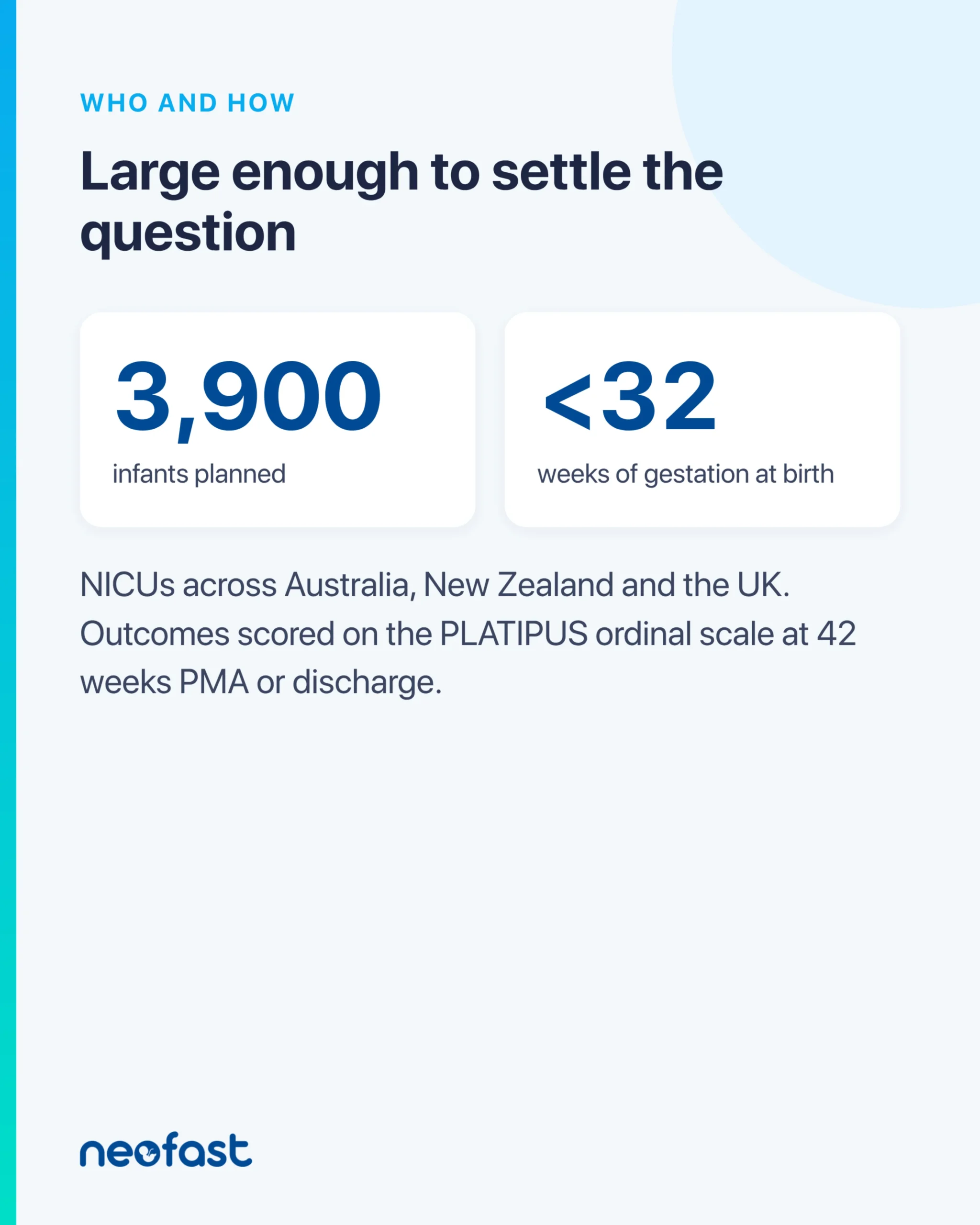
- The BabyCCINO trial is randomizing 3,900 infants born before 32 weeks of gestation to three caffeine citrate dosing regimens across NICUs in Australia, New Zealand and the UK.
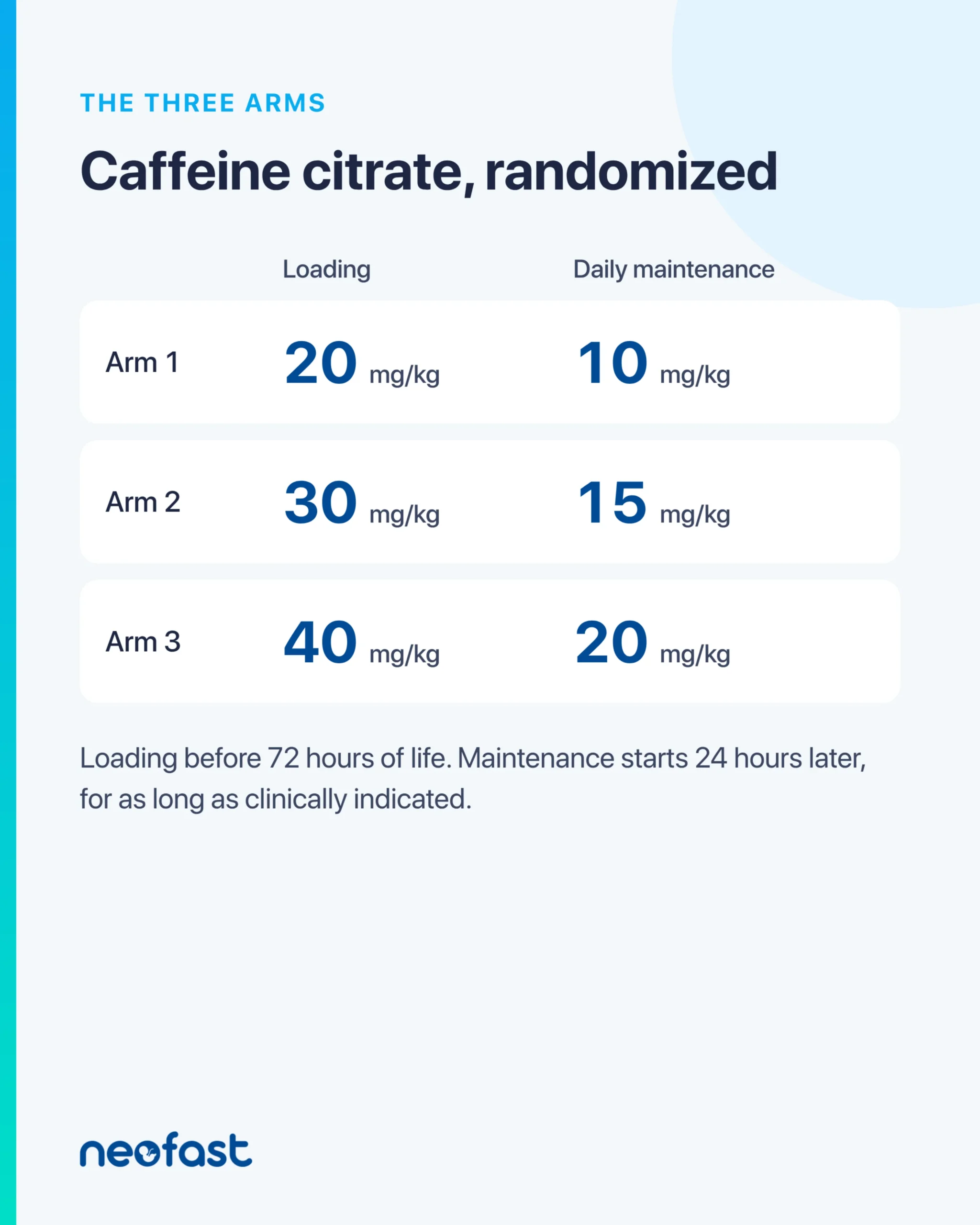
- The three arms compare loading and maintenance doses of 20 mg/kg loading with 10 mg/kg maintenance, 30 mg/kg loading with 15 mg/kg maintenance, and 40 mg/kg loading with 20 mg/kg maintenance.
- Loading doses are given before 72 hours of life, with maintenance dosing starting 24 hours later and continuing for as long as clinically indicated.
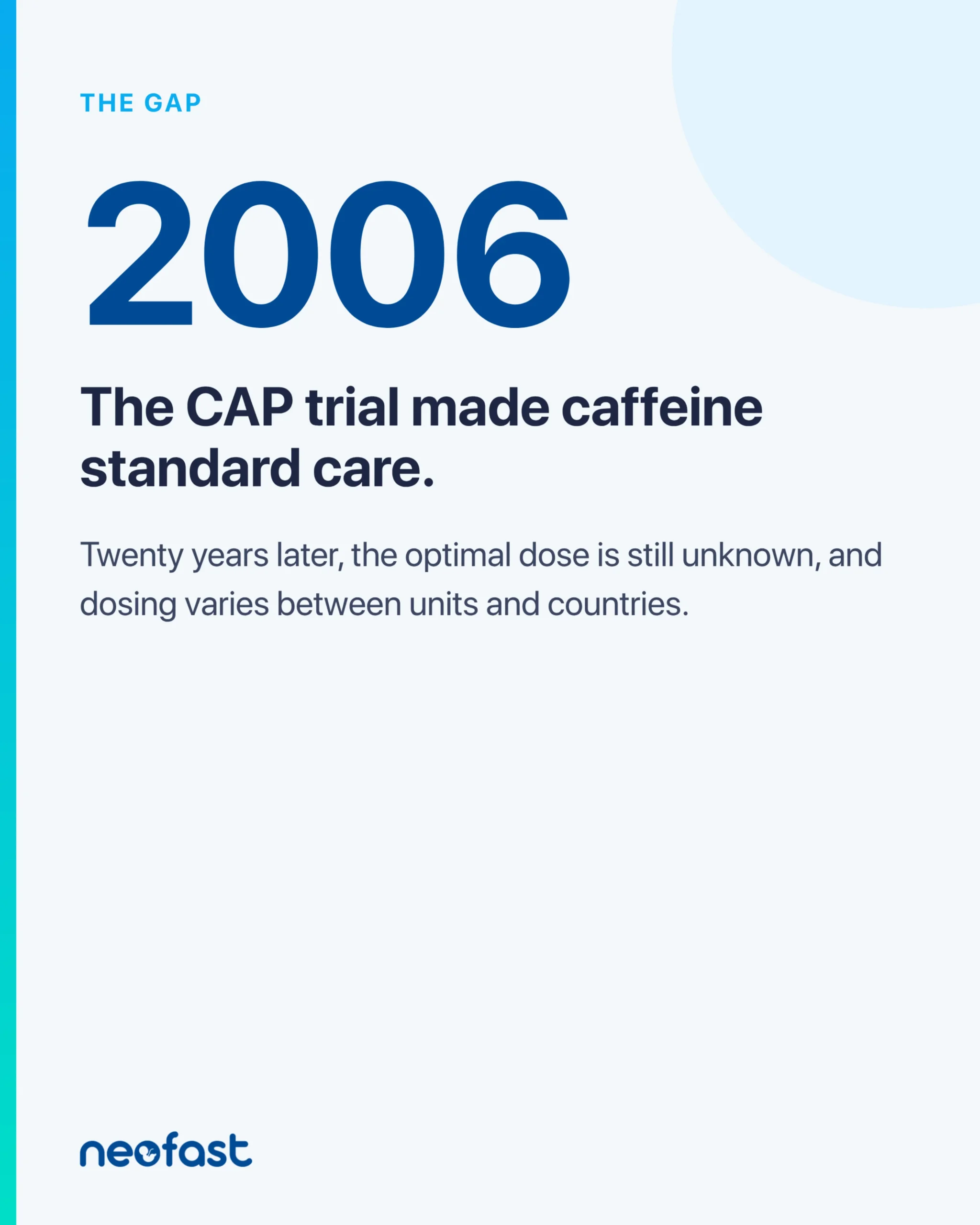
- Although the 2006 CAP trial established caffeine as standard care for apnea of prematurity, the optimal dose remains unknown twenty years later and varies between units and countries.
- Outcomes in BabyCCINO are scored using the PLATIPUS ordinal scale at 42 weeks postmenstrual age or at discharge.
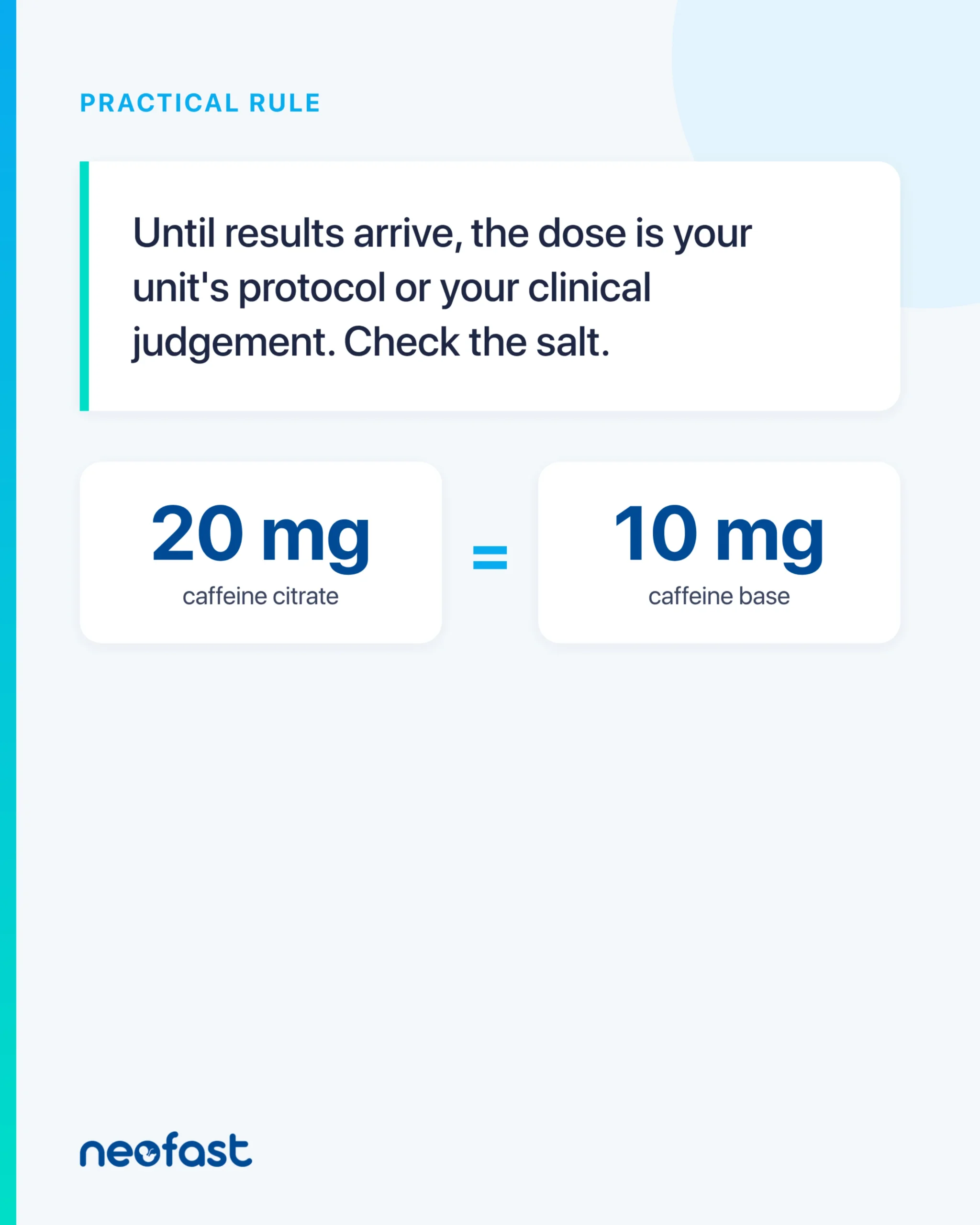
- When converting caffeine citrate to caffeine base, 20 mg of caffeine citrate equals 10 mg of caffeine base.
References
- Caffeine Citrate to Improve Neonatal Outcomes (BabyCCINO). ClinicalTrials.gov NCT06972849. University of Melbourne; 2026.
- Schmidt B, Roberts RS, Davis P, et al. Caffeine therapy for apnea of prematurity. N Engl J Med. 2006;354(20):2112–2121.
- Caffeine citrate: drug information. In: NeoFast app, Medicines. Micromedex; Lexicomp Pediatric Dosage Handbook, 30th ed., 2023.
APNEA OF PREMATURITY · OCTOBER 2026
How much caffeine? A 3,900-baby trial will now answer it.
BabyCCINO compares three caffeine citrate regimens in infants born before 32 weeks.
The Gap
The Gap
2006
The CAP trial made caffeine standard care.
Twenty years later, the optimal dose is still unknown, and dosing varies between units and countries.
The Three Arms
The Three Arms
Caffeine citrate, randomized
| Loading | Daily maintenance | |
|---|---|---|
| Arm 1 | 20 mg/kg | 10 mg/kg |
| Arm 2 | 30 mg/kg | 15 mg/kg |
| Arm 3 | 40 mg/kg | 20 mg/kg |
Loading before 72 hours of life. Maintenance starts 24 hours later, for as long as clinically indicated.
Who and How
Who and How
Large enough to settle the question
| 3,900 | infants planned |
| <32 | weeks of gestation at birth |
NICUs across Australia, New Zealand and the UK. Outcomes scored on the PLATIPUS ordinal scale at 42 weeks PMA or discharge.
Practical Rule
Practical Rule
Until results arrive, the dose is your unit’s protocol or your clinical judgement. Check the salt.
| 20 mg | caffeine citrate |
| = | |
| 10 mg | caffeine base |
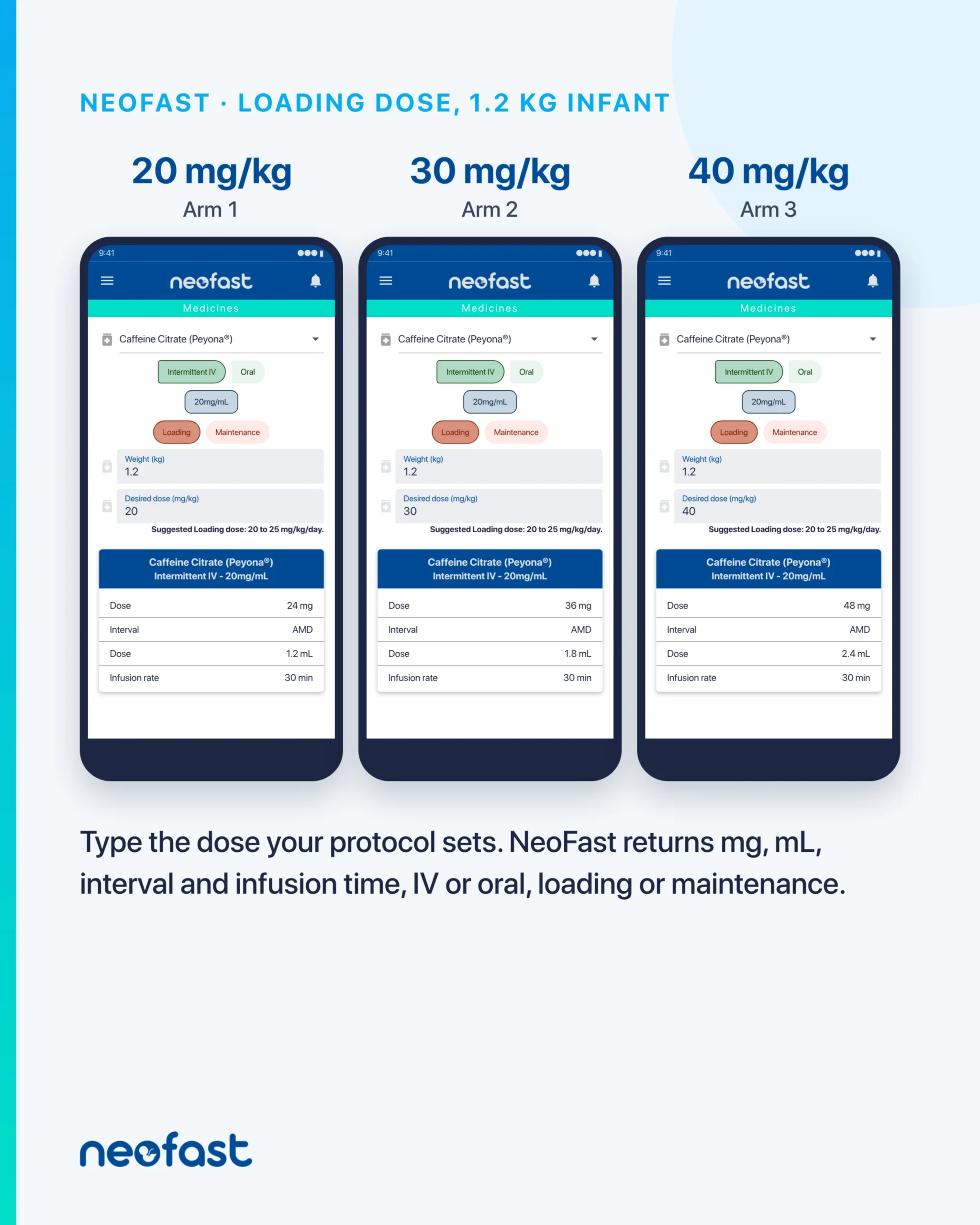
NeoFast · Loading Dose, 1.2 kg Infant
NeoFast · Loading Dose, 1.2 kg Infant
| 20 mg/kg (Arm 1) | 30 mg/kg (Arm 2) | 40 mg/kg (Arm 3) |
|---|---|---|
| Caffeine Citrate (Peyona®) Intermittent IV – 20mg/mL Dose: 24 mg Interval: AMD Dose: 1.2 mL Infusion rate: 30 min | Caffeine Citrate (Peyona®) Intermittent IV – 20mg/mL Dose: 36 mg Interval: AMD Dose: 1.8 mL Infusion rate: 30 min | Caffeine Citrate (Peyona®) Intermittent IV – 20mg/mL Dose: 48 mg Interval: AMD Dose: 2.4 mL Infusion rate: 30 min |
Weight (kg): 1.2 — Desired dose (mg/kg) entered per arm: 20, 30, 40. Suggested Loading dose: 20 to 25 mg/kg/day.
Type the dose your protocol sets. NeoFast returns mg, mL, interval and infusion time, IV or oral, loading or maintenance.

neofast
Neonatal calculations with the source cited on every screen.
App Store · Google Play · neofastapp.com
The app calculates. The prescriber decides.
Frequently asked questions
What is the BabyCCINO trial studying?
BabyCCINO is a trial comparing three caffeine citrate dosing regimens (loading and maintenance) for apnea of prematurity in 3,900 infants born before 32 weeks of gestation, across NICUs in Australia, New Zealand and the UK.
What are the three caffeine citrate dosing arms in BabyCCINO?
Arm 1 is 20 mg/kg loading with 10 mg/kg daily maintenance, Arm 2 is 30 mg/kg loading with 15 mg/kg daily maintenance, and Arm 3 is 40 mg/kg loading with 20 mg/kg daily maintenance.
When is the loading dose given and when does maintenance start?
The loading dose is given before 72 hours of life, and maintenance dosing starts 24 hours after the loading dose, continuing for as long as clinically indicated.
How is caffeine citrate dose related to caffeine base?
20 mg of caffeine citrate is equivalent to 10 mg of caffeine base, so the salt form must be checked when calculating doses.
What outcome scale is used in the BabyCCINO trial?
Outcomes are scored using the PLATIPUS ordinal scale, assessed at 42 weeks postmenstrual age or at discharge.
What should clinicians use for caffeine dosing until BabyCCINO results are available?
Until trial results arrive, clinicians should follow their unit’s protocol or clinical judgement, while checking whether the dose refers to caffeine citrate or caffeine base.