Key takeaways
- In RDS, HFOV initial MAP should be set 1–2 cmH2O above the conventional MAP, ranging from 8–10 cmH2O in infants under 1000g to 11–13 cmH2O in infants over 2000g, with an Open Lung Strategy using HFOV or SIMV-VG to avoid volutrauma and atelectrauma.
- In Meconium Aspiration Syndrome, ventilator mode must match the dominant pathology: low PEEP (4–5 cmH2O) with short Ti (0.30s) for airway obstruction/air trapping versus higher PEEP (5–8 cmH2O) for recruitment in parenchymal disease, targeting SpO2 92–98% in PPHN.
- In Congenital Diaphragmatic Hernia, a Gentle Ventilation Strategy targets low tidal volumes (4.0–5.5 mL/kg on conventional ventilation), pre-ductal SpO2 >85% in the first hour rising to 88–98% after stabilization, and permissive hypercapnia with PaCO2 45–65 mmHg.
- Severe chronic BPD requires low respiratory rates (11–30 bpm), long inspiratory times (Ti 0.5–1.0 s), and high PEEP (8.0–14.0 cmH2O) to stent open malacic airways and permit compensated respiratory acidosis with PaCO2 50–65 mmHg.
- HFOV uses active expiration via piston/diaphragm at 3–15 Hz for diffuse homogeneous lung disease, whereas HFJV relies on passive expiration with a short 0.02s Ti at 240–660 cpm, making it preferred for air leak syndromes like PIE and pneumothorax.
References
- Keszler M, Pillow JJ, Courtney SE. High-Frequency Ventilation. In: Goldsmith JP, Karotkin EH, Keszler M, Gautham KS, eds. Goldsmith’s Assisted Ventilation of the Neonate: An Evidence-Based Approach to Newborn Respiratory Care. 7th ed. Elsevier; 2022: Chapter 24.
- Yoder BA, Grubb PH. Mechanical Ventilation: Disease-Specific Strategies. In: Goldsmith JP, Karotkin EH, Keszler M, Gautham KS, eds. Goldsmith’s Assisted Ventilation of the Neonate: An Evidence-Based Approach to Newborn Respiratory Care. 7th ed. Elsevier; 2022: Chapter 25 (pp. 288–302).
- Goldsmith’s Assisted Ventilation of the Neonate (7th Edition).
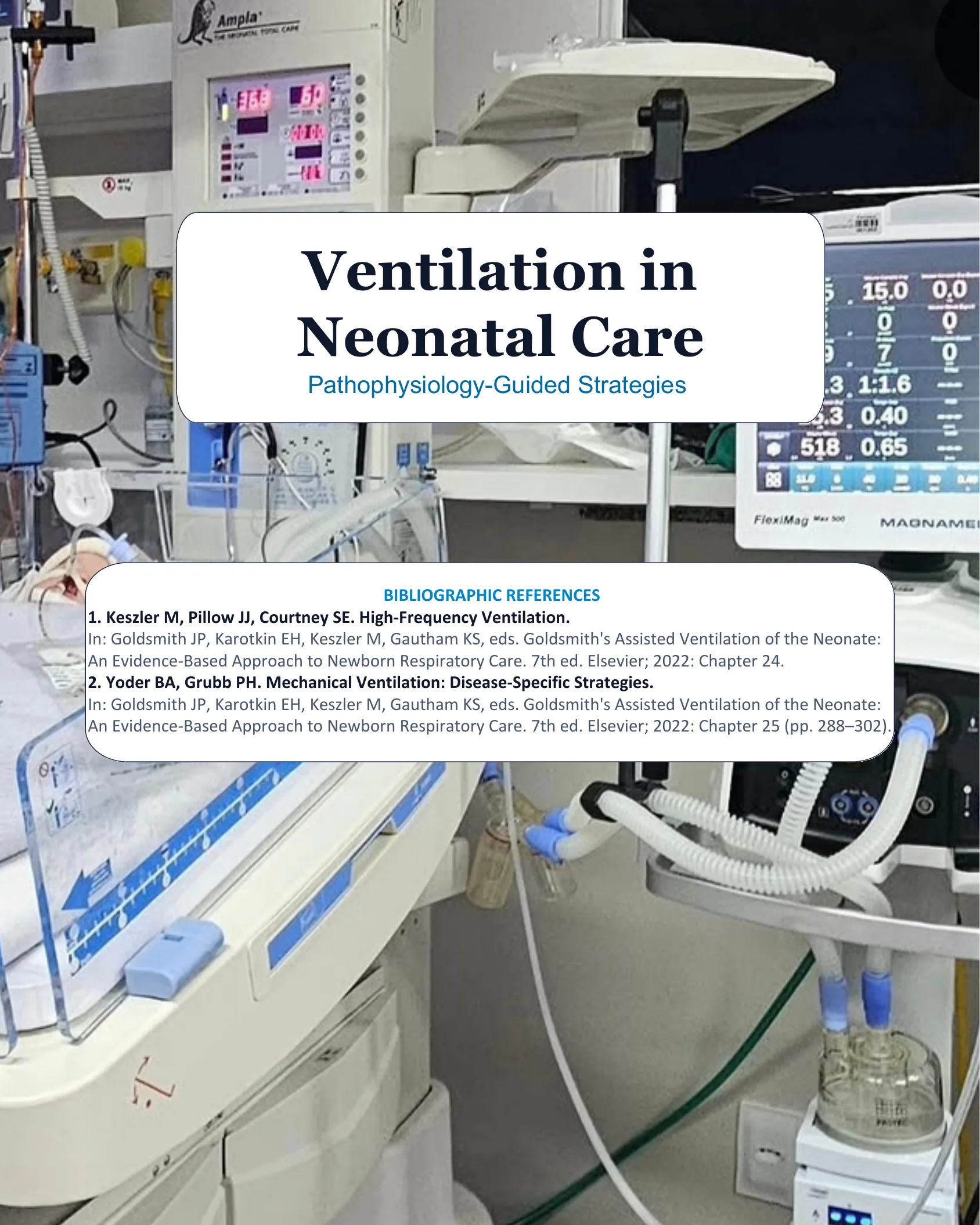
Ventilation in Neonatal Care
Pathophysiology-Guided Strategies
Bibliographic References
- Keszler M, Pillow JJ, Courtney SE. High-Frequency Ventilation. In: Goldsmith JP, Karotkin EH, Keszler M, Gautham KS, eds. Goldsmith’s Assisted Ventilation of the Neonate: An Evidence-Based Approach to Newborn Respiratory Care. 7th ed. Elsevier; 2022: Chapter 24.
- Yoder BA, Grubb PH. Mechanical Ventilation: Disease-Specific Strategies. In: Goldsmith JP, Karotkin EH, Keszler M, Gautham KS, eds. Goldsmith’s Assisted Ventilation of the Neonate: An Evidence-Based Approach to Newborn Respiratory Care. 7th ed. Elsevier; 2022: Chapter 25 (pp. 288–302).
Respiratory Distress Syndrome (RDS)
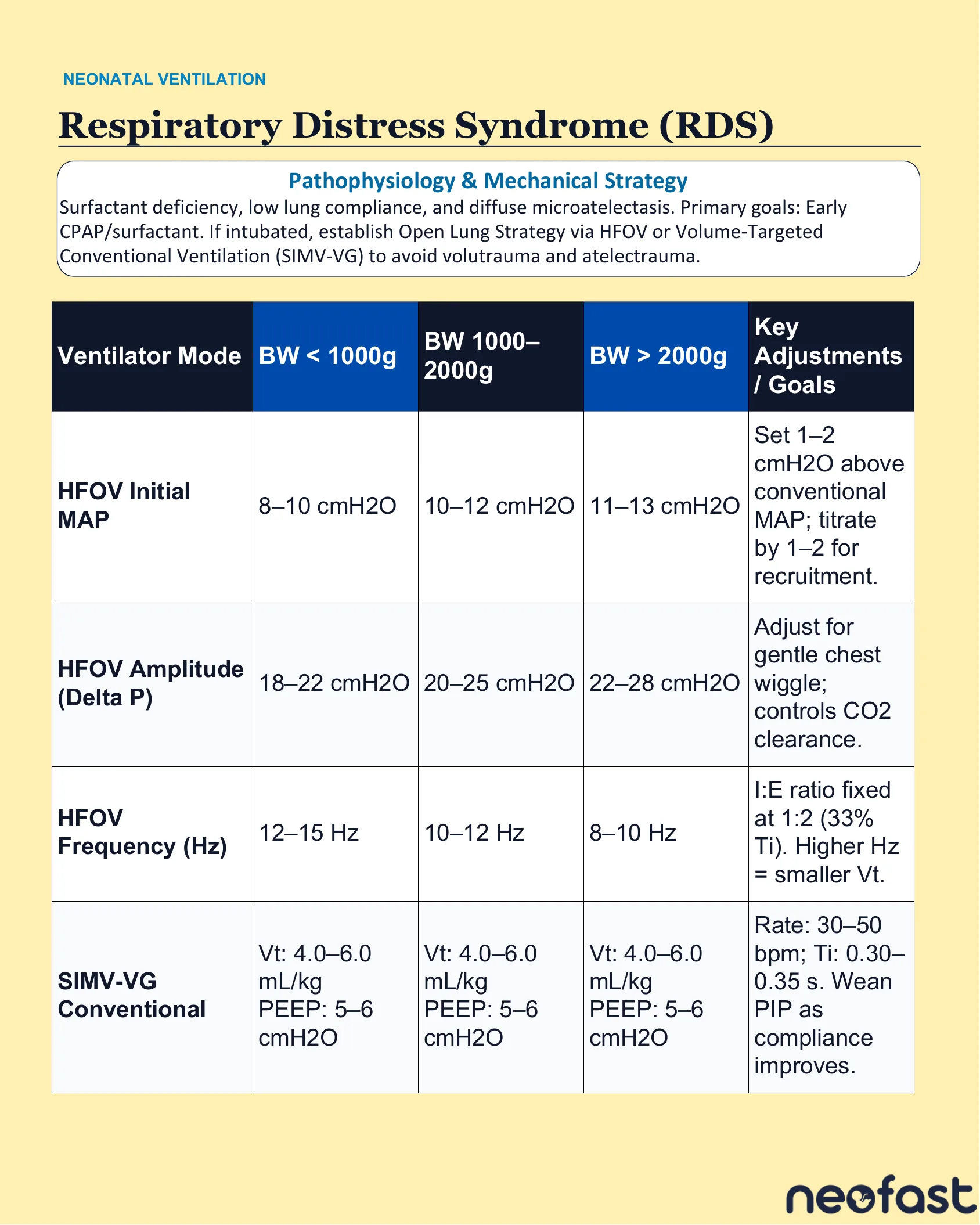
Pathophysiology & Mechanical Strategy
Surfactant deficiency, low lung compliance, and diffuse microatelectasis. Primary goals: Early CPAP/surfactant. If intubated, establish Open Lung Strategy via HFOV or Volume-Targeted Conventional Ventilation (SIMV-VG) to avoid volutrauma and atelectrauma.
| Ventilator Mode | BW < 1000g | BW 1000–2000g | BW > 2000g | Key Adjustments / Goals |
|---|---|---|---|---|
| HFOV Initial MAP | 8–10 cmH2O | 10–12 cmH2O | 11–13 cmH2O | Set 1–2 cmH2O above conventional MAP; titrate by 1–2 for recruitment. |
| HFOV Amplitude (Delta P) | 18–22 cmH2O | 20–25 cmH2O | 22–28 cmH2O | Adjust for gentle chest wiggle; controls CO2 clearance. |
| HFOV Frequency (Hz) | 12–15 Hz | 10–12 Hz | 8–10 Hz | I:E ratio fixed at 1:2 (33% Ti). Higher Hz = smaller Vt. |
| SIMV-VG Conventional | Vt: 4.0–6.0 mL/kg; PEEP: 5–6 cmH2O | Vt: 4.0–6.0 mL/kg; PEEP: 5–6 cmH2O | Vt: 4.0–6.0 mL/kg; PEEP: 5–6 cmH2O | Rate: 30–50 bpm; Ti: 0.30–0.35 s. Wean PIP as compliance improves. |
Meconium Aspiration Syndrome (MAS)
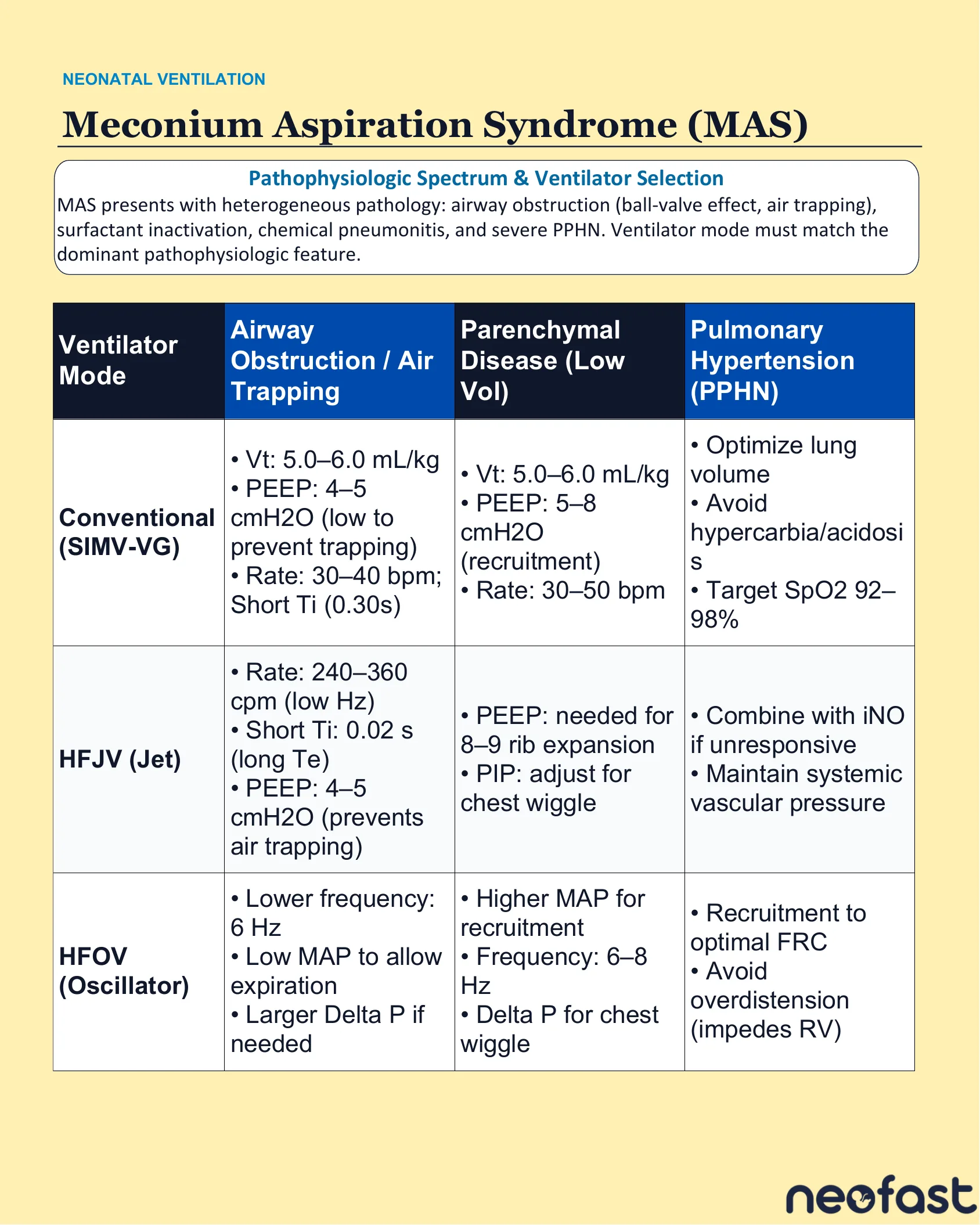
Pathophysiologic Spectrum & Ventilator Selection
MAS presents with heterogeneous pathology: airway obstruction (ball-valve effect, air trapping), surfactant inactivation, chemical pneumonitis, and severe PPHN. Ventilator mode must match the dominant pathophysiologic feature.
| Ventilator Mode | Airway Obstruction / Air Trapping | Parenchymal Disease (Low Vol) | Pulmonary Hypertension (PPHN) |
|---|---|---|---|
| Conventional (SIMV-VG) | Vt: 5.0–6.0 mL/kg; PEEP: 4–5 cmH2O (low to prevent trapping); Rate: 30–40 bpm; Short Ti (0.30s) | Vt: 5.0–6.0 mL/kg; PEEP: 5–8 cmH2O (recruitment); Rate: 30–50 bpm | Optimize lung volume; Avoid hypercarbia/acidosis; Target SpO2 92–98% |
| HFJV (Jet) | Rate: 240–360 cpm (low Hz); Short Ti: 0.02 s (long Te); PEEP: 4–5 cmH2O (prevents air trapping) | PEEP: needed for 8–9 rib expansion; PIP: adjust for chest wiggle | Combine with iNO if unresponsive; Maintain systemic vascular pressure |
| HFOV (Oscillator) | Lower frequency: 6 Hz; Low MAP to allow expiration; Larger Delta P if needed | Higher MAP for recruitment; Frequency: 6–8 Hz; Delta P for chest wiggle | Recruitment to optimal FRC; Avoid overdistension (impedes RV) |
Congenital Diaphragmatic Hernia (CDH) & Hypoplasia
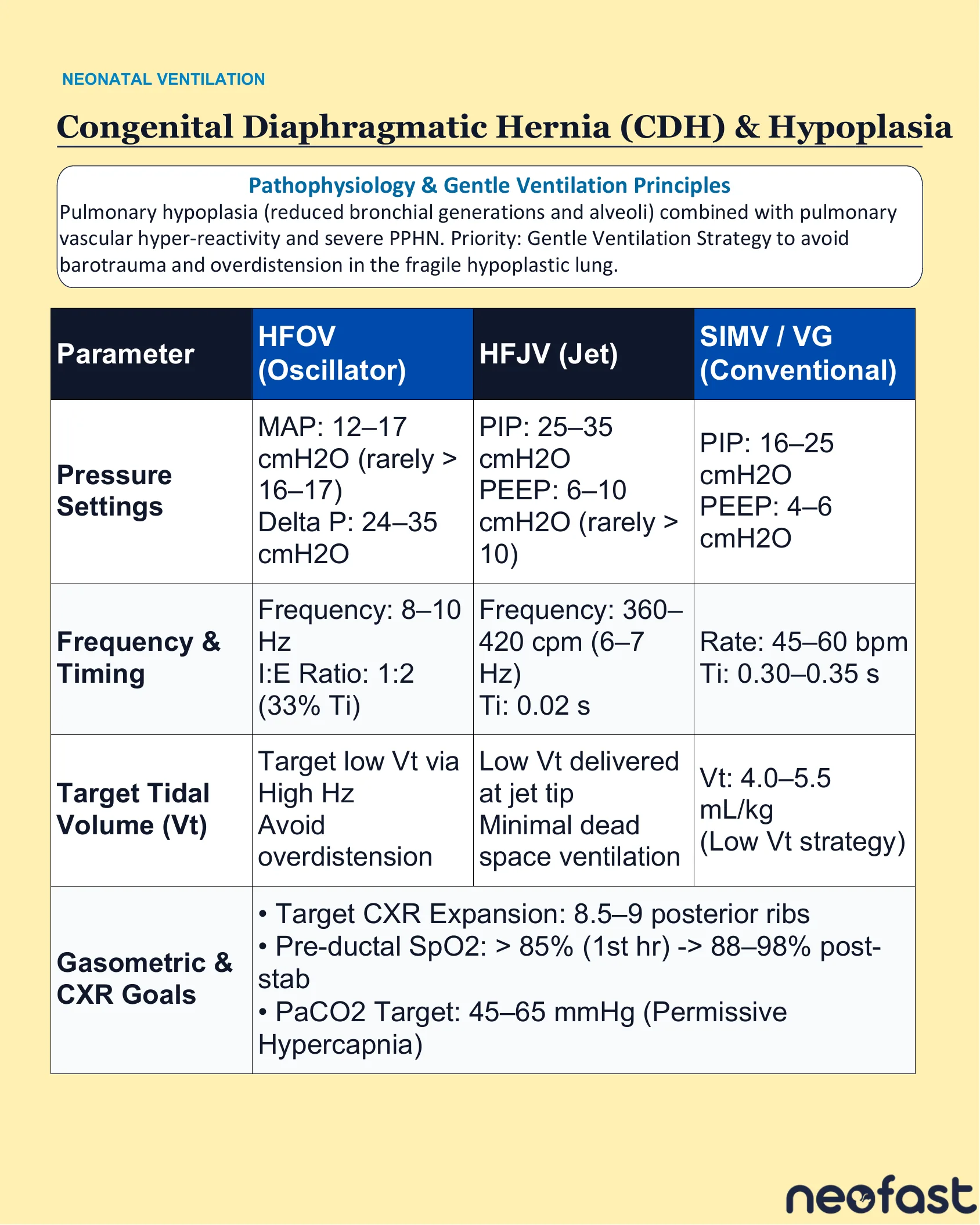
Pathophysiology & Gentle Ventilation Principles
Pulmonary hypoplasia (reduced bronchial generations and alveoli) combined with pulmonary vascular hyper-reactivity and severe PPHN. Priority: Gentle Ventilation Strategy to avoid barotrauma and overdistension in the fragile hypoplastic lung.
| Parameter | HFOV (Oscillator) | HFJV (Jet) | SIMV / VG (Conventional) |
|---|---|---|---|
| Pressure Settings | MAP: 12–17 cmH2O (rarely > 16–17); Delta P: 24–35 cmH2O | PIP: 25–35 cmH2O; PEEP: 6–10 cmH2O (rarely > 10) | PIP: 16–25 cmH2O; PEEP: 4–6 cmH2O |
| Frequency & Timing | Frequency: 8–10 Hz; I:E Ratio: 1:2 (33% Ti) | Frequency: 360–420 cpm (6–7 Hz); Ti: 0.02 s | Rate: 45–60 bpm; Ti: 0.30–0.35 s |
| Target Tidal Volume (Vt) | Target low Vt via High Hz; Avoid overdistension | Low Vt delivered at jet tip; Minimal dead space ventilation | Vt: 4.0–5.5 mL/kg (Low Vt strategy) |
| Gasometric & CXR Goals | Target CXR Expansion: 8.5–9 posterior ribs; Pre-ductal SpO2: > 85% (1st hr) -> 88–98% post-stab; PaCO2 Target: 45–65 mmHg (Permissive Hypercapnia) | ||
Severe / Chronic Bronchopulmonary Dysplasia (BPD)
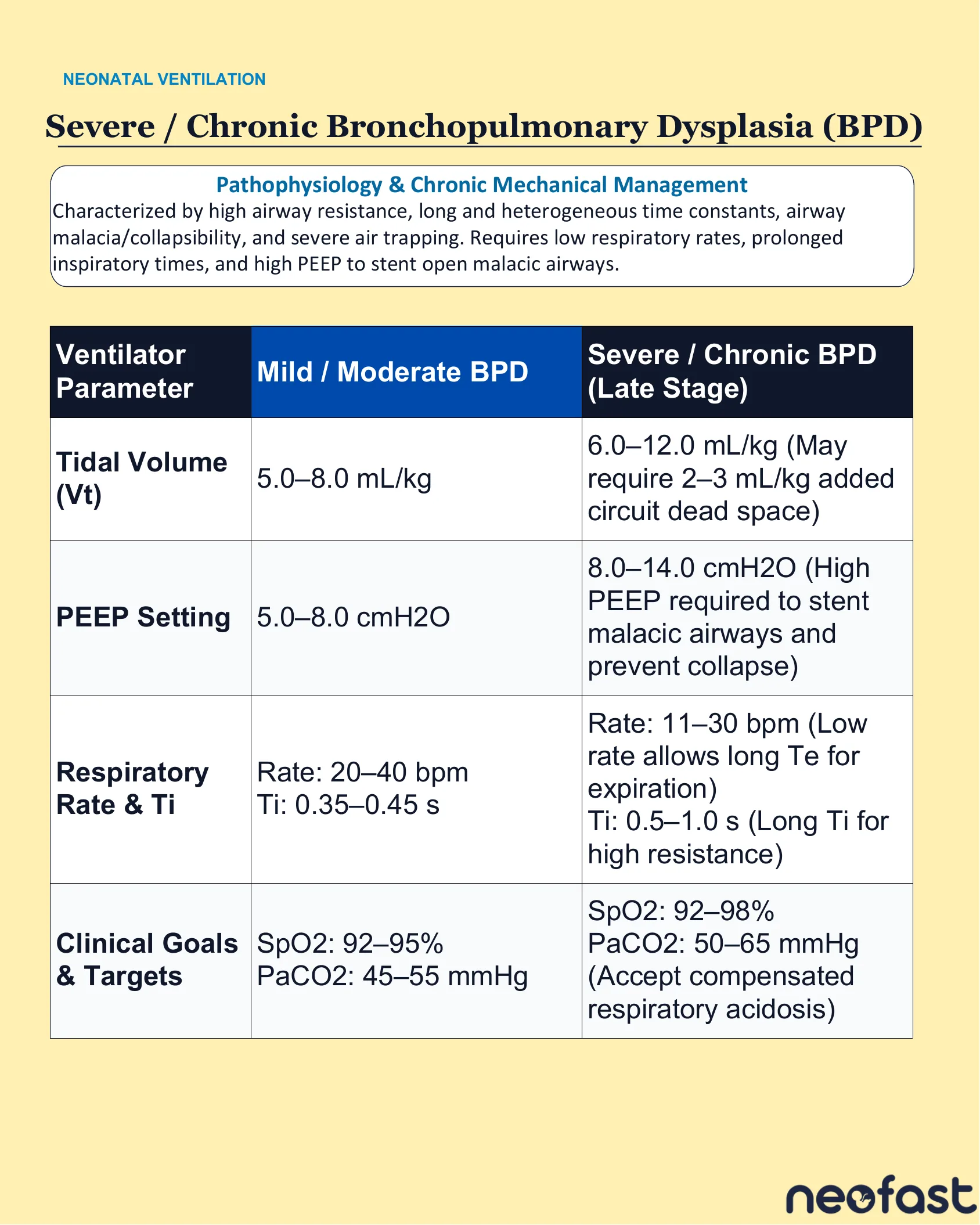
Pathophysiology & Chronic Mechanical Management
Characterized by high airway resistance, long and heterogeneous time constants, airway malacia/collapsibility, and severe air trapping. Requires low respiratory rates, prolonged inspiratory times, and high PEEP to stent open malacic airways.
| Ventilator Parameter | Mild / Moderate BPD | Severe / Chronic BPD (Late Stage) |
|---|---|---|
| Tidal Volume (Vt) | 5.0–8.0 mL/kg | 6.0–12.0 mL/kg (May require 2–3 mL/kg added circuit dead space) |
| PEEP Setting | 5.0–8.0 cmH2O | 8.0–14.0 cmH2O (High PEEP required to stent malacic airways and prevent collapse) |
| Respiratory Rate & Ti | Rate: 20–40 bpm; Ti: 0.35–0.45 s | Rate: 11–30 bpm (Low rate allows long Te for expiration); Ti: 0.5–1.0 s (Long Ti for high resistance) |
| Clinical Goals & Targets | SpO2: 92–95%; PaCO2: 45–55 mmHg | SpO2: 92–98%; PaCO2: 50–65 mmHg (Accept compensated respiratory acidosis) |
Comparative Analysis: HFOV vs. HFJV
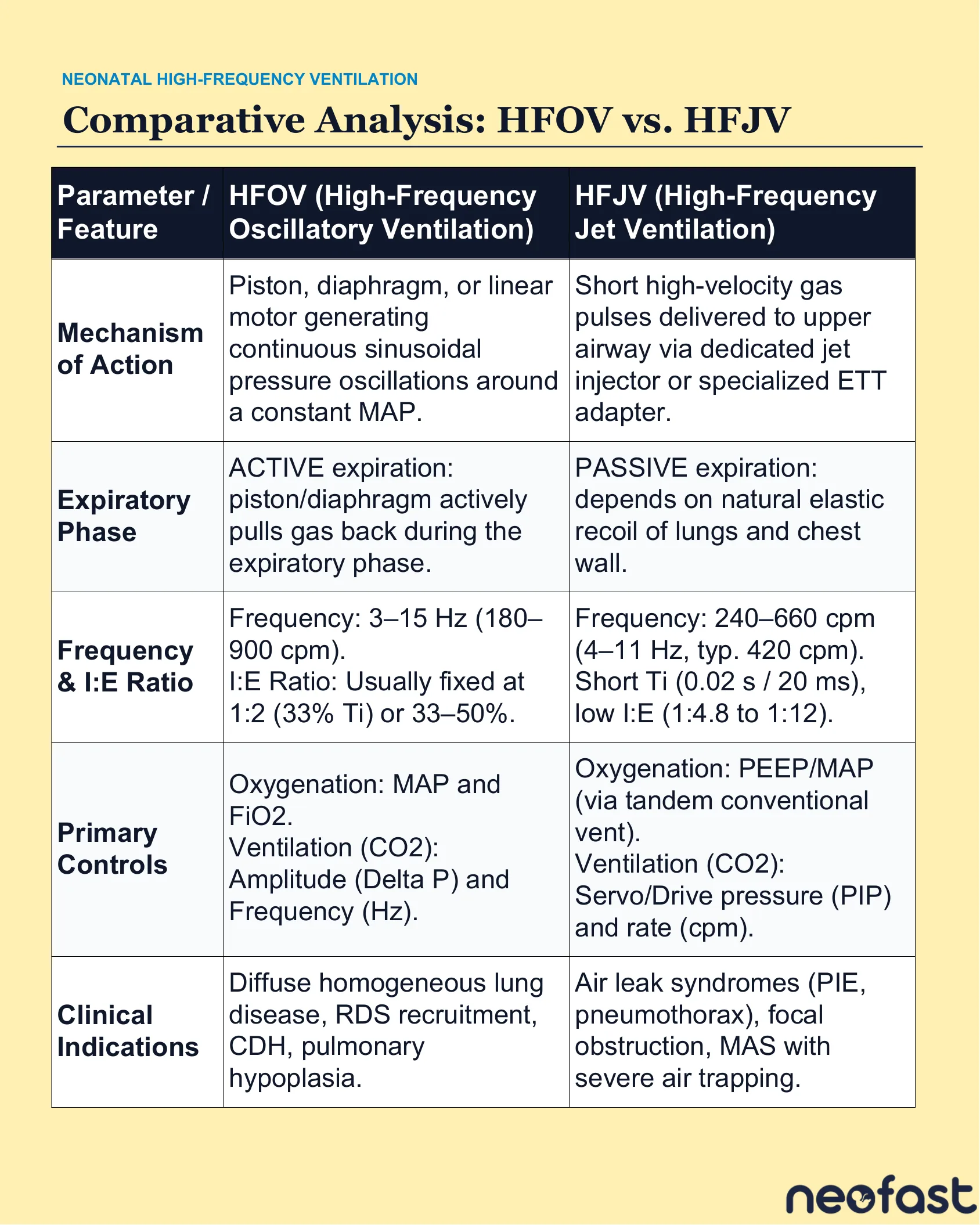
| Parameter / Feature | HFOV (High-Frequency Oscillatory Ventilation) | HFJV (High-Frequency Jet Ventilation) |
|---|---|---|
| Mechanism of Action | Piston, diaphragm, or linear motor generating continuous sinusoidal pressure oscillations around a constant MAP. | Short high-velocity gas pulses delivered to upper airway via dedicated jet injector or specialized ETT adapter. |
| Expiratory Phase | ACTIVE expiration: piston/diaphragm actively pulls gas back during the expiratory phase. | PASSIVE expiration: depends on natural elastic recoil of lungs and chest wall. |
| Frequency & I:E Ratio | Frequency: 3–15 Hz (180–900 cpm). I:E Ratio: Usually fixed at 1:2 (33% Ti) or 33–50%. | Frequency: 240–660 cpm (4–11 Hz, typ. 420 cpm). Short Ti (0.02 s / 20 ms), low I:E (1:4.8 to 1:12). |
| Primary Controls | Oxygenation: MAP and FiO2. Ventilation (CO2): Amplitude (Delta P) and Frequency (Hz). | Oxygenation: PEEP/MAP (via tandem conventional vent). Ventilation (CO2): Servo/Drive pressure (PIP) and rate (cpm). |
| Clinical Indications | Diffuse homogeneous lung disease, RDS recruitment, CDH, pulmonary hypoplasia. | Air leak syndromes (PIE, pneumothorax), focal obstruction, MAS with severe air trapping. |
Lung Protection Strategies in Critical Neonates
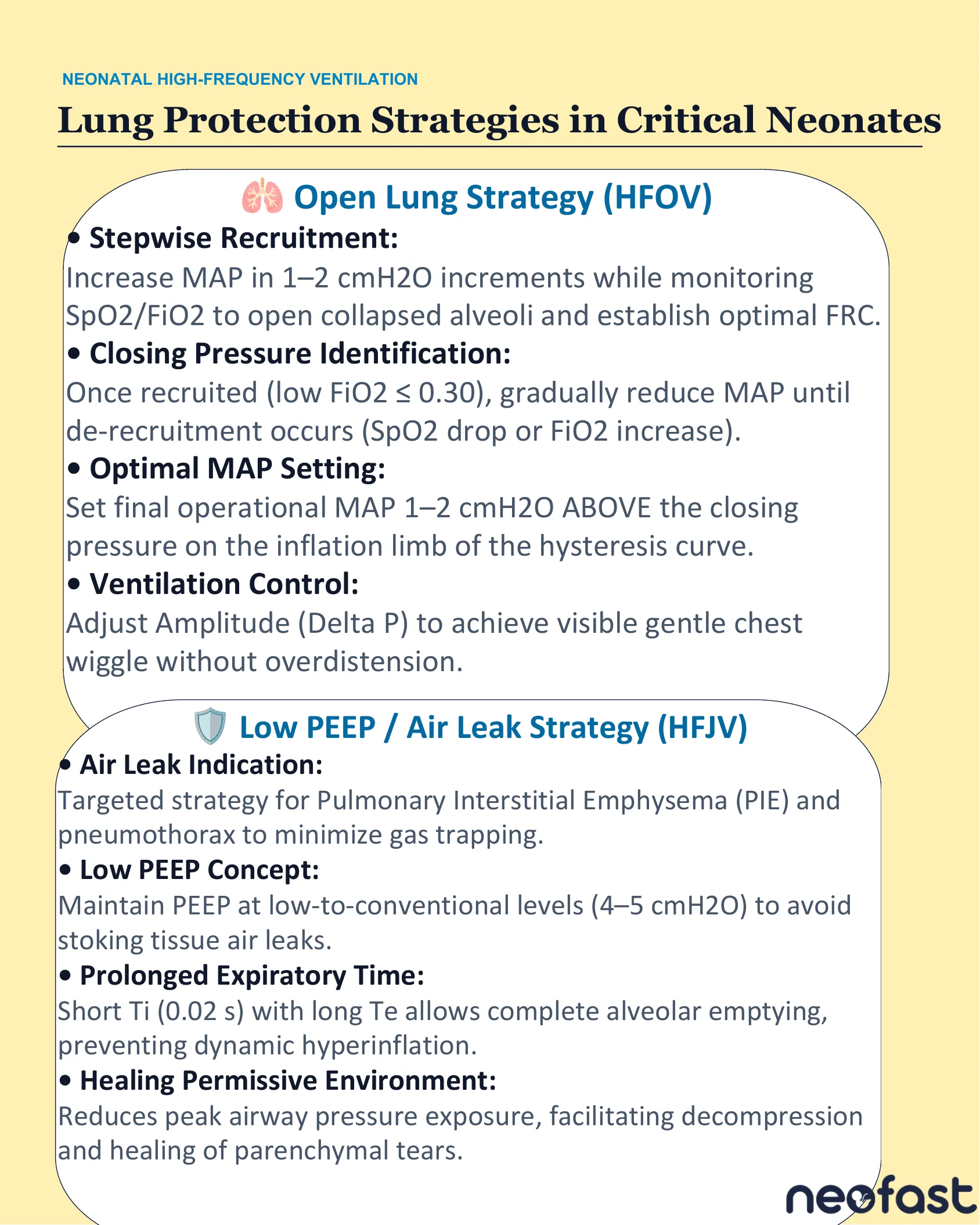
🫁 Open Lung Strategy (HFOV)
- Stepwise Recruitment: Increase MAP in 1–2 cmH2O increments while monitoring SpO2/FiO2 to open collapsed alveoli and establish optimal FRC.
- Closing Pressure Identification: Once recruited (low FiO2 ≤ 0.30), gradually reduce MAP until de-recruitment occurs (SpO2 drop or FiO2 increase).
- Optimal MAP Setting: Set final operational MAP 1–2 cmH2O ABOVE the closing pressure on the inflation limb of the hysteresis curve.
- Ventilation Control: Adjust Amplitude (Delta P) to achieve visible gentle chest wiggle without overdistension.
🛡️ Low PEEP / Air Leak Strategy (HFJV)
- Air Leak Indication: Targeted strategy for Pulmonary Interstitial Emphysema (PIE) and pneumothorax to minimize gas trapping.
- Low PEEP Concept: Maintain PEEP at low-to-conventional levels (4–5 cmH2O) to avoid stoking tissue air leaks.
- Prolonged Expiratory Time: Short Ti (0.02 s) with long Te allows complete alveolar emptying, preventing dynamic hyperinflation.
- Healing Permissive Environment: Reduces peak airway pressure exposure, facilitating decompression and healing of parenchymal tears.
Monitoring Protocol
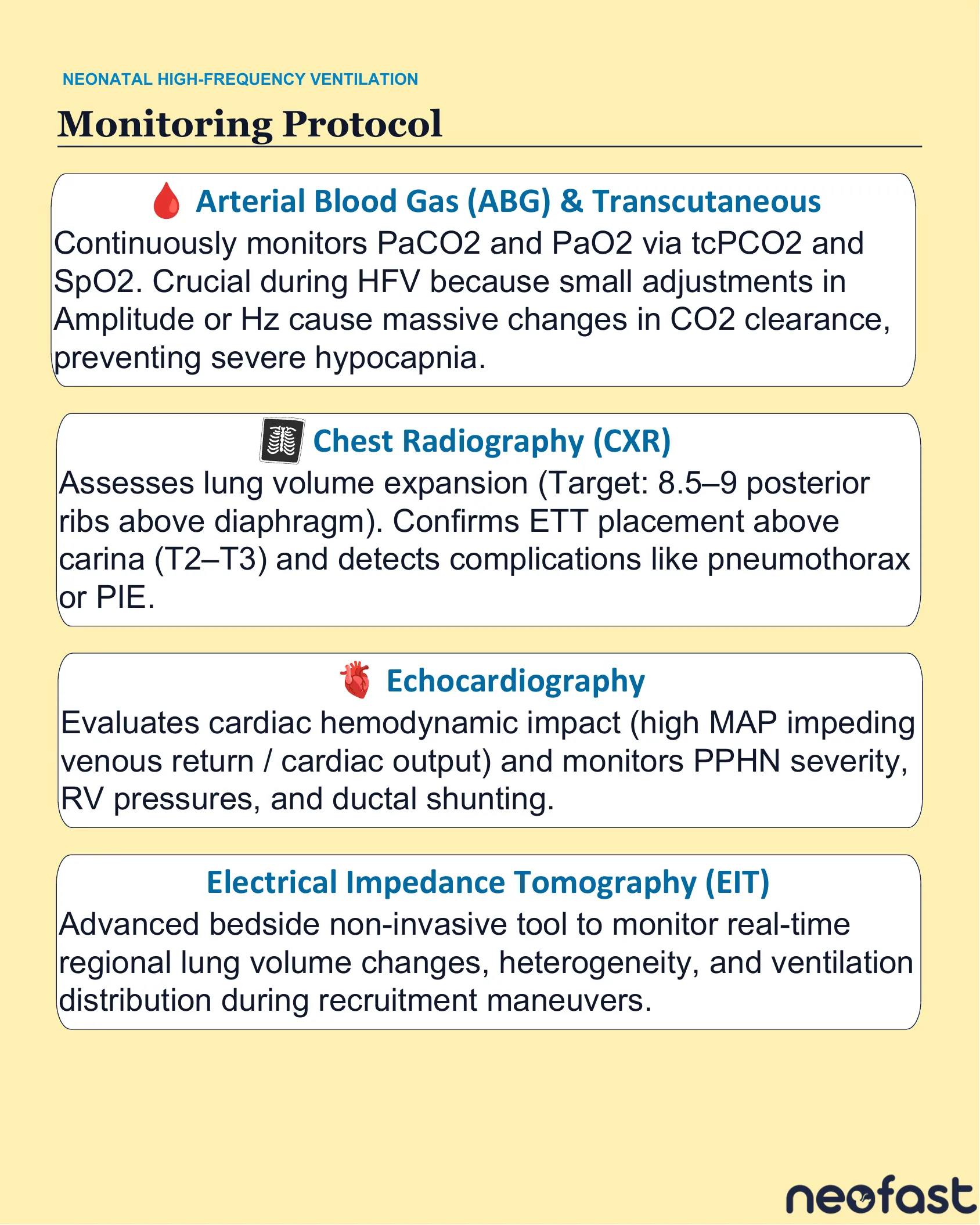
🩸 Arterial Blood Gas (ABG) & Transcutaneous
Continuously monitors PaCO2 and PaO2 via tcPCO2 and SpO2. Crucial during HFV because small adjustments in Amplitude or Hz cause massive changes in CO2 clearance, preventing severe hypocapnia.
🩻 Chest Radiography (CXR)
Assesses lung volume expansion (Target: 8.5–9 posterior ribs above diaphragm). Confirms ETT placement above carina (T2–T3) and detects complications like pneumothorax or PIE.
❤️ Echocardiography
Evaluates cardiac hemodynamic impact (high MAP impeding venous return / cardiac output) and monitors PPHN severity, RV pressures, and ductal shunting.
Electrical Impedance Tomography (EIT)
Advanced bedside non-invasive tool to monitor real-time regional lung volume changes, heterogeneity, and ventilation distribution during recruitment maneuvers.
Ventilator Safety and the NeoFast App
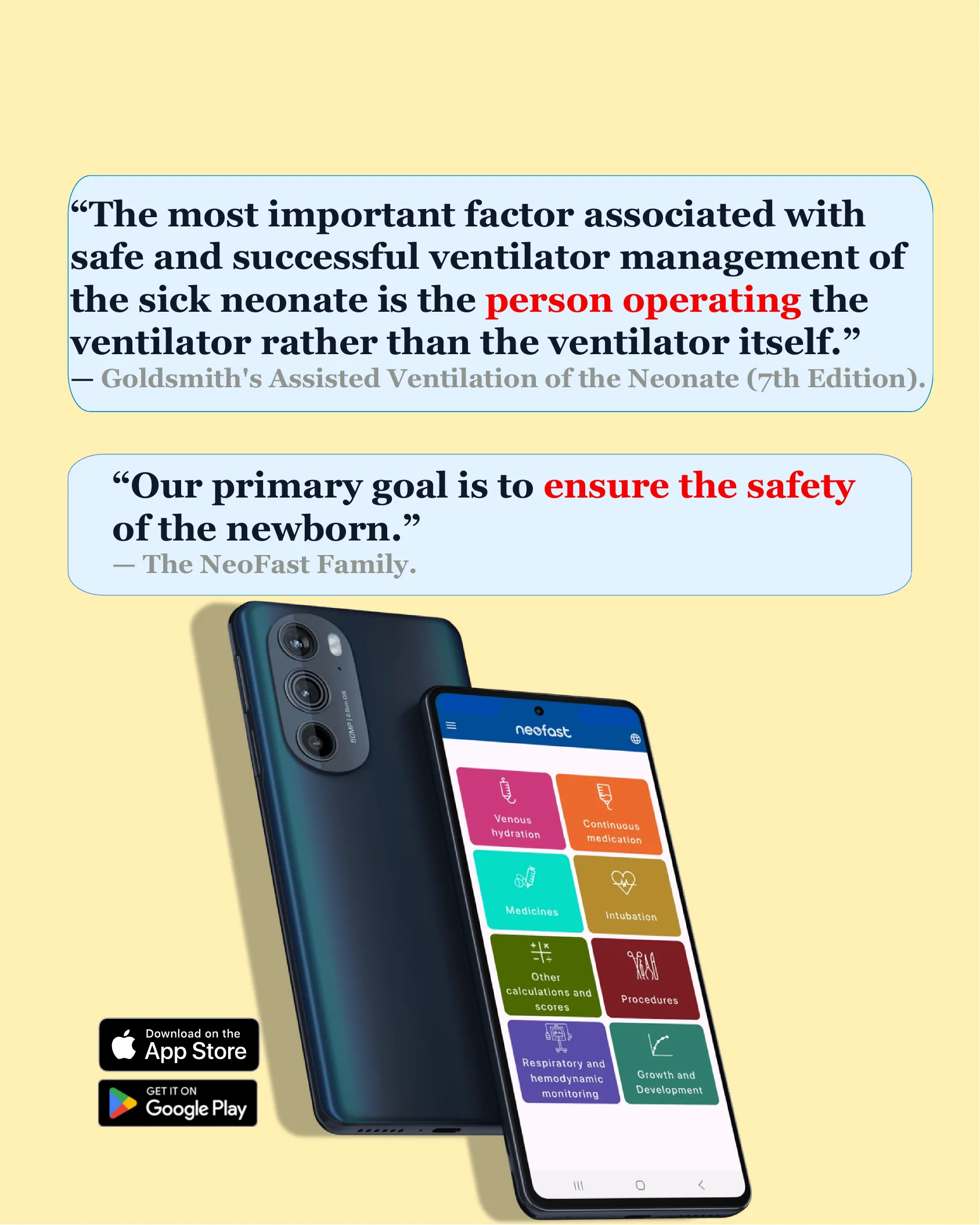
“The most important factor associated with safe and successful ventilator management of the sick neonate is the person operating the ventilator rather than the ventilator itself.”
— Goldsmith’s Assisted Ventilation of the Neonate (7th Edition).
“Our primary goal is to ensure the safety of the newborn.”
— The NeoFast Family.
NeoFast App Menu
- Venous hydration
- Continuous medication
- Medicines
- Intubation
- Other calculations and scores
- Procedures
- Respiratory and hemodynamic monitoring
- Growth and Development
Download on the App Store
Get it on Google Play
Frequently asked questions
What HFOV MAP settings are recommended for RDS based on birth weight?
Initial MAP should be set 1–2 cmH2O above the conventional MAP: 8–10 cmH2O for BW <1000g, 10–12 cmH2O for BW 1000–2000g, and 11–13 cmH2O for BW >2000g, titrated by 1–2 cmH2O for recruitment.
What tidal volume and PEEP are used for conventional SIMV-VG in RDS?
Target Vt of 4.0–6.0 mL/kg with PEEP 5–6 cmH2O, rate 30–50 bpm, and Ti 0.30–0.35 s, weaning PIP as compliance improves.
How should HFJV be set for MAS with airway obstruction and air trapping?
Use a low rate of 240–360 cpm with a short Ti of 0.02 s (long Te) and PEEP 4–5 cmH2O to prevent air trapping.
What are the gasometric and CXR goals in CDH management?
Target CXR expansion of 8.5–9 posterior ribs, pre-ductal SpO2 >85% in the first hour progressing to 88–98% post-stabilization, and permissive hypercapnia with PaCO2 45–65 mmHg.
How do HFOV and HFJV differ in their approach to expiration and clinical indications?
HFOV produces ACTIVE expiration via piston/diaphragm and is used for diffuse homogeneous lung disease, RDS recruitment, CDH, and pulmonary hypoplasia; HFJV relies on PASSIVE expiration and is indicated for air leak syndromes (PIE, pneumothorax), focal obstruction, and MAS with severe air trapping.