


References
- Micromedex Clinical Knowledge
- Lexicomp Core Databases
- Pediatric & Neonatal Dosage Handbooks
Key takeaways
- All neonatal vasoactive and inotropic infusions must run via continuous infusion pumps, and the maximum concentrations strictly require central venous access.
- Dobutamine is diluted to a recommended neonatal concentration of 1 mg/mL (absolute maximum 2 mg/mL with central access) and dosed 2–25 mcg/kg/min.
- Dobutamine requires continuous cardiac and blood-pressure monitoring and carries a high extravasation/phlebitis risk.
Neonatal Vasoactive & Inotropic Infusion Guide
Practical protocols for Dilution, Reconstitution, and Dosing: Dobutamine, Adrenaline, and Milrinone.
TARGET_DEMOGRAPHIC: NEONATOLOGY (NICU) | PROTOCOL_VERSION: 1.0
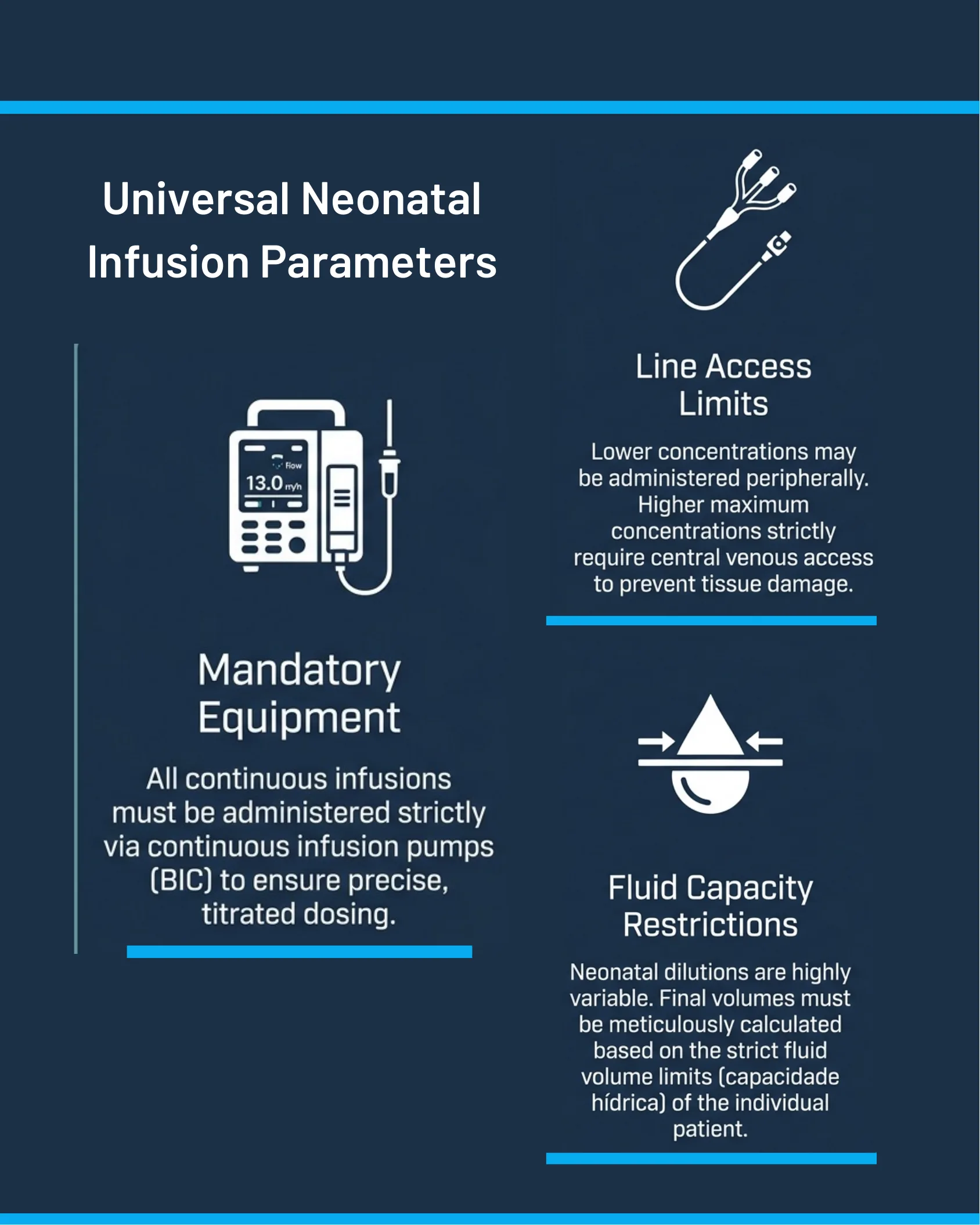
Universal Neonatal Infusion Parameters
Universal Neonatal Infusion Parameters
- Mandatory Equipment: All continuous infusions must be administered strictly via continuous infusion pumps (BIC) to ensure precise, titrated dosing.
- Line Access Limits: Lower concentrations may be administered peripherally. Higher maximum concentrations strictly require central venous access to prevent tissue damage.
- Fluid Capacity Restrictions: Neonatal dilutions are highly variable. Final volumes must be meticulously calculated based on the strict fluid volume limits (capacidade hídrica) of the individual patient.
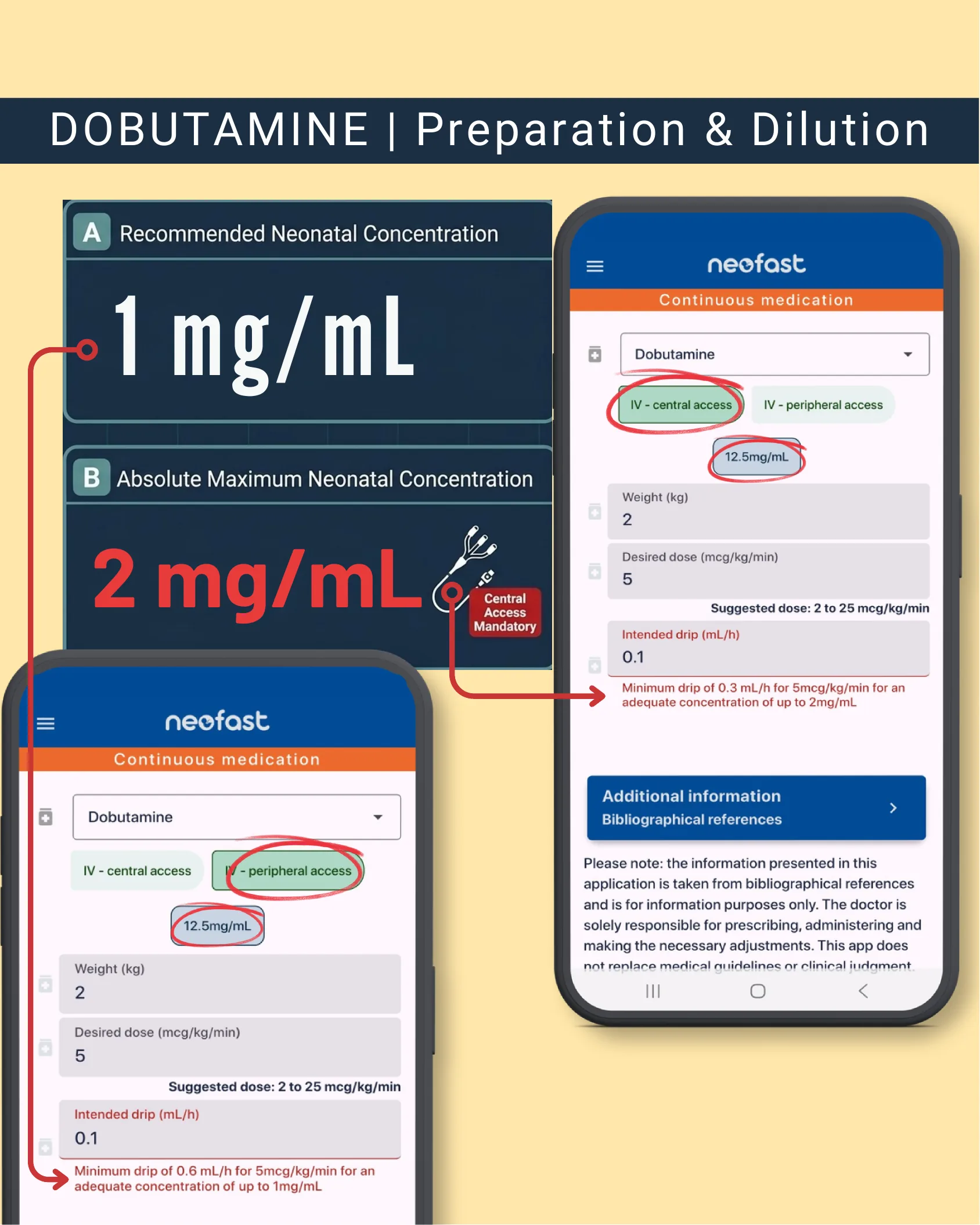
Dobutamine | Preparation & Dilution
DOBUTAMINE | Preparation & Dilution
| Concentration | |
|---|---|
| A. Recommended Neonatal Concentration | 1 mg/mL |
| B. Absolute Maximum Neonatal Concentration | 2 mg/mL (Central Access Mandatory) |
App Example — IV Peripheral Access
- Drug: Dobutamine
- Route: IV – peripheral access
- Concentration: 12.5 mg/mL
- Weight (kg): 2
- Desired dose (mcg/kg/min): 5
- Suggested dose: 2 to 25 mcg/kg/min
- Intended drip (mL/h): 0.1
- Note: Minimum drip of 0.6 mL/h for 5 mcg/kg/min for an adequate concentration of up to 1 mg/mL
App Example — IV Central Access
- Drug: Dobutamine
- Route: IV – central access
- Concentration: 12.5 mg/mL
- Weight (kg): 2
- Desired dose (mcg/kg/min): 5
- Suggested dose: 2 to 25 mcg/kg/min
- Intended drip (mL/h): 0.1
- Note: Minimum drip of 0.3 mL/h for 5 mcg/kg/min for an adequate concentration of up to 2 mg/mL
Additional information: Bibliographical references. Please note: the information presented in this application is taken from bibliographical references and is for information purposes only. The doctor is solely responsible for prescribing, administering and making the necessary adjustments. This app does not replace medical guidelines or clinical judgment.
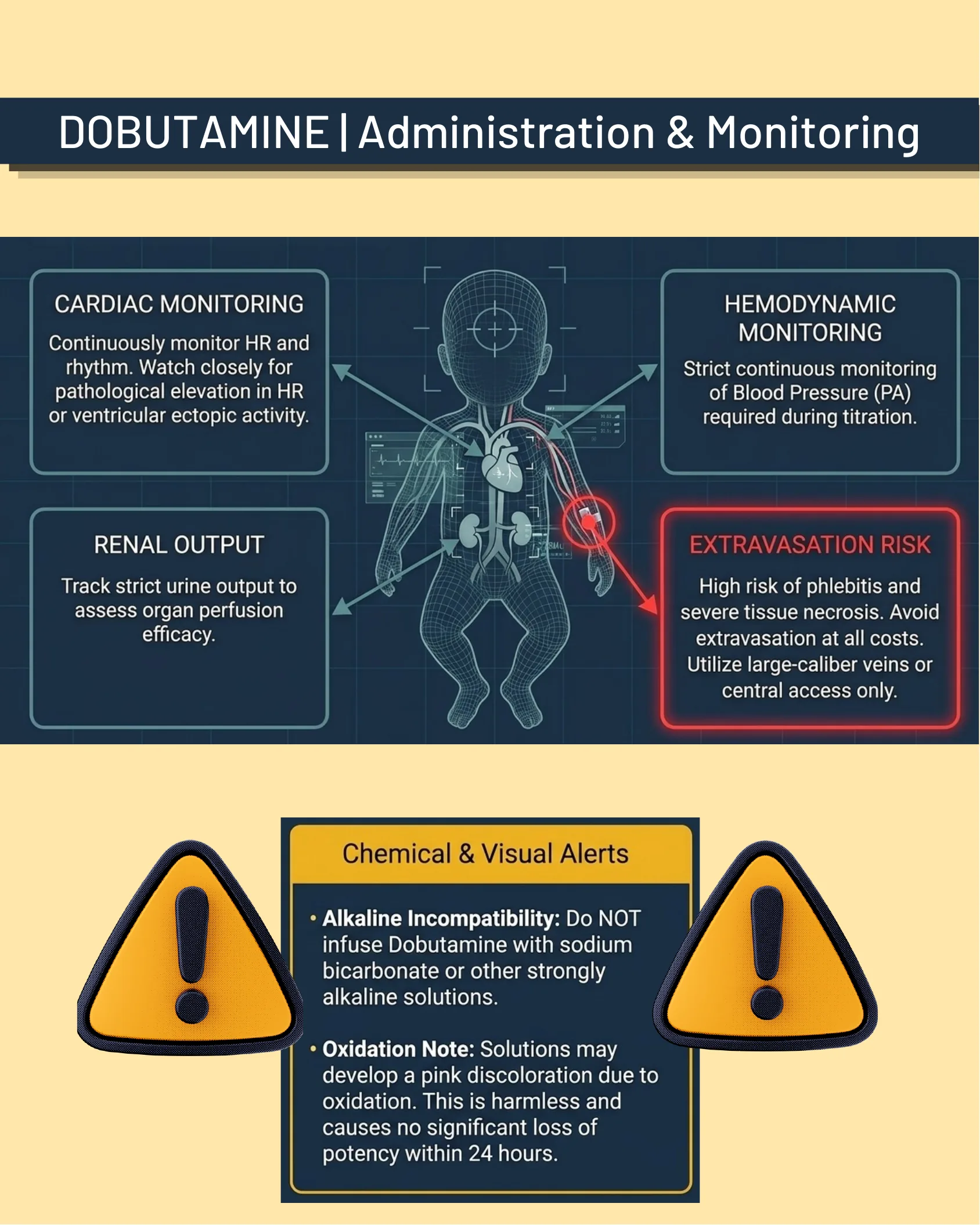
Dobutamine | Administration & Monitoring
DOBUTAMINE | Administration & Monitoring
- Cardiac Monitoring: Continuously monitor HR and rhythm. Watch closely for pathological elevation in HR or ventricular ectopic activity.
- Hemodynamic Monitoring: Strict continuous monitoring of Blood Pressure (PA) required during titration.
- Renal Output: Track strict urine output to assess organ perfusion efficacy.
- Extravasation Risk: High risk of phlebitis and severe tissue necrosis. Avoid extravasation at all costs. Utilize large-caliber veins or central access only.
Chemical & Visual Alerts
- Alkaline Incompatibility: Do NOT infuse Dobutamine with sodium bicarbonate or other strongly alkaline solutions.
- Oxidation Note: Solutions may develop a pink discoloration due to oxidation. This is harmless and causes no significant loss of potency within 24 hours.
Adrenaline | Preparation & Dilution
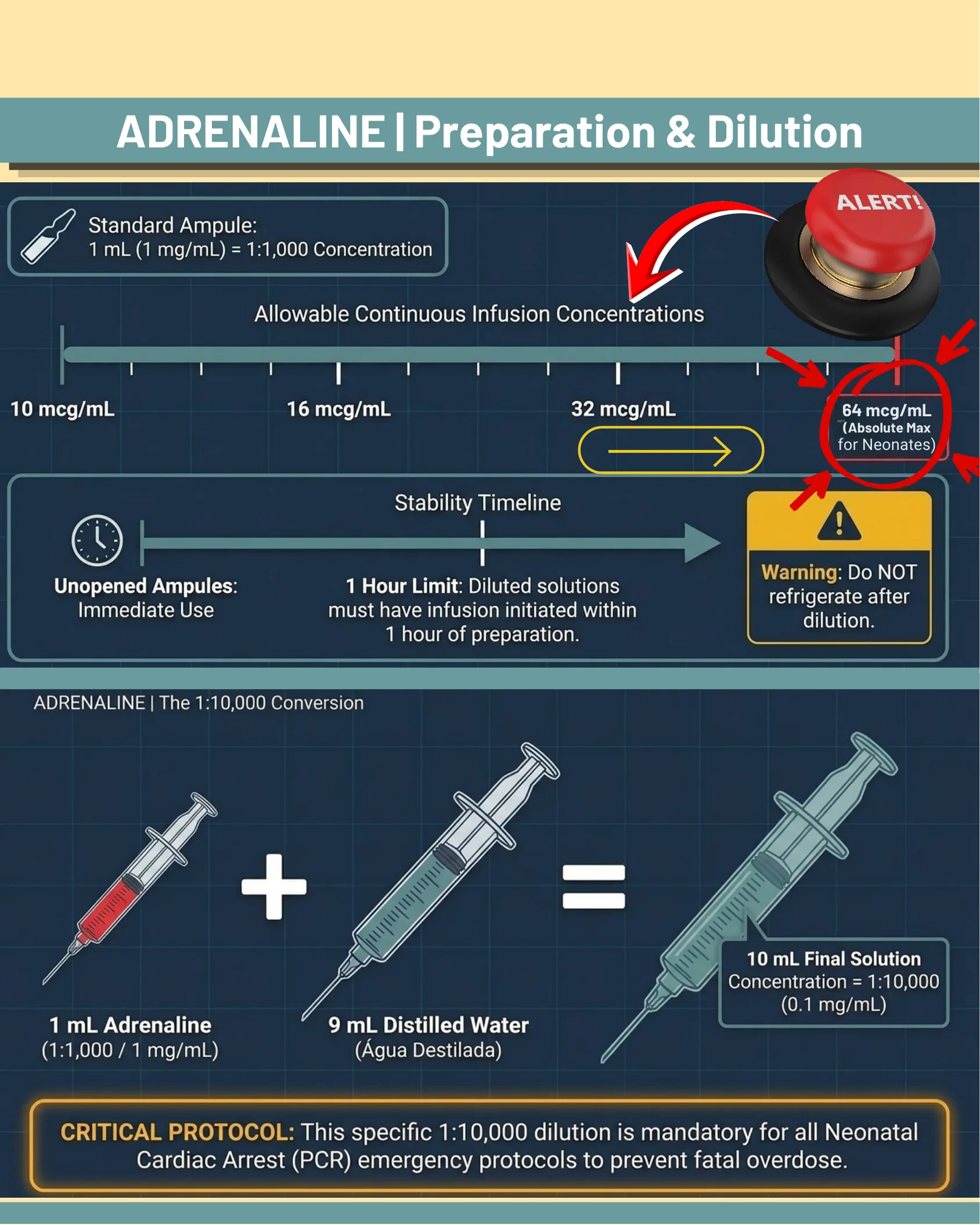
ADRENALINE | Preparation & Dilution
Standard Ampule: 1 mL (1 mg/mL) = 1:1,000 Concentration
Allowable Continuous Infusion Concentrations
- 10 mcg/mL
- 16 mcg/mL
- 32 mcg/mL
- 64 mcg/mL (Absolute Max for Neonates)
Stability Timeline
- Unopened Ampules: Immediate Use
- 1 Hour Limit: Diluted solutions must have infusion initiated within 1 hour of preparation.
Warning: Do NOT refrigerate after dilution.
ADRENALINE | The 1:10,000 Conversion
- 1 mL Adrenaline (1:1,000 / 1 mg/mL)
- + 9 mL Distilled Water (Água Destilada)
- = 10 mL Final Solution, Concentration = 1:10,000 (0.1 mg/mL)
CRITICAL PROTOCOL: This specific 1:10,000 dilution is mandatory for all Neonatal Cardiac Arrest (PCR) emergency protocols to prevent fatal overdose.
Adrenaline | Dosing Calculation Example
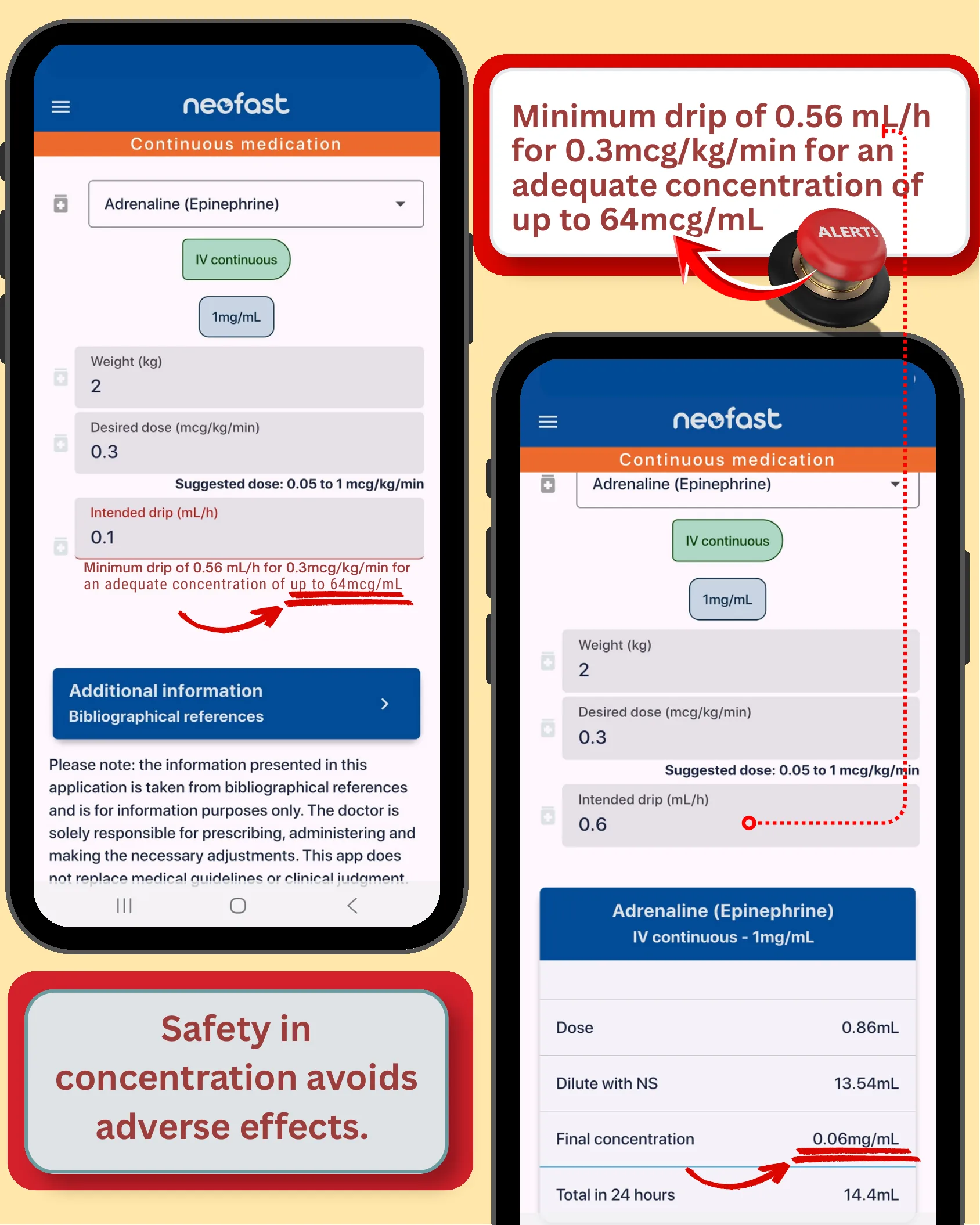
Adrenaline (Epinephrine) — App Calculation Example
- Drug: Adrenaline (Epinephrine)
- Route: IV continuous
- Concentration: 1 mg/mL
- Weight (kg): 2
- Desired dose (mcg/kg/min): 0.3
- Suggested dose: 0.05 to 1 mcg/kg/min
- Intended drip (mL/h): 0.1 (initial entry), 0.6 (updated)
- Note: Minimum drip of 0.56 mL/h for 0.3 mcg/kg/min for an adequate concentration of up to 64 mcg/mL
Resulting Calculation Table
| Parameter | Value |
|---|---|
| Dose | 0.86 mL |
| Dilute with NS | 13.54 mL |
| Final concentration | 0.06 mg/mL |
| Total in 24 hours | 14.4 mL |
Safety in concentration avoids adverse effects.
Additional information: Bibliographical references. Please note: the information presented in this application is taken from bibliographical references and is for information purposes only. The doctor is solely responsible for prescribing, administering and making the necessary adjustments. This app does not replace medical guidelines or clinical judgment.
Adrenaline | Neonatal Dosage Protocols
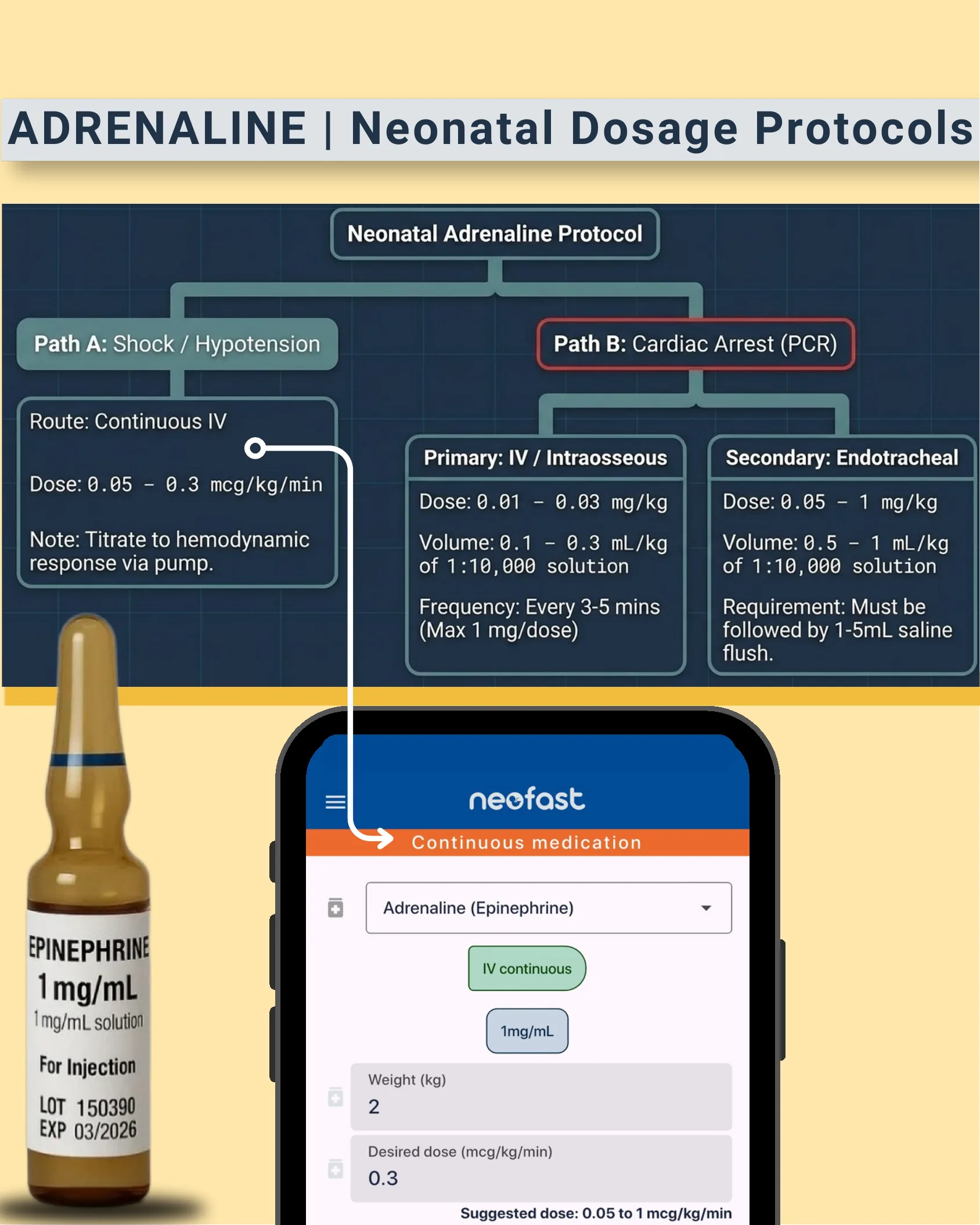
ADRENALINE | Neonatal Dosage Protocols
Neonatal Adrenaline Protocol
Path A: Shock / Hypotension
- Route: Continuous IV
- Dose: 0.05 – 0.3 mcg/kg/min
- Note: Titrate to hemodynamic response via pump.
Path B: Cardiac Arrest (PCR)
Primary: IV / Intraosseous
- Dose: 0.01 – 0.03 mg/kg
- Volume: 0.1 – 0.3 mL/kg of 1:10,000 solution
- Frequency: Every 3-5 mins (Max 1 mg/dose)
Secondary: Endotracheal
- Dose: 0.05 – 1 mg/kg
- Volume: 0.5 – 1 mL/kg of 1:10,000 solution
- Requirement: Must be followed by 1-5 mL saline flush.
Ampule Reference
- EPINEPHRINE 1 mg/mL solution, For Injection
- LOT 150390
- EXP 03/2026
App Example
- Drug: Adrenaline (Epinephrine)
- Route: IV continuous
- Concentration: 1 mg/mL
- Weight (kg): 2
- Desired dose (mcg/kg/min): 0.3
- Suggested dose: 0.05 to 1 mcg/kg/min
Milrinone | Preparation & Dilution
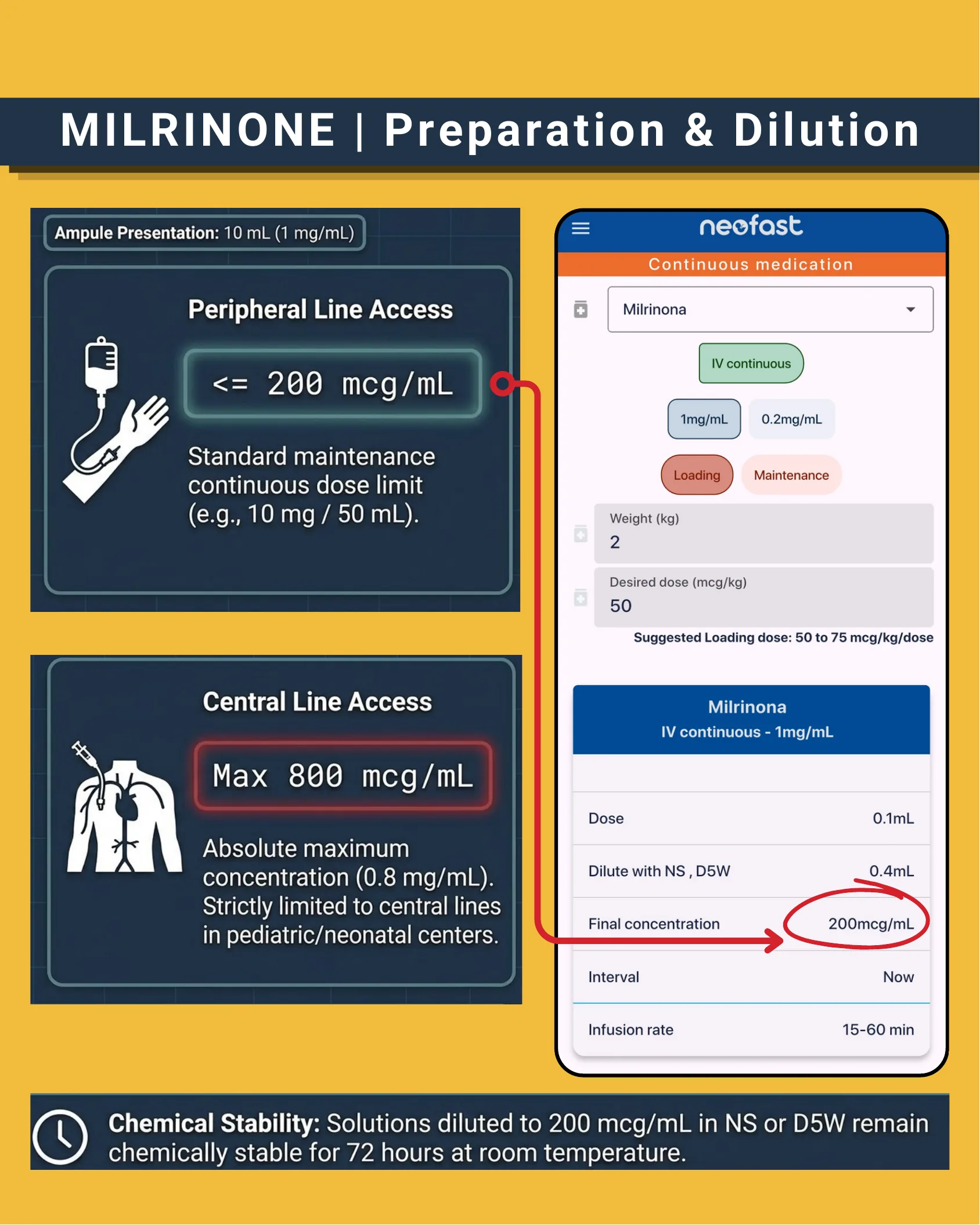
MILRINONE | Preparation & Dilution
Ampule Presentation: 10 mL (1 mg/mL)
Peripheral Line Access
- ≤ 200 mcg/mL
- Standard maintenance continuous dose limit (e.g., 10 mg / 50 mL).
Central Line Access
- Max 800 mcg/mL
- Absolute maximum concentration (0.8 mg/mL). Strictly limited to central lines in pediatric/neonatal centers.
App Example
- Drug: Milrinona
- Route: IV continuous
- Concentration options: 1 mg/mL, 0.2 mg/mL
- Mode: Loading / Maintenance
- Weight (kg): 2
- Desired dose (mcg/kg): 50
- Suggested Loading dose: 50 to 75 mcg/kg/dose
| Parameter | Value |
|---|---|
| Dose | 0.1 mL |
| Dilute with NS, D5W | 0.4 mL |
| Final concentration | 200 mcg/mL |
| Interval | Now |
| Infusion rate | 15-60 min |
Chemical Stability: Solutions diluted to 200 mcg/mL in NS or D5W remain chemically stable for 72 hours at room temperature.
MILRINONE | Neonatal Infusion Timing
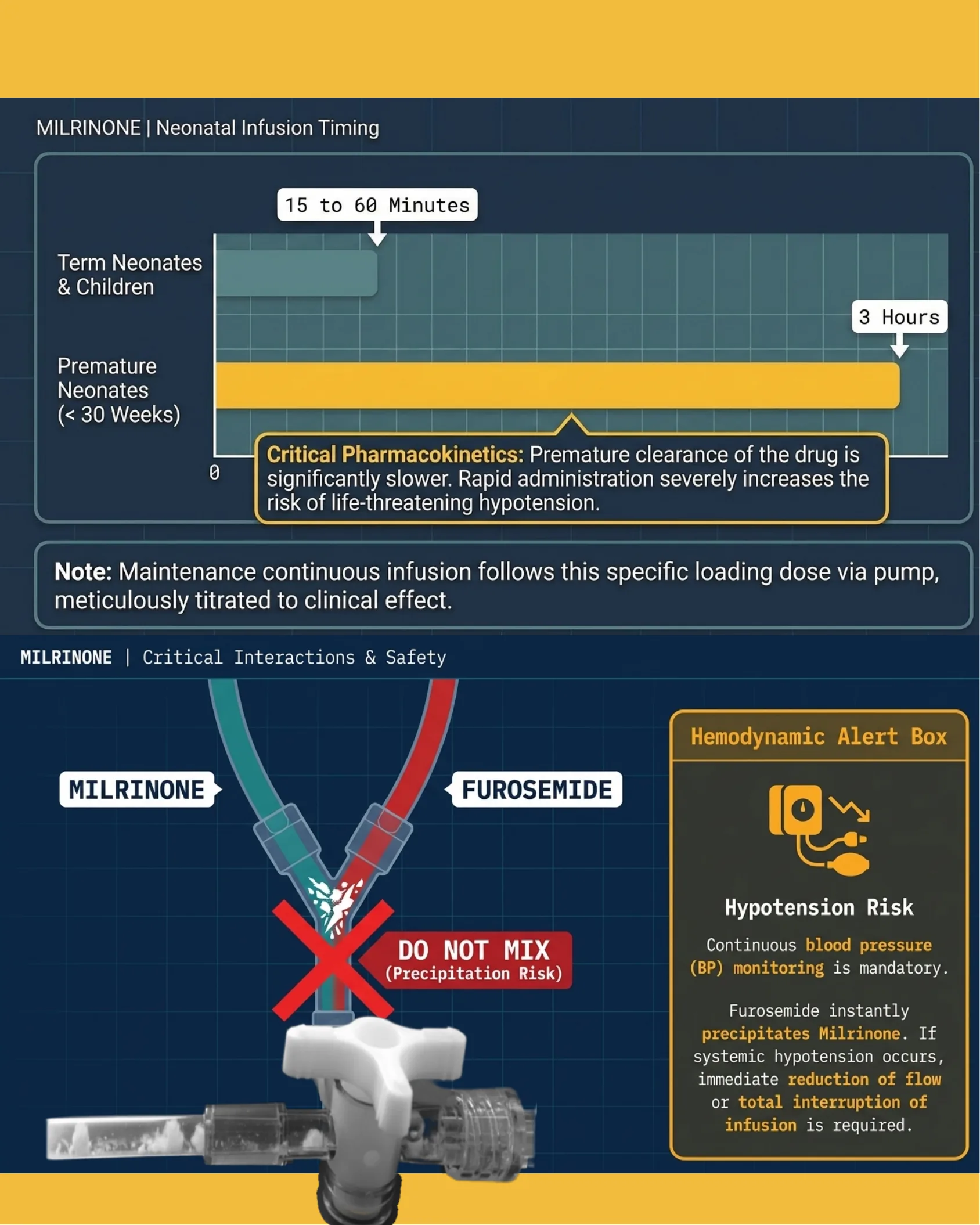
MILRINONE | Neonatal Infusion Timing
- Term Neonates & Children: 15 to 60 Minutes
- Premature Neonates (< 30 Weeks): 3 Hours
Critical Pharmacokinetics: Premature clearance of the drug is significantly slower. Rapid administration severely increases the risk of life-threatening hypotension.
Note: Maintenance continuous infusion follows this specific loading dose via pump, meticulously titrated to clinical effect.
MILRINONE | Critical Interactions & Safety
MILRINONE — FUROSEMIDE
DO NOT MIX (Precipitation Risk)
Hemodynamic Alert Box
Hypotension Risk
Continuous blood pressure (BP) monitoring is mandatory.
Furosemide instantly precipitates Milrinone. If systemic hypotension occurs, immediate reduction of flow or total interruption of infusion is required.
SYNTHESIS | The Neonatal Matrix
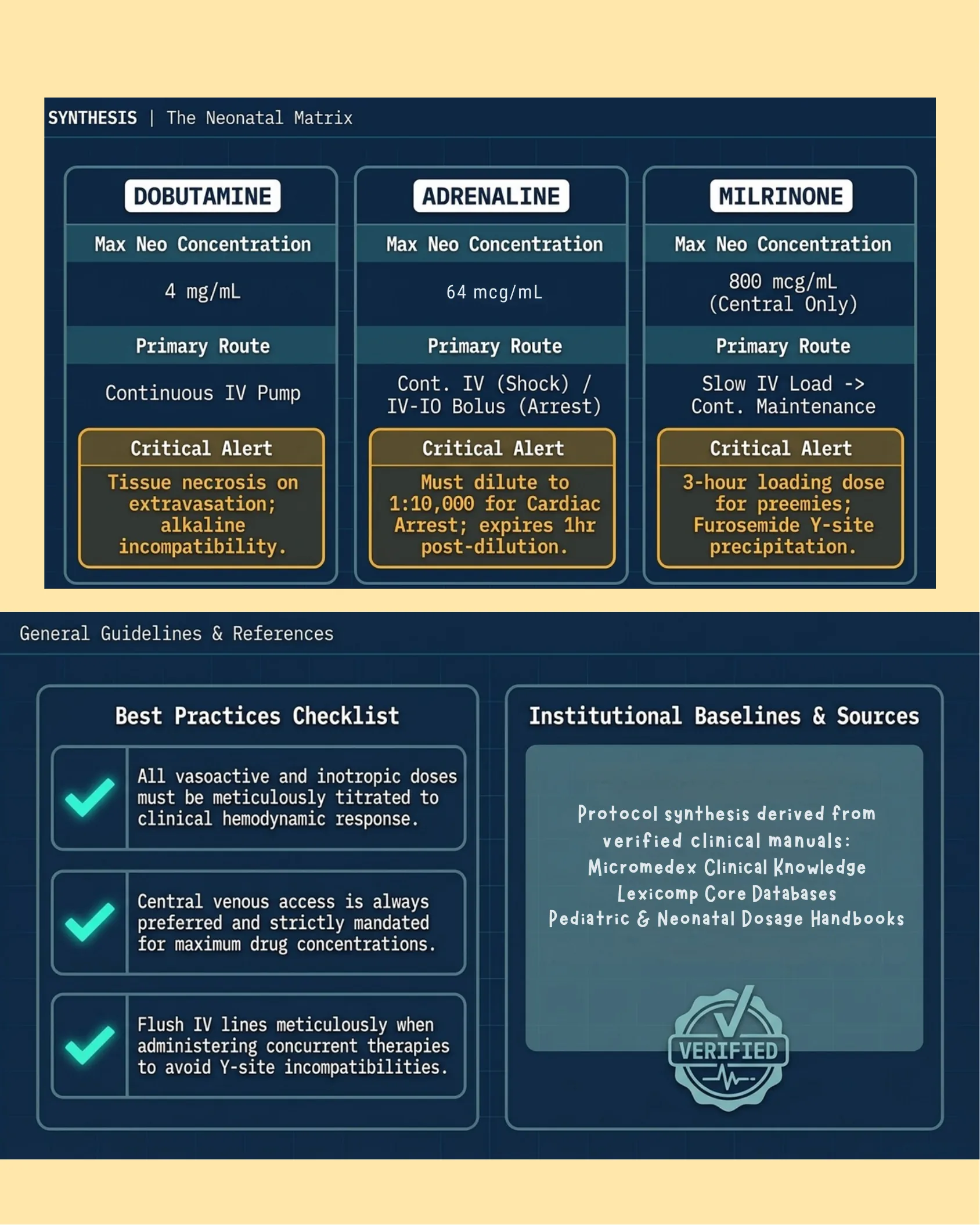
SYNTHESIS | The Neonatal Matrix
| Drug | Max Neo Concentration | Primary Route | Critical Alert |
|---|---|---|---|
| DOBUTAMINE | 4 mg/mL | Continuous IV Pump | Tissue necrosis on extravasation; alkaline incompatibility. |
| ADRENALINE | 64 mcg/mL | Cont. IV (Shock) / IV-IO Bolus (Arrest) | Must dilute to 1:10,000 for Cardiac Arrest; expires 1hr post-dilution. |
| MILRINONE | 800 mcg/mL (Central Only) | Slow IV Load -> Cont. Maintenance | 3-hour loading dose for preemies; Furosemide Y-site precipitation. |
General Guidelines & References
Best Practices Checklist
- All vasoactive and inotropic doses must be meticulously titrated to clinical hemodynamic response.
- Central venous access is always preferred and strictly mandated for maximum drug concentrations.
- Flush IV lines meticulously when administering concurrent therapies to avoid Y-site incompatibilities.
Institutional Baselines & Sources
Protocol synthesis derived from verified clinical manuals:
- Micromedex Clinical Knowledge
- Lexicomp Core Databases
- Pediatric & Neonatal Dosage Handbooks
VERIFIED

neofast
Neonatal Prescription
GET IT ON Google Play
Download on the App Store
Frequently asked questions
What is the recommended dobutamine concentration and dose in neonates?
1 mg/mL (maximum 2 mg/mL with central access), infused at 2–25 mcg/kg/min via a continuous pump.
When is central venous access mandatory for these infusions?
For the higher maximum concentrations; lower concentrations may be given peripherally.
What monitoring does dobutamine require?
Continuous heart rate and rhythm, strict blood-pressure monitoring during titration, urine output, and vigilance for extravasation.