参考文献
- Toronto Resident’s Handbook of Neonatology
要点
- 新生儿戒断综合征(NAS,阿片类特异性戒断称 NOWS)源于宫内物质暴露;30–75% 的阿片类暴露新生儿需要药物治疗。
- 戒断出现时间取决于阿片类:短效(如芬太尼)常<24 小时;长效(美沙酮、丁丙诺啡)延迟至 5–7 天,急性症状持续 10–30 天。
- 改良 Finnegan 评分指导管理——出生后 1–2 小时开始,每 3–4 小时重复;至少监测 72 小时,长效阿片类或多种药物暴露则至少 120 小时。
- 非药物护理(皮肤接触、母婴同室、襁褓、低刺激、母乳喂养)为一线;口服吗啡为一线药物,苯巴比妥或可乐定用于升级。
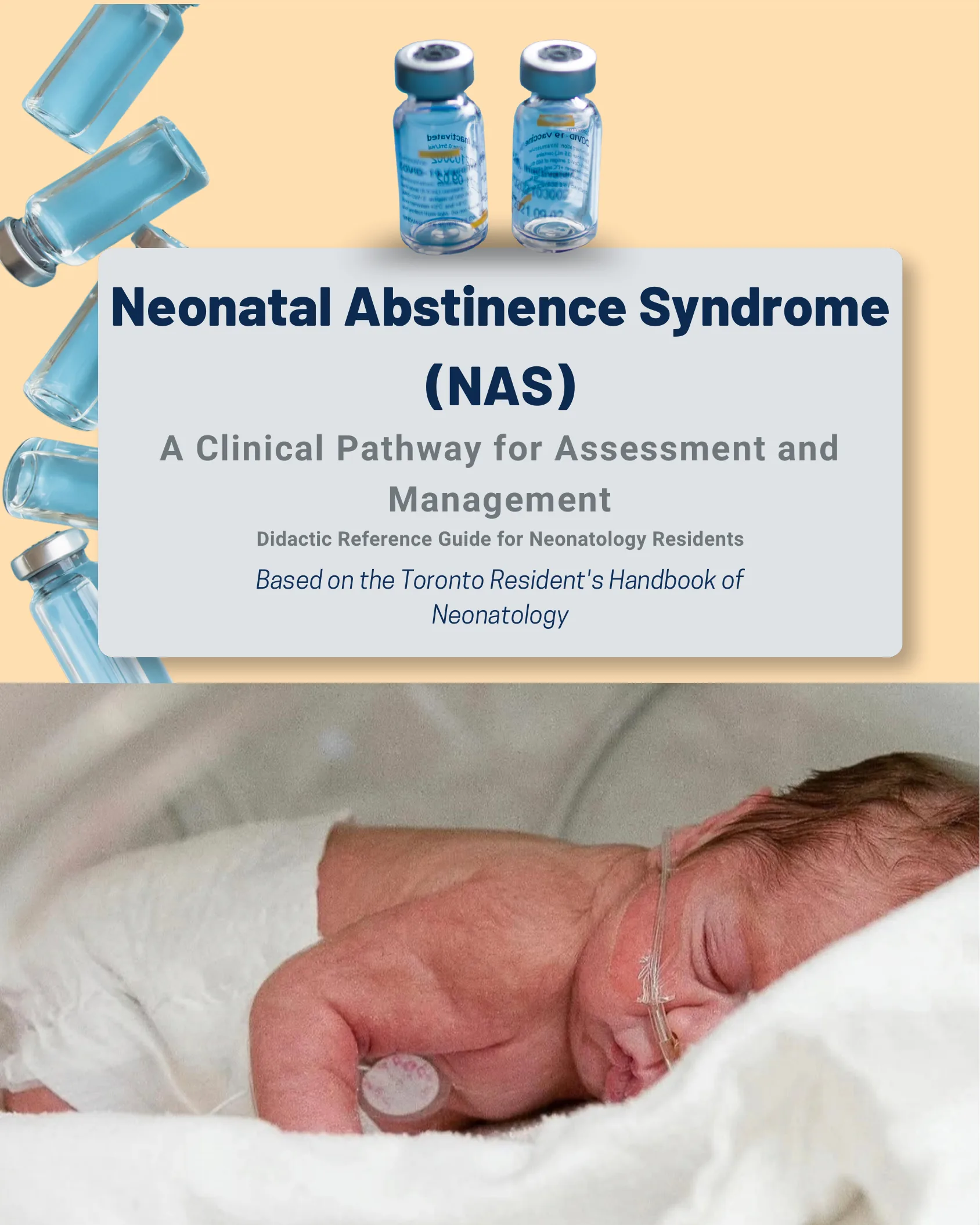
新生儿禁断综合征 (NAS)
评估和管理的临床途径
针对新生儿学住院医生的教学参考指南
基于《多伦多新生儿学住院医生手册》
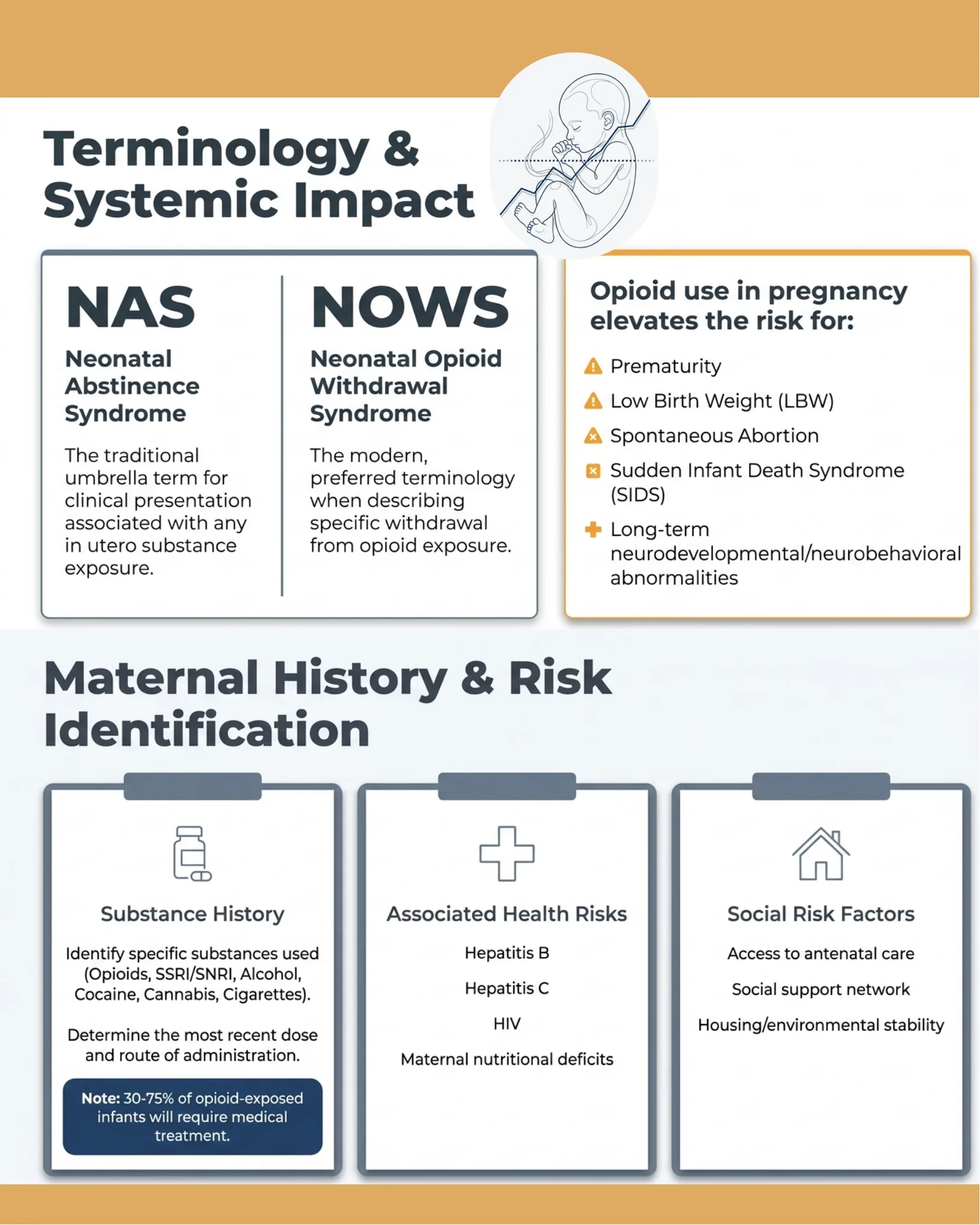
术语与系统影响
术语与系统影响
| NAS | NOWS |
|---|---|
| 新生儿禁断综合征 传统总称,用于描述与任何宫内物质暴露相关的临床表现。 | 新生儿阿片类药物戒断综合征 现代、首选术语,用于描述阿片类药物暴露引起的特异性戒断。 |
妊娠期使用阿片类药物会增加以下风险:
- 早产
- 低出生体重 (LBW)
- 自然流产
- 婴儿猝死综合征 (SIDS)
- 长期神经发育/神经行为异常
产妇病史与风险识别
物质使用史
- 识别具体使用的物质(阿片类药物、SSRI/SNRI、酒精、可卡因、大麻、香烟)。
- 确定最近一次给药的剂量和给药途径。
注意:30-75% 的阿片类药物暴露婴儿需要医学治疗。
相关健康风险
- 乙肝
- 丙肝
- 艾滋病
- 产妇营养不足
社会风险因素
- 获得产前护理的机会
- 社会支持网络
- 住房/环保稳定性
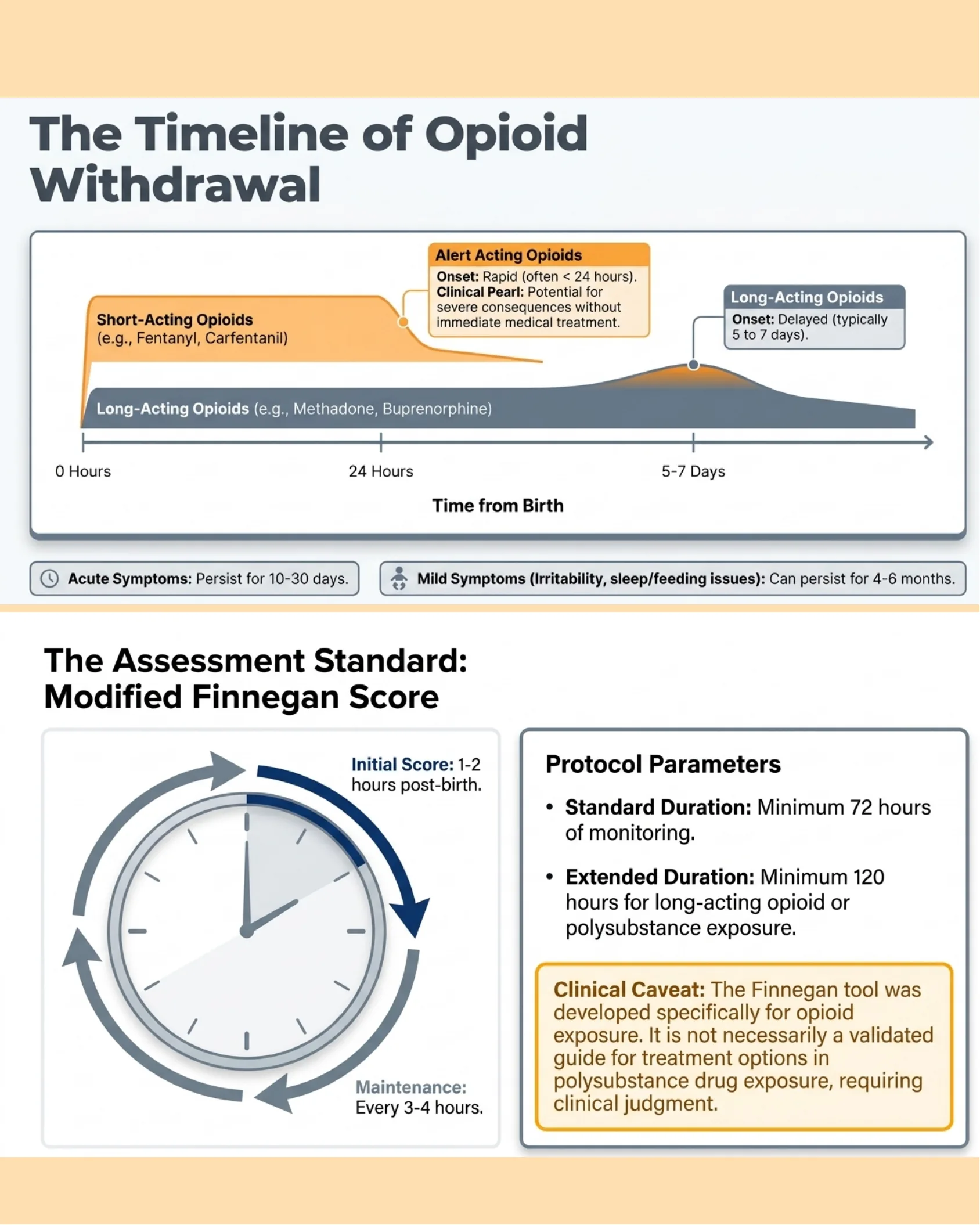
阿片类药物戒断的时间表与评估标准
阿片类药物戒断的时间表
- 短效阿片类药物(如芬太尼、卡芬太尼)
起始:迅速(通常 < 24 小时)。
临床要点:如不立即接受医学治疗,可能导致严重后果。 - 长效阿片类药物(如美沙酮、丁丙诺啡)
起始:延迟(通常 5-7 天)。
急性症状:持续 10-30 天。
轻度症状(易激惹、睡眠/喂养问题):可持续 4-6 个月。
评估标准:改良 Finnegan 评分
- 初始评分:出生后 1-2 小时。
- 维持:每 3-4 小时一次。
方案参数
- 标准时间:最少 72 小时监测。
- 延长时间:长效阿片类药物或多物质暴露时最少 120 小时。
临床警告:Finnegan 工具是专门为阿片类药物暴露开发的。对于多物质药物暴露的治疗方案,它不一定是经过验证的指南,需要临床判断。
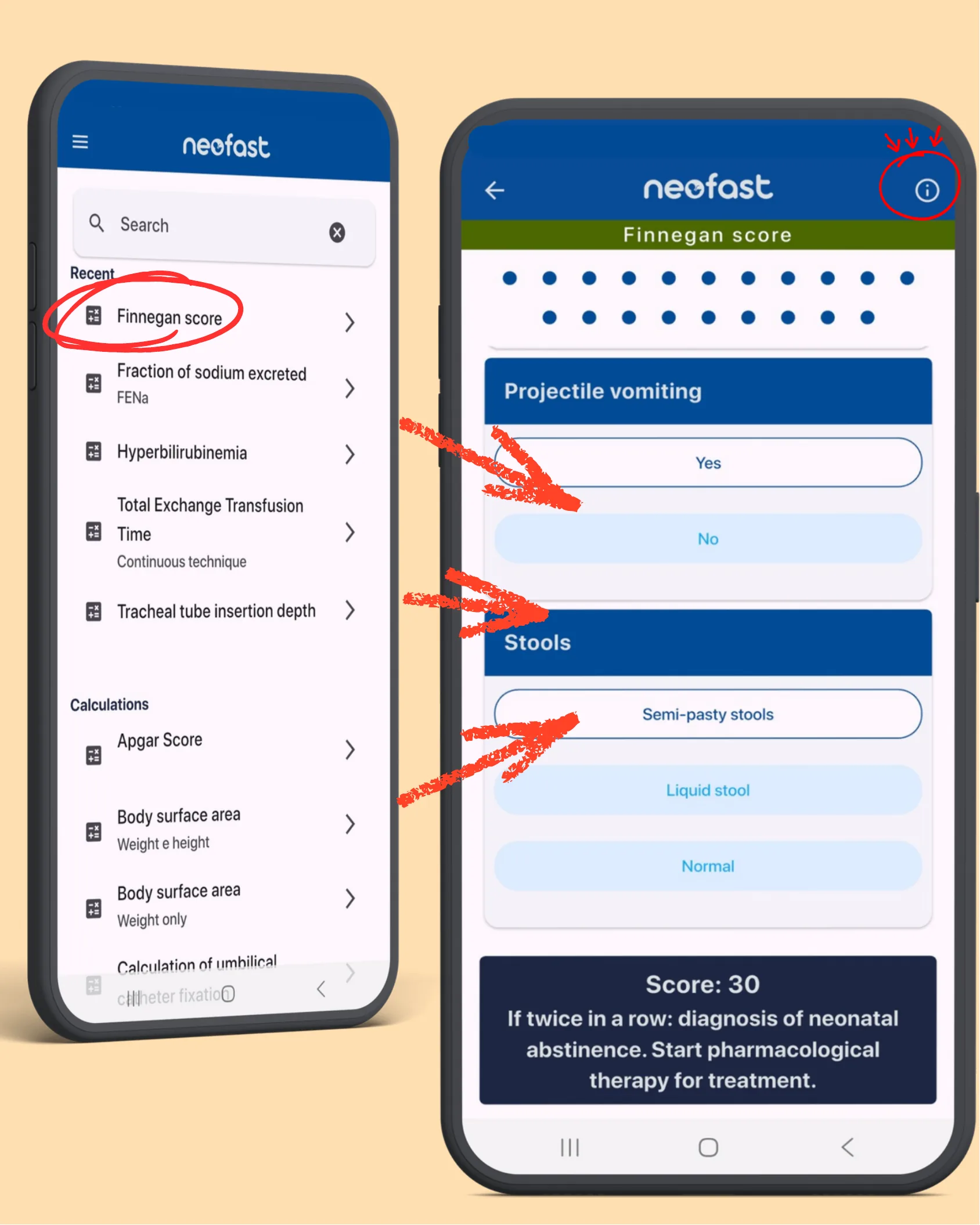
Finnegan 评分 – 应用示例
Finnegan 评分
应用程序:NeoFast
- 最近选择的工具:Finnegan 评分
Finnegan 评分
- 喷射性呕吐:是/否
- 大便:半糊状大便/液体大便/正常
评分:30
连续两次出现:诊断为新生儿禁断。开始药理学治疗。
Finnegan 评分表
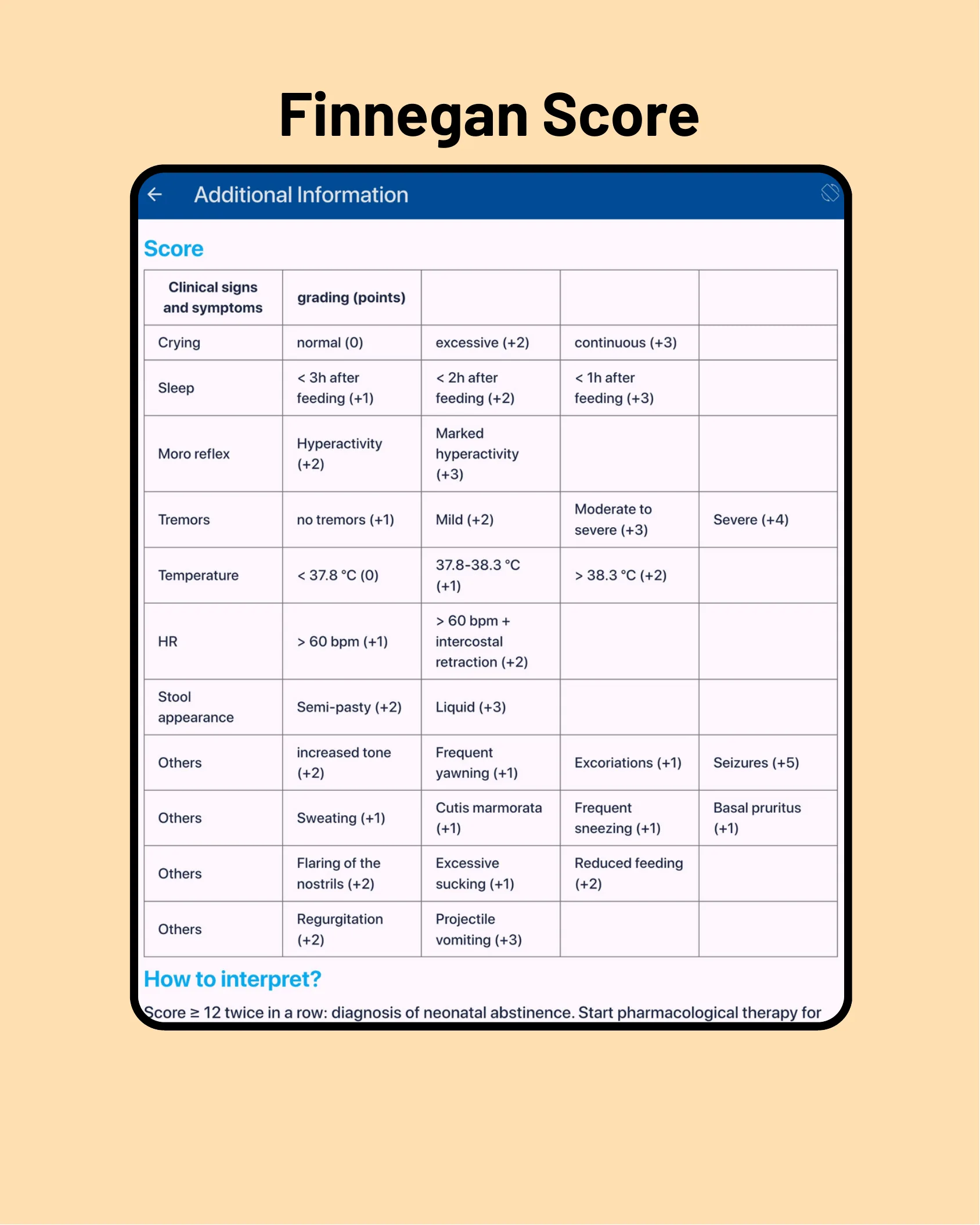
Finnegan 评分
| 临床体征和症状 | 分级(分数) | |||
|---|---|---|---|---|
| 哭声 | 正常 (0) | 过度 (+2) | 持续 (+3) | |
| 睡眠 | 喂养后 < 3小时 (+1) | 喂养后 < 2小时 (+2) | 喂养后 < 1小时 (+3) | |
| Moro 反射 | 亢进 (+2) | 明显亢进 (+3) | ||
| 震颤 | 无震颤 (+1) | 轻度 (+2) | 中度至重度 (+3) | 重度 (+4) |
| 温度 | < 37.8 °C (0) | 37.8-38.3 °C (+1) | > 38.3 °C (+2) | |
| HR | > 60 bpm (+1) | > 60 bpm + 肋间凹陷 (+2) | ||
| 大便外观 | 半糊状 (+2) | 液体 (+3) | ||
| 其他 | 肌张力增加 (+2) | 频繁哈欠 (+1) | 皮肤抓伤 (+1) | 抽搐 (+5) |
| 其他 | 出汗 (+1) | 网状青斑 (+1) | 频繁打喷嚏 (+1) | 基底瘙痒 (+1) |
| 其他 | 鼻翼扇动 (+2) | 吸吮过度 (+1) | 喂养减少 (+2) | |
| 其他 | 反流 (+2) | 喷射性呕吐 (+3) | ||
如何解释?
连续两次评分 ≥ 12:诊断为新生儿禁断。开始药理学治疗…
可视化 Finnegan 评分与非药理学护理
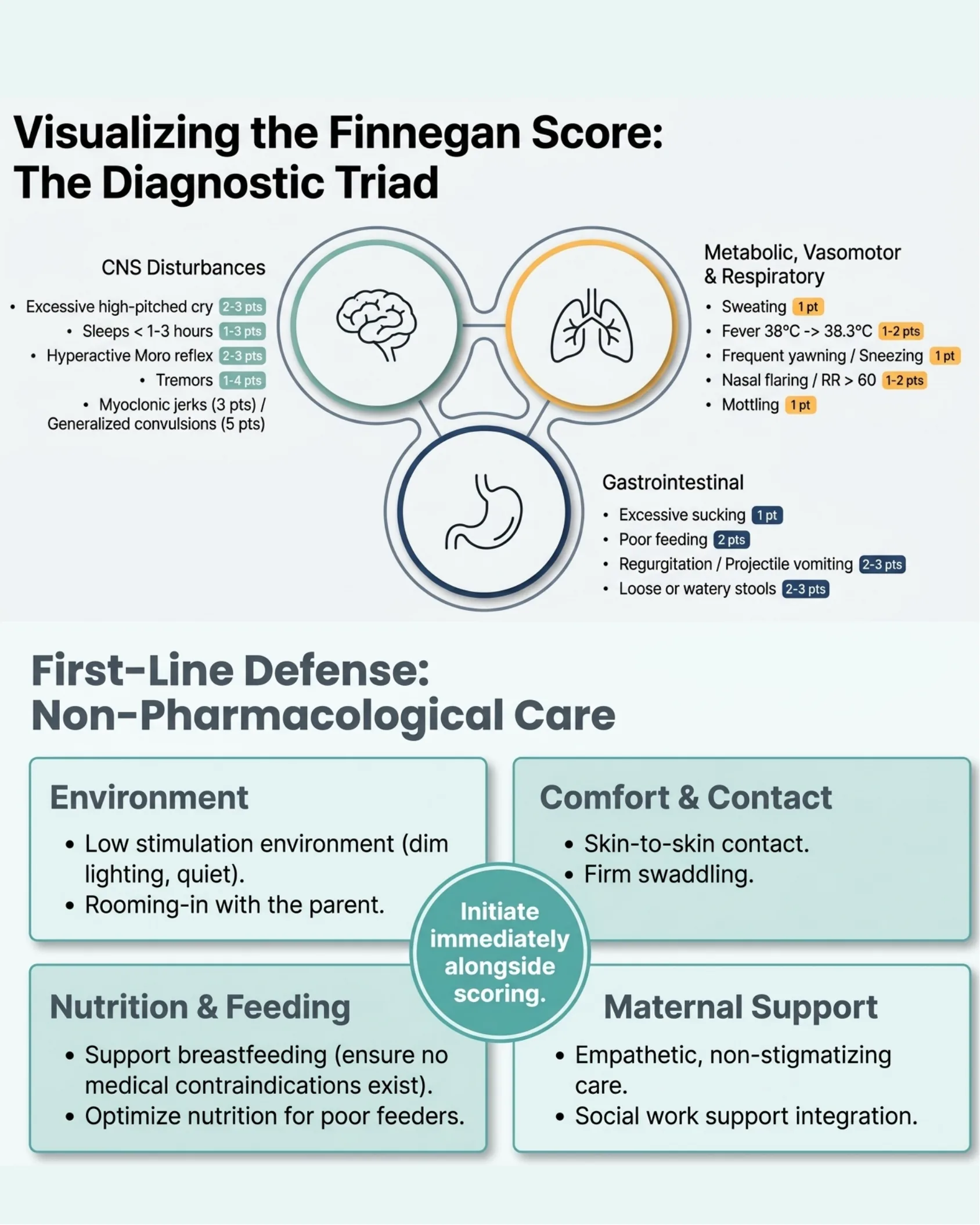
可视化 Finnegan 评分:诊断三联症
中枢神经系统障碍
- 过度高音哭声:2-3 分
- 睡眠 < 1-3 小时:1-3 分
- Moro 反射亢进:2-3 分
- 震颤:1-4 分
- 肌阵挛 (3 分) / 全身抽搐 (5 分)
代谢、血管舒缩与呼吸
- 出汗:1 分
- 发热 38°C -> 38.3°C:1-2 分
- 频繁哈欠/打喷嚏:1 分
- 鼻翼扇动/呼吸频率 > 60:1-2 分
- 网状青斑:1 分
胃肠道
- 吸吮过度:1 分
- 喂养不良:2 分
- 反流/喷射性呕吐:2-3 分
- 松散或水样大便:2-3 分
第一线防守:非药理学护理
与评分同时立即启动。
环境
- 低刺激环境(昏暗照明、安静)。
- 与家长同室。
舒适与接触
- 皮肤接触。
- 紧密包裹。
营养与喂养
- 支持母乳喂养(确保不存在医学禁忌)。
- 优化喂养不良婴儿的营养。
产妇支持
- 同情、无污名化的护理。
- 融合社会工作支持。
临床决策算法与升级阈值
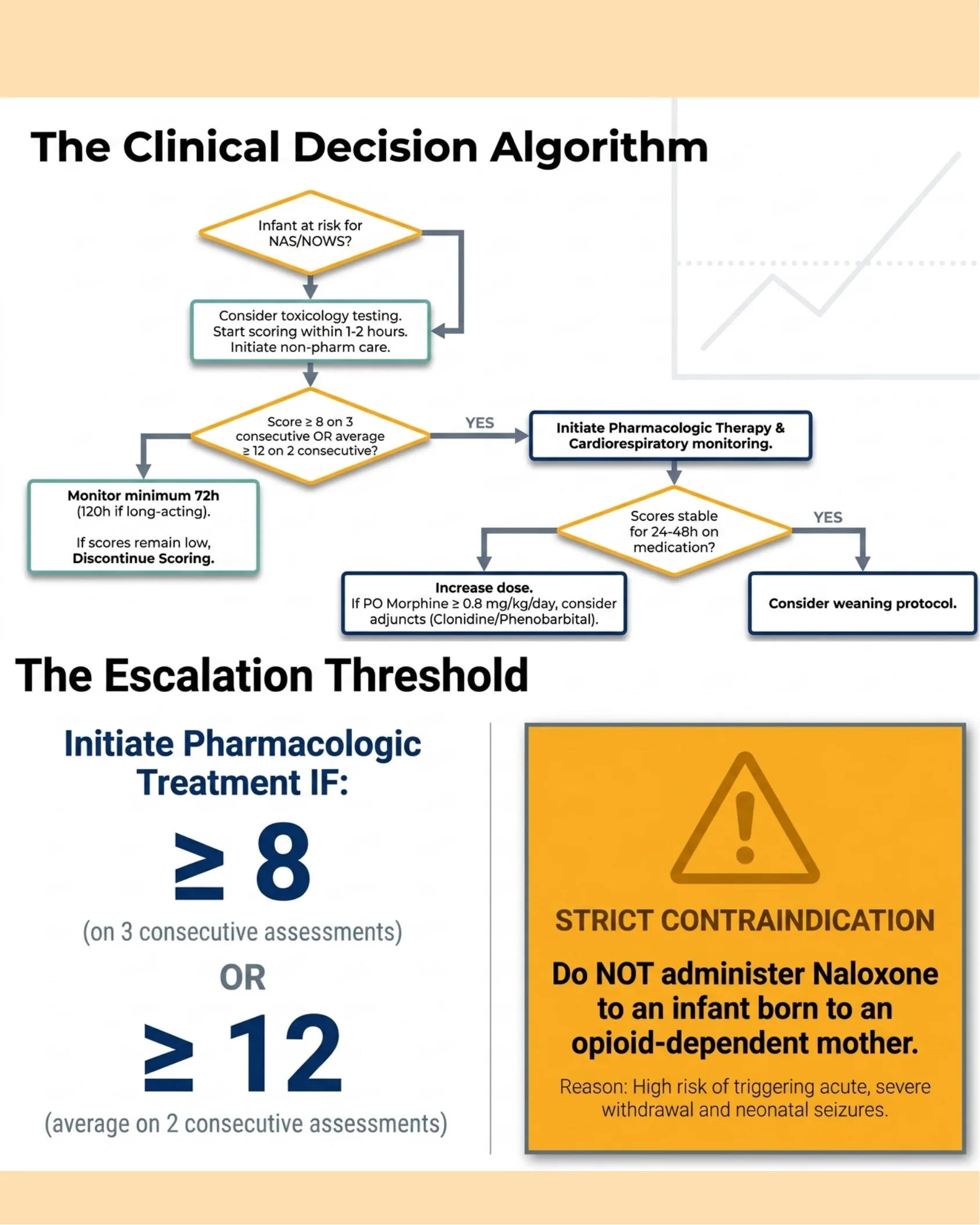
临床决策算法
- 婴儿患 NAS/NOWS 风险?
- 考虑毒理学检测。在 1-2 小时内开始评分。启动非药理护理。
- 连续 3 次评分 ≥ 8 或连续 2 次平均 ≥ 12?
如否:监测最少 72 小时(长效药物时 120 小时)。如评分保持低位,停止评分。
如是:启动药理学治疗与心肺监测。
- 服药 24-48 小时后评分稳定?
如否:增加剂量。如口服吗啡 ≥ 0.8 mg/kg/day,考虑辅助用药(可乐定/苯巴比妥)。
如是:考虑逐量递减方案。
升级阈值
以下情况启动药理学治疗:
- ≥ 8(连续 3 次评估)
- 或
- ≥ 12(连续 2 次评估的平均值)
严格禁忌
不要向阿片类药物依赖母亲所生的婴儿给予纳洛酮。
原因:高风险触发急性、严重戒断和新生儿抽搐。
药理学管理概述与比较矩阵
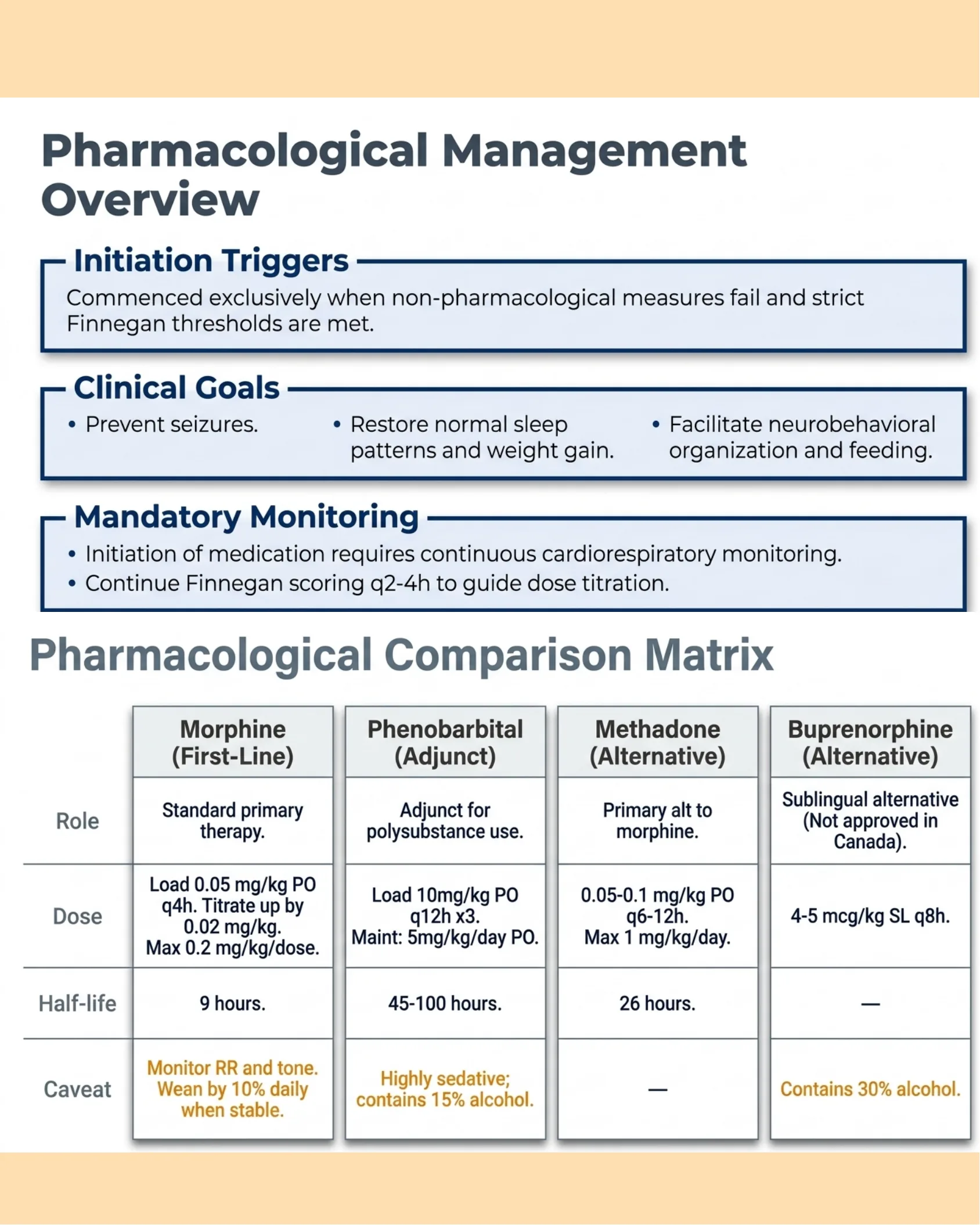
药理学管理概述
启动触发因素
仅当非药理学措施失败且严格符合 Finnegan 阈值时才开始使用。
临床目标
- 预防抽搐。
- 恢复正常睡眠模式和体重增加。
- 促进神经行为组织和喂养。
强制性监测
- 药物启动需要连续心肺监测。
- 继续 Finnegan 评分 q2-4h 以指导剂量滴定。
药理学比较矩阵
| 吗啡(一线) | 苯巴比妥(辅助) | 美沙酮(替代) | 丁丙诺啡(替代) | |
|---|---|---|---|---|
| 作用 | 标准一线治疗。 | 多物质使用的辅助用药。 | 吗啡的主要替代品。 | 舌下替代品(加拿大未批准)。 |
| 剂量 | 负荷 0.05 mg/kg 口服 q4h。按 0.02 mg/kg 逐量递增。最大 0.2 mg/kg/次。 | 负荷 10mg/kg 口服 q12h × 3。维持:5mg/kg/天 口服。 | 0.05-0.1 mg/kg 口服 q6-12h。最大 1 mg/kg/天。 | 4-5 mcg/kg 舌下 q8h。 |
| 半衰期 | 9 小时。 | 45-100 小时。 | 26 小时。 | — |
| 警告 | 监测呼吸频率和肌张力。稳定后按日减少 10%。 | 高度镇静;含 15% 酒精。 | — | 含 30% 酒精。 |
逐量递减与出院标准
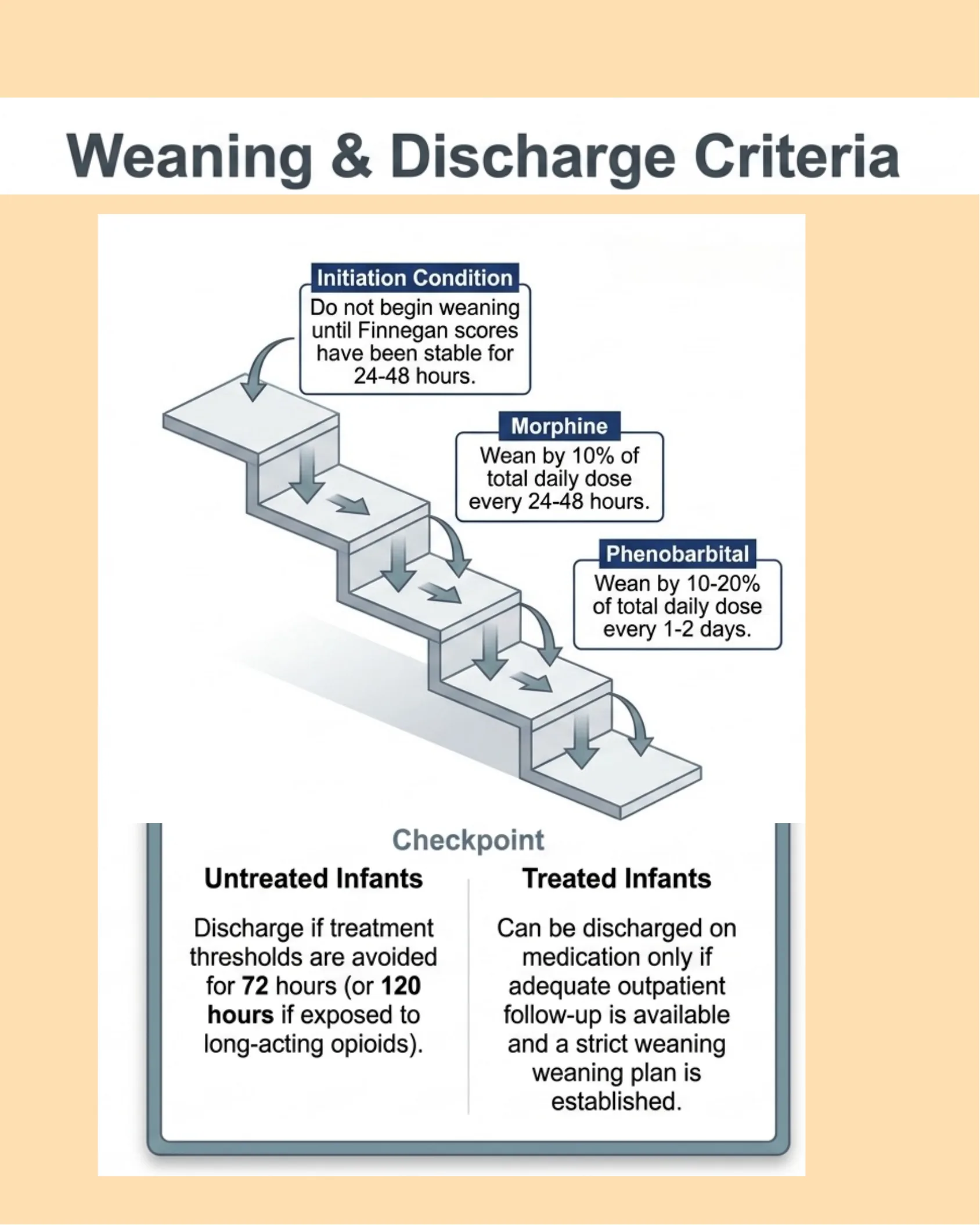
逐量递减与出院标准
- 启动条件:不要在 Finnegan 评分稳定 24-48 小时前开始逐量递减。
- 吗啡:每 24-48 小时按总日剂量的 10% 逐量递减。
- 苯巴比妥:每 1-2 天按总日剂量的 10-20% 逐量递减。
检查点
| 未治疗婴儿 | 已治疗婴儿 |
|---|---|
| 如未达到治疗阈值 72 小时(或长效阿片类药物暴露时 120 小时),可出院。 | 仅在有充分的门诊随访和已建立严格逐量递减方案的情况下,才能带药出院。 |
值班住院医生的总结与临床要点
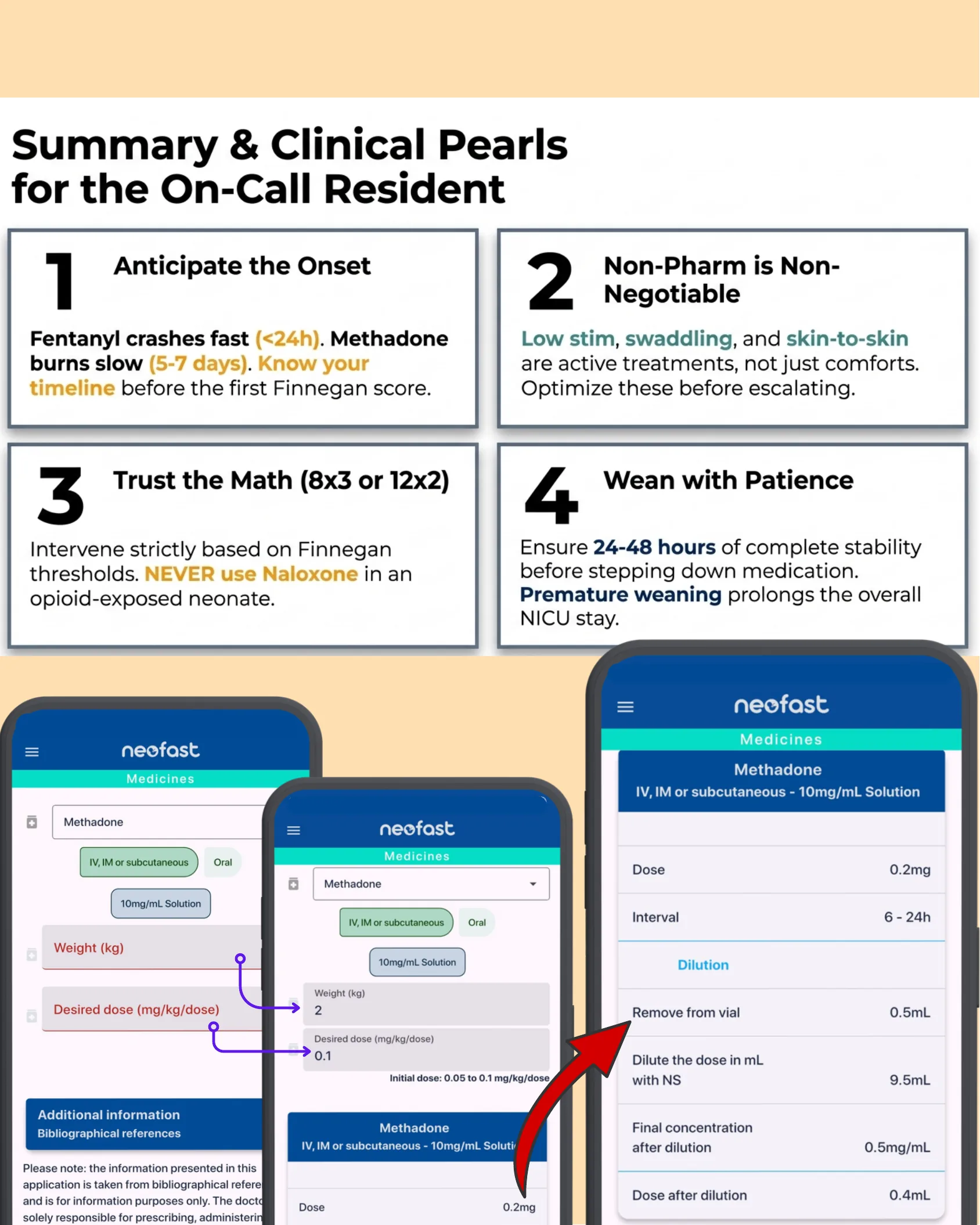
值班住院医生的总结与临床要点
- 预测起始
芬太尼下降迅速(<24 小时)。美沙酮下降缓慢(5-7 天)。在第一次 Finnegan 评分前了解你的时间表。
- 非药理学不可协商
低刺激、包裹和皮肤接触是主动治疗,而不仅仅是舒适措施。在升级前优化这些。
- 相信数据(8×3 或 12×2)
严格根据 Finnegan 阈值进行干预。不要在阿片类药物暴露新生儿中使用纳洛酮。
- 耐心逐量递减
确保完全稳定 24-48 小时后再减少药物。提前逐量递减会延长整体 NICU 住院时间。
NeoFast 应用 – 美沙酮给药示例
- 药物:美沙酮
- 途径:IV、IM 或皮下/口服
- 浓度:10mg/mL 溶液
- 体重 (kg):2
- 所需剂量 (mg/kg/次):0.1
- 初始剂量:0.05 至 0.1 mg/kg/次
- 剂量:0.2mg
- 间隔:6 – 24 小时
稀释
- 从小瓶中取出:0.5mL
- 用 NS 稀释剂量到 mL:9.5mL
- 稀释后最终浓度:0.5mg/mL
- 稀释后剂量:0.4mL
其他信息
文献参考资料
请注意:本应用程序中呈现的信息来自文献参考资料,仅供信息目的。医生单独负责处方、给药…

NeoFast
- GET IT ON Google Play
- Download on the App Store
常见问题
何时开始 NAS 的药物治疗?
当改良 Finnegan 评分提示时——通常连续 3 次评分≥8,或连续 2 次平均≥12。
物质暴露的新生儿应监测多久?
至少 72 小时;长效阿片类或多药暴露则延长至至少 120 小时。
NAS 的一线治疗是什么?
先采取非药物措施(皮肤接触、母婴同室、襁褓、低刺激环境、母乳喂养);口服吗啡为一线药物,无效时用苯巴比妥或可乐定。