


Key takeaways
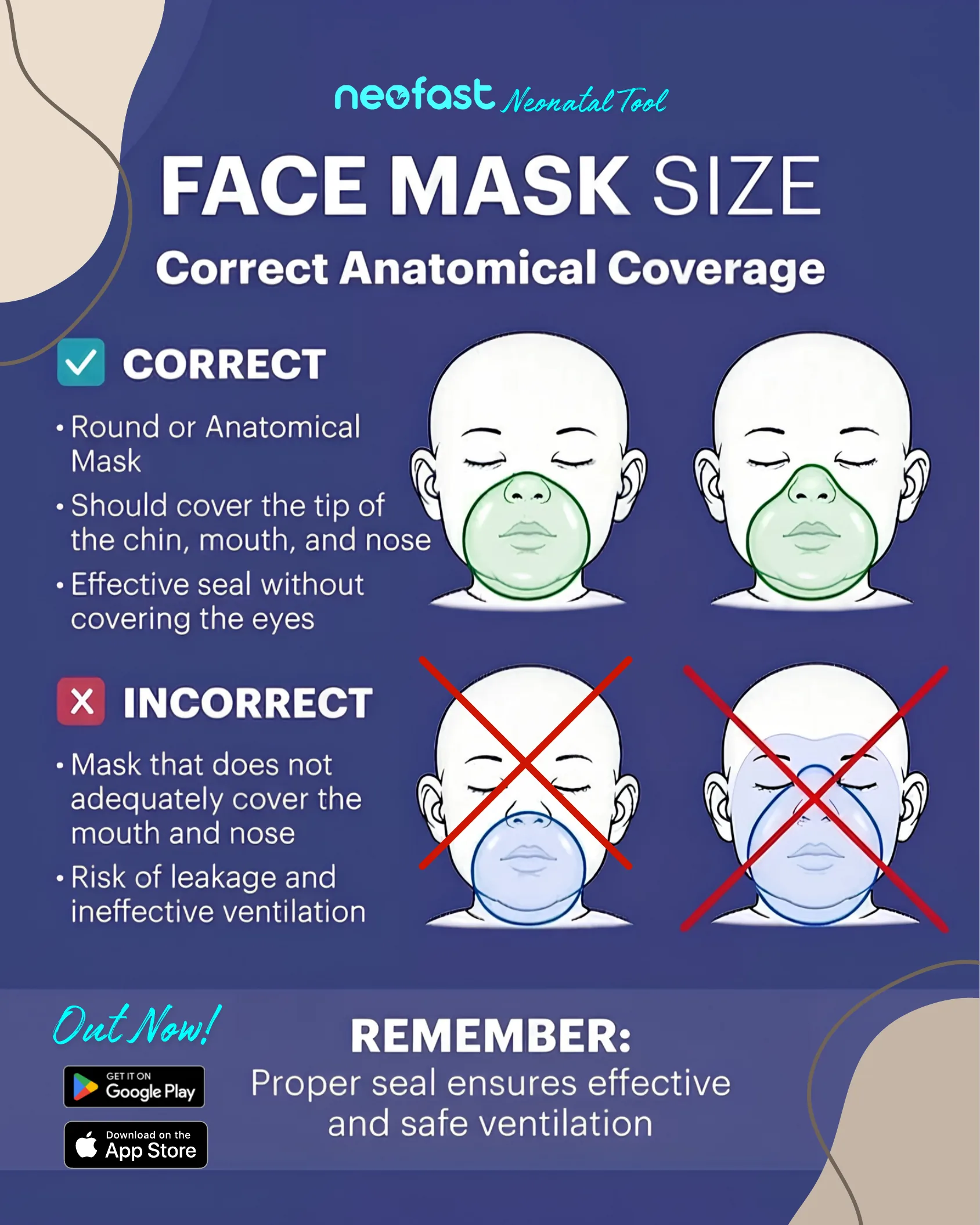
- A correctly sized neonatal face mask should cover the tip of the chin, the mouth, and the nose to achieve an effective seal.
- Proper mask fit must avoid covering the eyes while still ensuring an effective seal during ventilation.
- An incorrectly fitted mask that does not adequately cover the mouth and nose risks leakage and ineffective ventilation.
- Proper seal is essential to ensure effective and safe neonatal ventilation.
Face Mask Size – Correct Anatomical Coverage
Neofast Neonatal Tool
FACE MASK SIZE
Correct Anatomical Coverage
✔ CORRECT
- Round or Anatomical Mask
- Should cover the tip of the chin, mouth, and nose
- Effective seal without covering the eyes
✘ INCORRECT
- Mask that does not adequately cover the mouth and nose
- Risk of leakage and ineffective ventilation
Out Now!
REMEMBER: Proper seal ensures effective and safe ventilation
Frequently asked questions
What anatomical landmarks should a neonatal face mask cover for correct fit?
The mask should cover the tip of the chin, the mouth, and the nose, providing an effective seal without covering the eyes.
What happens if a neonatal face mask does not cover the mouth and nose adequately?
It creates a risk of leakage and ineffective ventilation.
Should a neonatal ventilation mask cover the eyes?
No, the mask should provide an effective seal without covering the eyes.
What type of mask shape is recommended for correct anatomical coverage in neonatal ventilation?
A round or anatomical mask that covers the tip of the chin, mouth, and nose is recommended.
Why does proper face mask seal matter in neonatal ventilation?
Proper seal ensures effective and safe ventilation.


Get NeoFast
Precise neonatal prescribing at the bedside — 150+ drugs, drip rates, GIR, fluids and electrolytes.
★ 4.8 · rated 70 · Free 30-day trial