


Phenobarbital in Neonatal Abstinence Syndrome (NAS)
Clinical Indications & Management Protocols
Distilled insights from the Toronto Resident’s Handbook of Neonatology
Clinical Pathway & Treatment Trigger
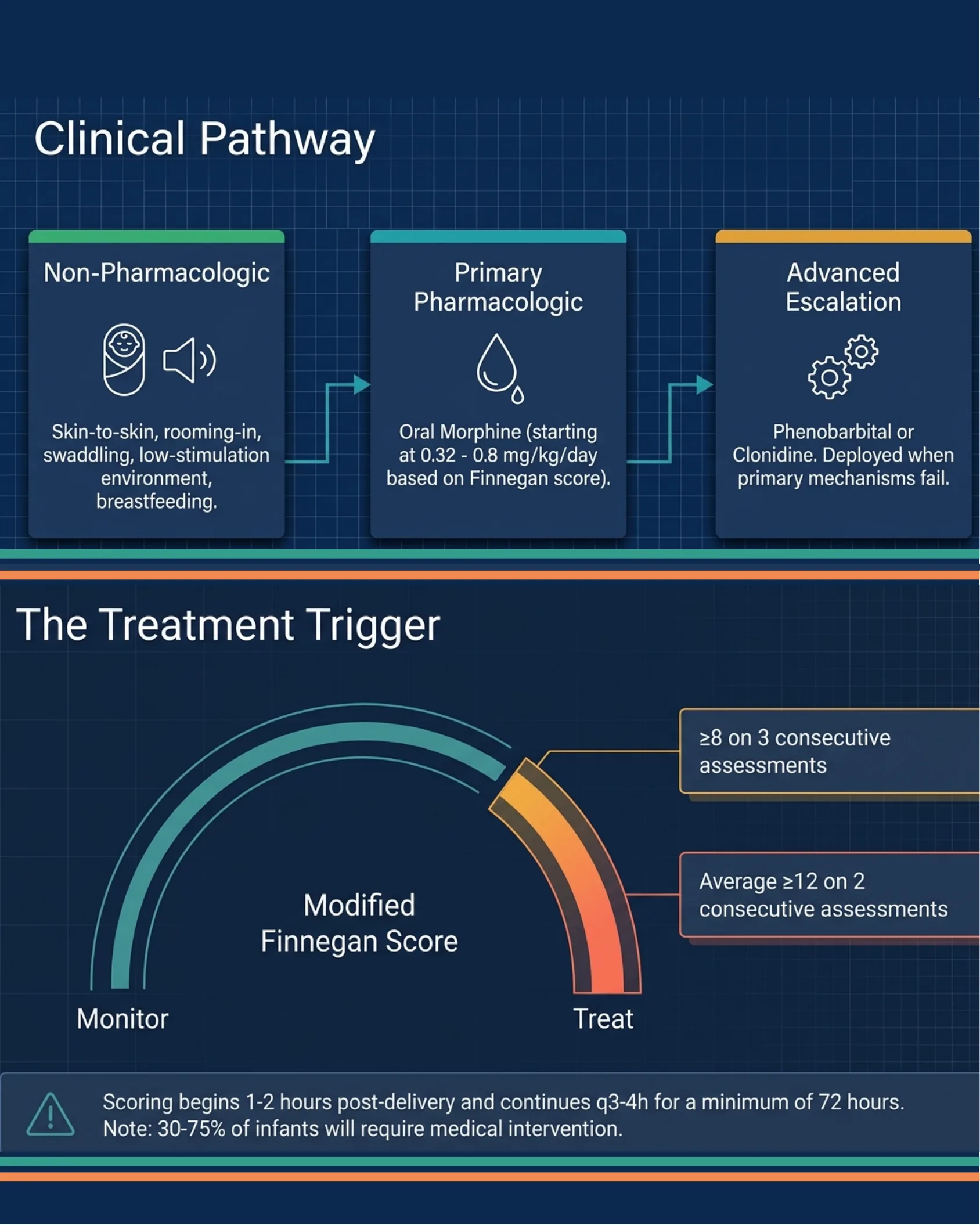
Clinical Pathway
- Non-Pharmacologic: Skin-to-skin, rooming-in, swaddling, low-stimulation environment, breastfeeding.
- Primary Pharmacologic: Oral Morphine (starting at 0.32 – 0.8 mg/kg/day based on Finnegan score).
- Advanced Escalation: Phenobarbital or Clonidine. Deployed when primary mechanisms fail.
The Treatment Trigger
Modified Finnegan Score: ranges from Monitor to Treat.
- ≥8 on 3 consecutive assessments
- Average ≥12 on 2 consecutive assessments
Note: Scoring begins 1-2 hours post-delivery and continues q3-4h for a minimum of 72 hours. 30-75% of infants will require medical intervention.
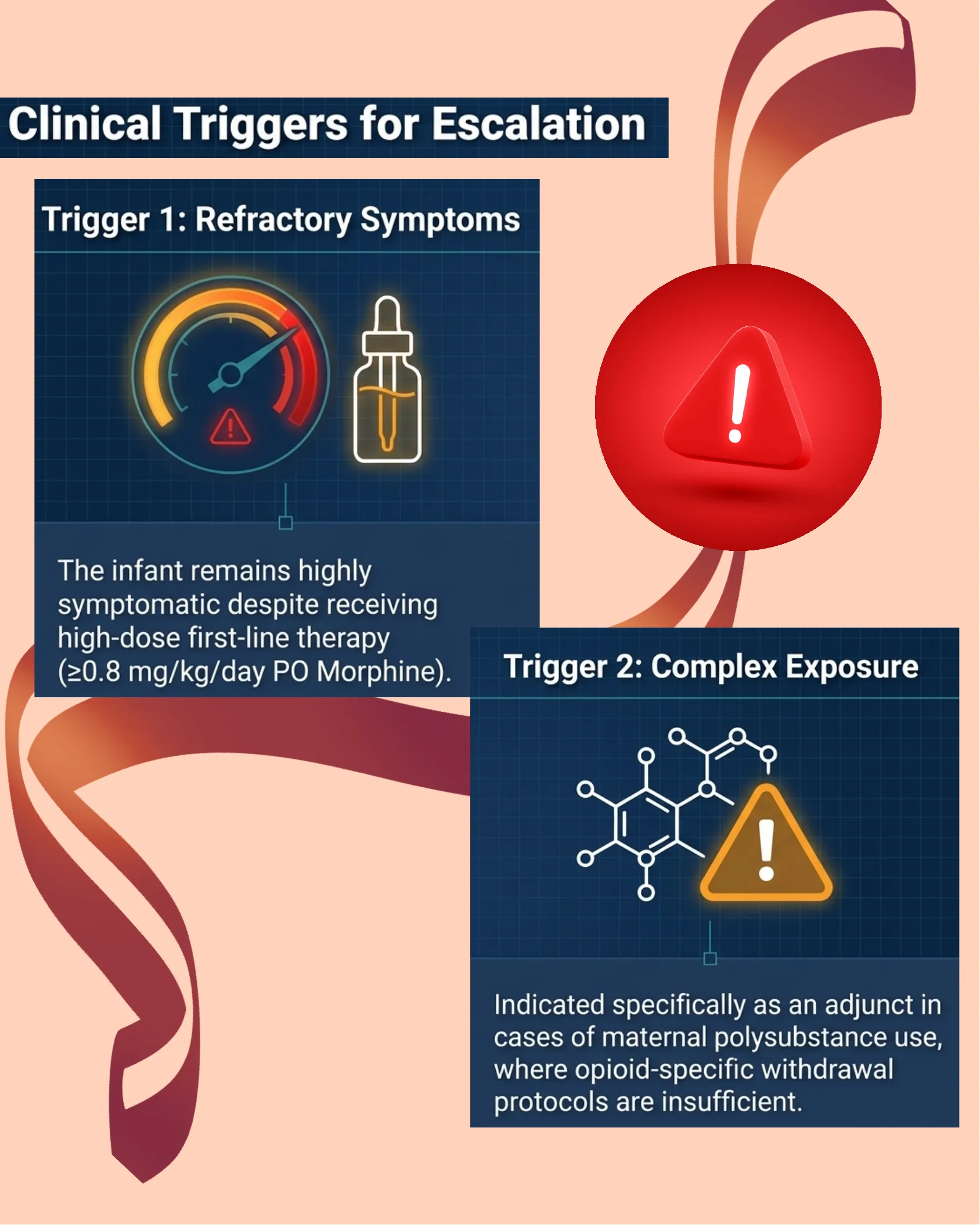
Clinical Triggers for Escalation
Clinical Triggers for Escalation
Trigger 1: Refractory Symptoms
The infant remains highly symptomatic despite receiving high-dose first-line therapy (≥0.8 mg/kg/day PO Morphine).
Trigger 2: Complex Exposure
Indicated specifically as an adjunct in cases of maternal polysubstance use, where opioid-specific withdrawal protocols are insufficient.
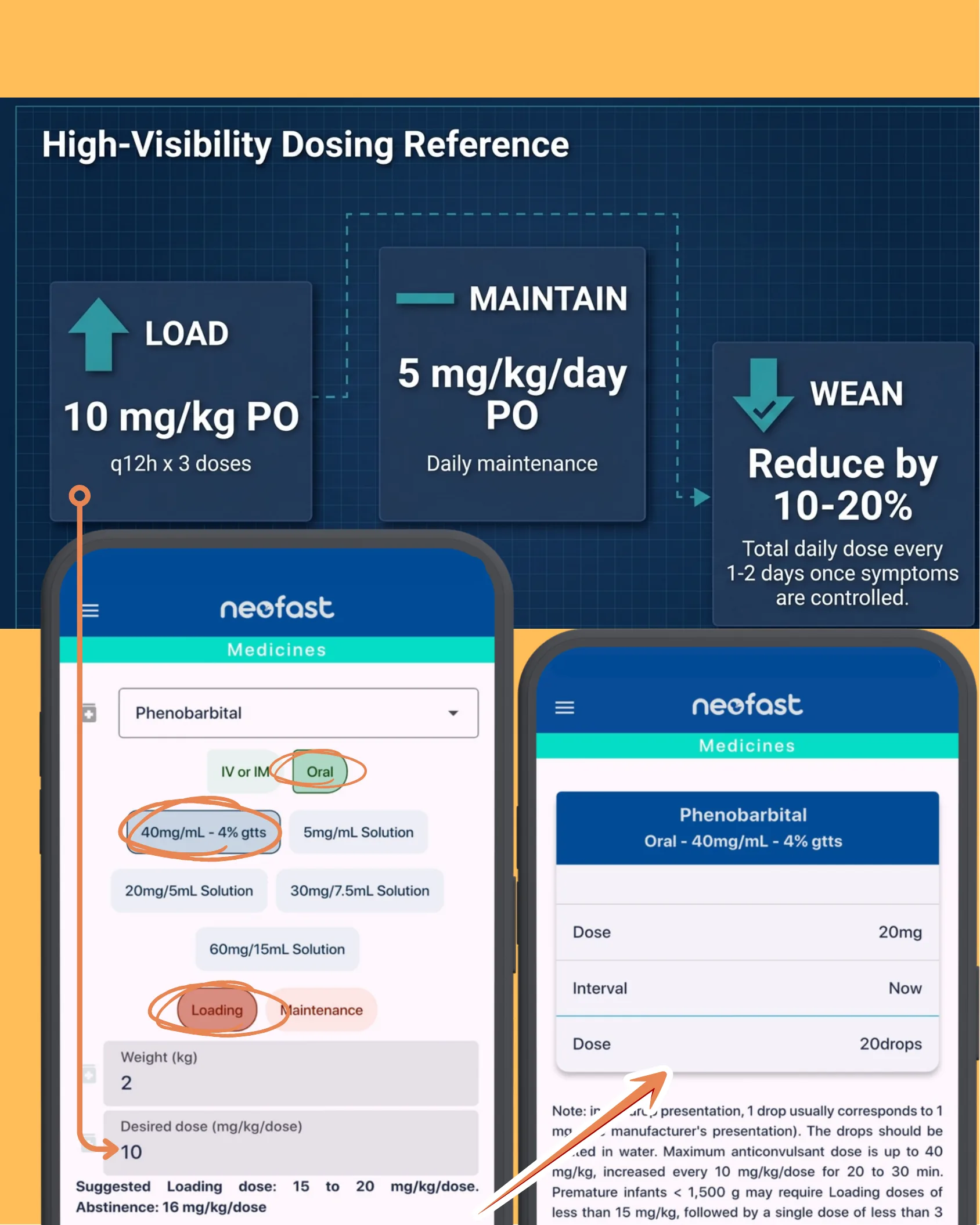
High-Visibility Dosing Reference (Loading)
High-Visibility Dosing Reference
- LOAD: 10 mg/kg PO, q12h x 3 doses
- MAINTAIN: 5 mg/kg/day PO, Daily maintenance
- WEAN: Reduce by 10-20% of total daily dose every 1-2 days once symptoms are controlled.
NeoFast App Reference – Loading Dose Example
Medicine: Phenobarbital
Route: Oral
Formulation: 40mg/mL – 4% gtts
Mode: Loading
Weight (kg): 2
Desired dose (mg/kg/dose): 10
Suggested Loading dose: 15 to 20 mg/kg/dose. Abstinence: 16 mg/kg/dose
| Dose | 20mg |
| Interval | Now |
| Dose | 20 drops |
Note: in the drop presentation, 1 drop usually corresponds to 1 mg (see manufacturer’s presentation). The drops should be diluted in water. Maximum anticonvulsant dose is up to 40 mg/kg, increased every 10 mg/kg/dose for 20 to 30 min. Premature infants < 1,500 g may require Loading doses of less than 15 mg/kg, followed by a single dose of less than 3…
High-Visibility Dosing Reference (Maintenance)
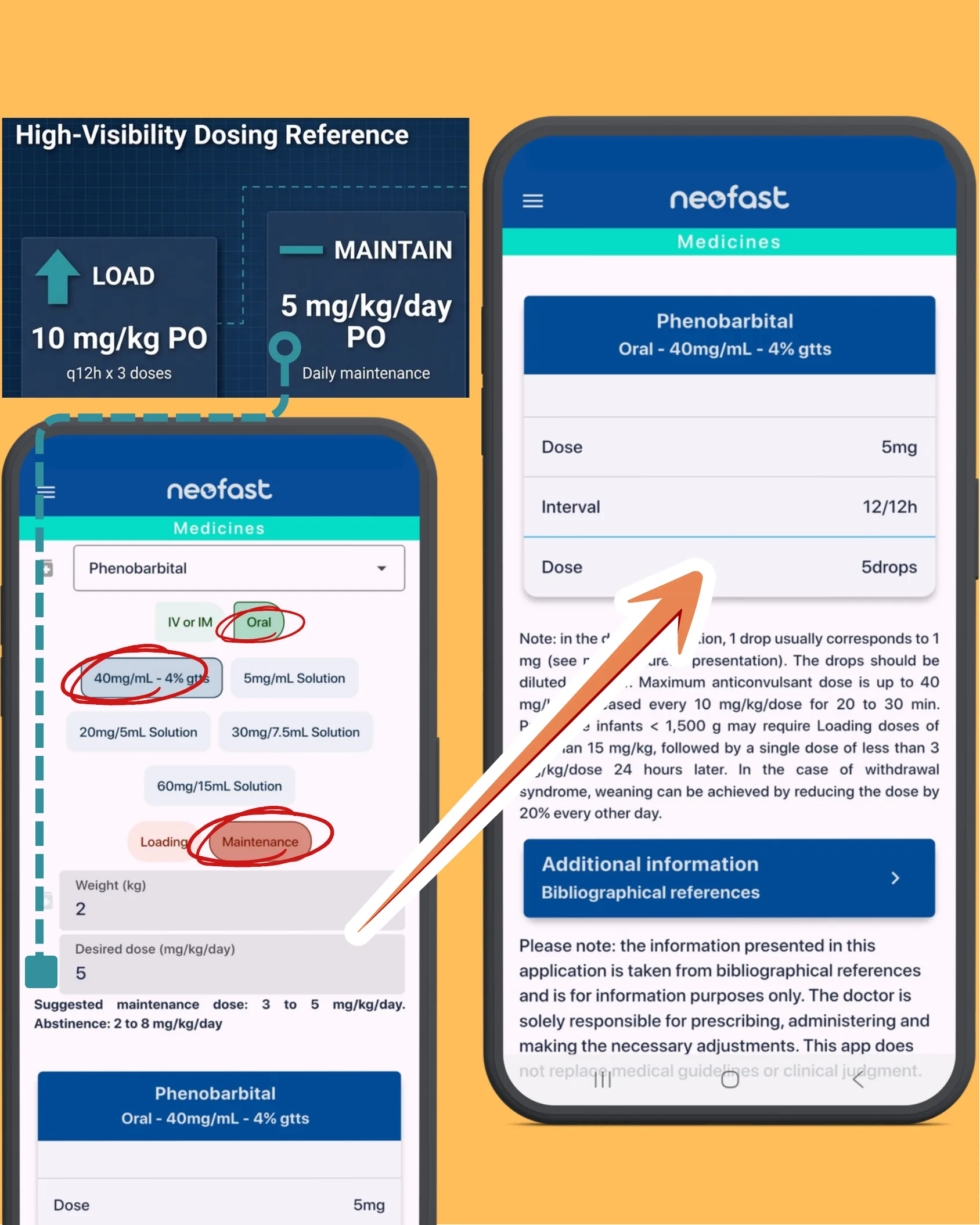
High-Visibility Dosing Reference
- LOAD: 10 mg/kg PO, q12h x 3 doses
- MAINTAIN: 5 mg/kg/day PO, Daily maintenance
NeoFast App Reference – Maintenance Dose Example
Medicine: Phenobarbital
Route: Oral
Formulation: 40mg/mL – 4% gtts
Mode: Maintenance
Weight (kg): 2
Desired dose (mg/kg/day): 5
Suggested maintenance dose: 3 to 5 mg/kg/day. Abstinence: 2 to 8 mg/kg/day
| Dose | 5mg |
| Interval | 12/12h |
| Dose | 5 drops |
Note: in the drop presentation, 1 drop usually corresponds to 1 mg (see manufacturer’s presentation). The drops should be diluted… Maximum anticonvulsant dose is up to 40 mg/kg, increased every 10 mg/kg/dose for 20 to 30 min. Premature infants < 1,500 g may require Loading doses of less than 15 mg/kg, followed by a single dose of less than 3 mg/kg/dose 24 hours later. In the case of withdrawal syndrome, weaning can be achieved by reducing the dose by 20% every other day.
Additional information: Bibliographical references
Please note: the information presented in this application is taken from bibliographical references and is for information purposes only. The doctor is solely responsible for prescribing, administering and making the necessary adjustments. This app does not replace medical guidelines or clinical judgment.
Anatomical Warning Tag & Morphine vs. Phenobarbital Comparison
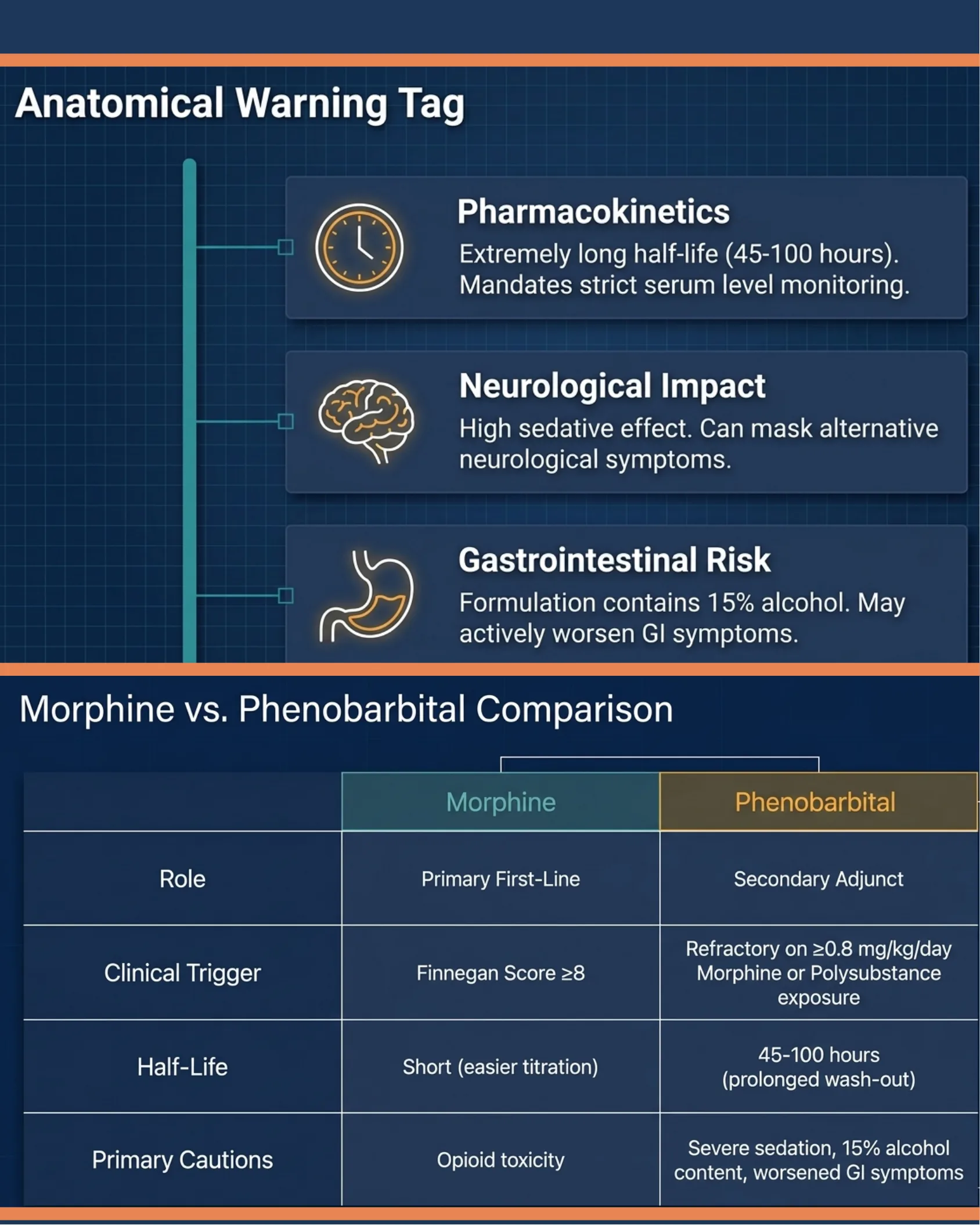
Anatomical Warning Tag
- Pharmacokinetics: Extremely long half-life (45-100 hours). Mandates strict serum level monitoring.
- Neurological Impact: High sedative effect. Can mask alternative neurological symptoms.
- Gastrointestinal Risk: Formulation contains 15% alcohol. May actively worsen GI symptoms.
Morphine vs. Phenobarbital Comparison
| Morphine | Phenobarbital | |
|---|---|---|
| Role | Primary First-Line | Secondary Adjunct |
| Clinical Trigger | Finnegan Score ≥8 | Refractory on ≥0.8 mg/kg/day Morphine or Polysubstance exposure |
| Half-Life | Short (easier titration) | 45-100 hours (prolonged wash-out) |
| Primary Cautions | Opioid toxicity | Severe sedation, 15% alcohol content, worsened GI symptoms |
NAS Escalation Pyramid & NeoFast App
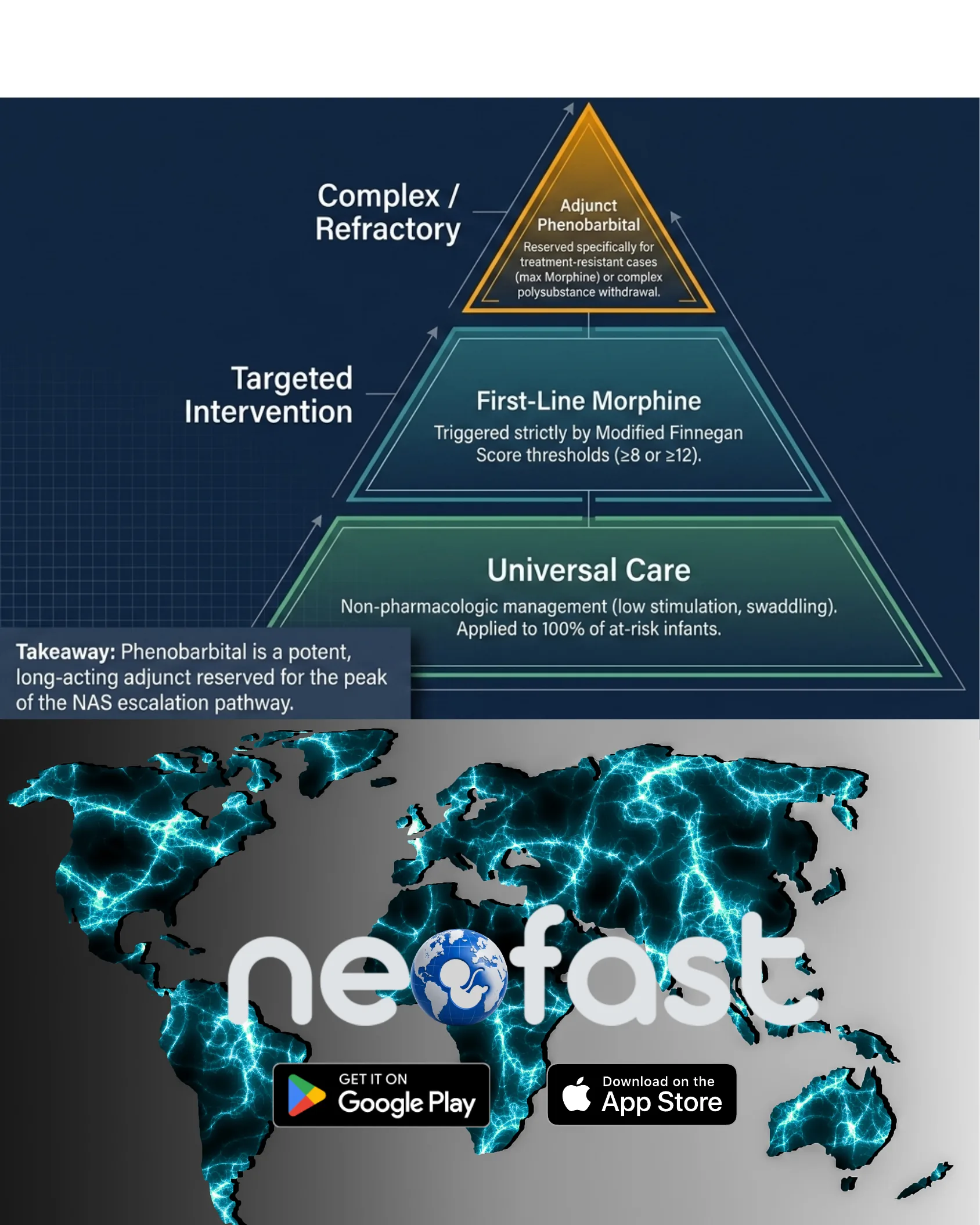
NAS Escalation Pyramid
- Universal Care: Non-pharmacologic management (low stimulation, swaddling). Applied to 100% of at-risk infants.
- Targeted Intervention – First-Line Morphine: Triggered strictly by Modified Finnegan Score thresholds (≥8 or ≥12).
- Complex / Refractory – Adjunct Phenobarbital: Reserved specifically for treatment-resistant cases (max Morphine) or complex polysubstance withdrawal.
Takeaway: Phenobarbital is a potent, long-acting adjunct reserved for the peak of the NAS escalation pathway.
NeoFast
Get it on Google Play — Download on the App Store