Key takeaways
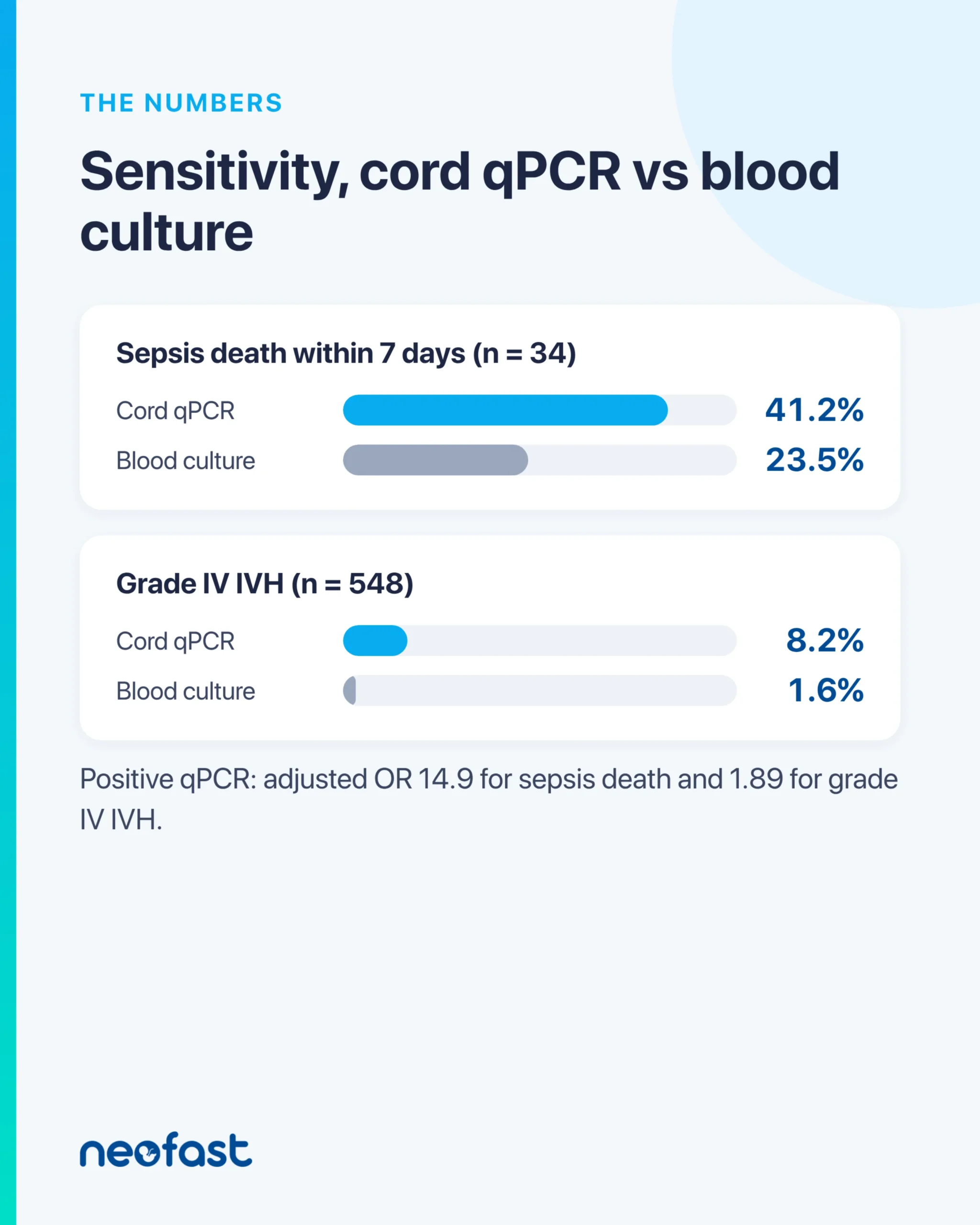
- In 15,290 very low birth weight infants, umbilical cord qPCR had 41.2% sensitivity for sepsis death within 7 days versus 23.5% for blood culture.
- For grade IV IVH (n = 548), cord qPCR sensitivity was 8.2% compared with 1.6% for blood culture.
- Positive cord qPCR carried an adjusted OR of 14.9 for sepsis death and 1.89 for grade IV IVH.
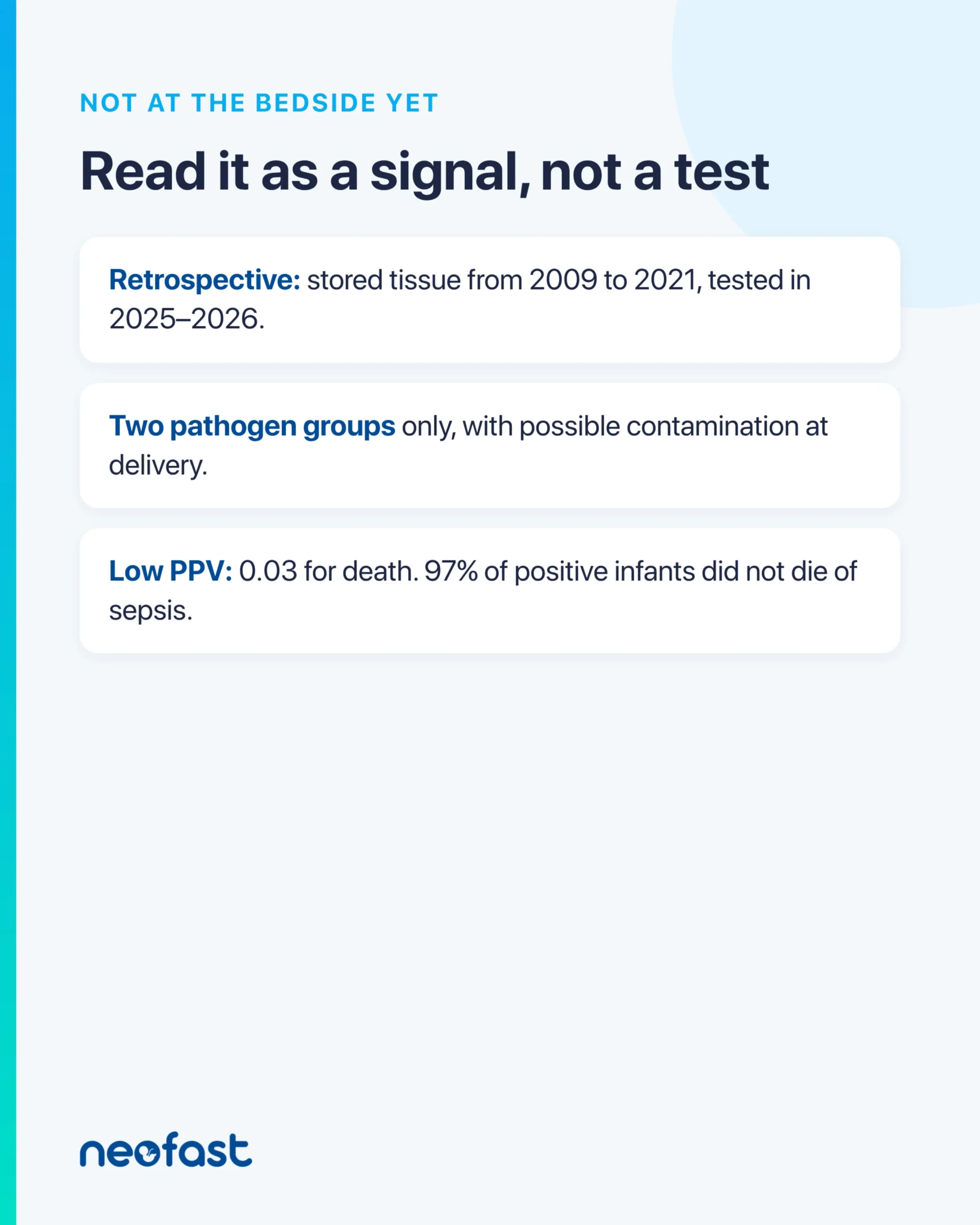
- Despite higher sensitivity, positive predictive value for death was only 0.03, meaning 97% of qPCR-positive infants did not die of sepsis.
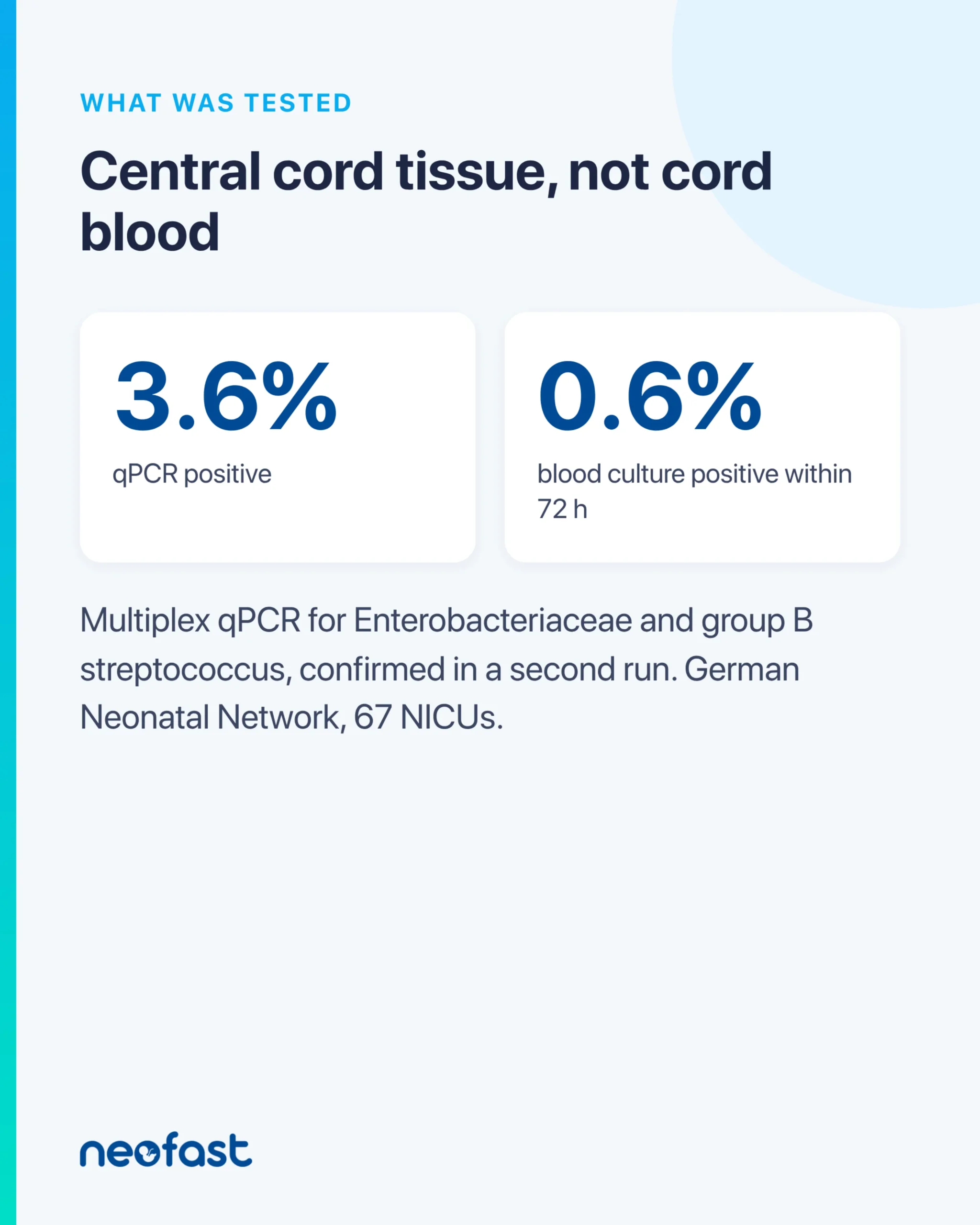
- The study tested central cord tissue (not cord blood) with multiplex qPCR for Enterobacteriaceae and group B streptococcus, confirmed in a second run, across 67 NICUs in the German Neonatal Network.
References
- Hanenberg L, Fortmann I, Rupp J, et al; German Neonatal Network. Umbilical cord quantitative polymerase chain reaction and sepsis complications for neonates. JAMA Netw Open. 2026;9(10):e2637159.
- Gentamicin: drug information. In: NeoFast app, Antibiotics. Micromedex; Lexicomp Pediatric and Neonatal Dosage Handbook, 30th ed., 2023.
Neonatal Sepsis · October 2026
NEONATAL SEPSIS · OCTOBER 2026
Blood culture missed most early sepsis deaths.
In 15,290 very low birth weight infants, umbilical cord PCR flagged almost twice as many.
The Numbers
The Numbers
Sensitivity, cord qPCR vs blood culture
| Sepsis death within 7 days (n = 34) | Sensitivity |
|---|---|
| Cord qPCR | 41.2% |
| Blood culture | 23.5% |
| Grade IV IVH (n = 548) | Sensitivity |
|---|---|
| Cord qPCR | 8.2% |
| Blood culture | 1.6% |
Positive qPCR: adjusted OR 14.9 for sepsis death and 1.89 for grade IV IVH.
What Was Tested
What Was Tested
Central cord tissue, not cord blood
| Metric | Result |
|---|---|
| qPCR positive | 3.6% |
| Blood culture positive within 72 h | 0.6% |
Multiplex qPCR for Enterobacteriaceae and group B streptococcus, confirmed in a second run. German Neonatal Network, 67 NICUs.
Not at the Bedside Yet
Not at the Bedside Yet
Read it as a signal, not a test
- Retrospective: stored tissue from 2009 to 2021, tested in 2025–2026.
- Two pathogen groups only, with possible contamination at delivery.
- Low PPV: 0.03 for death. 97% of positive infants did not die of sepsis.
Practical Rule

Practical Rule
A negative blood culture does not rule out sepsis. Decide on the infant, and start empirical antibiotics on time, at the right interval.
NeoFast · Gentamicin, 28 weeks, Day 1, 1.2 kg
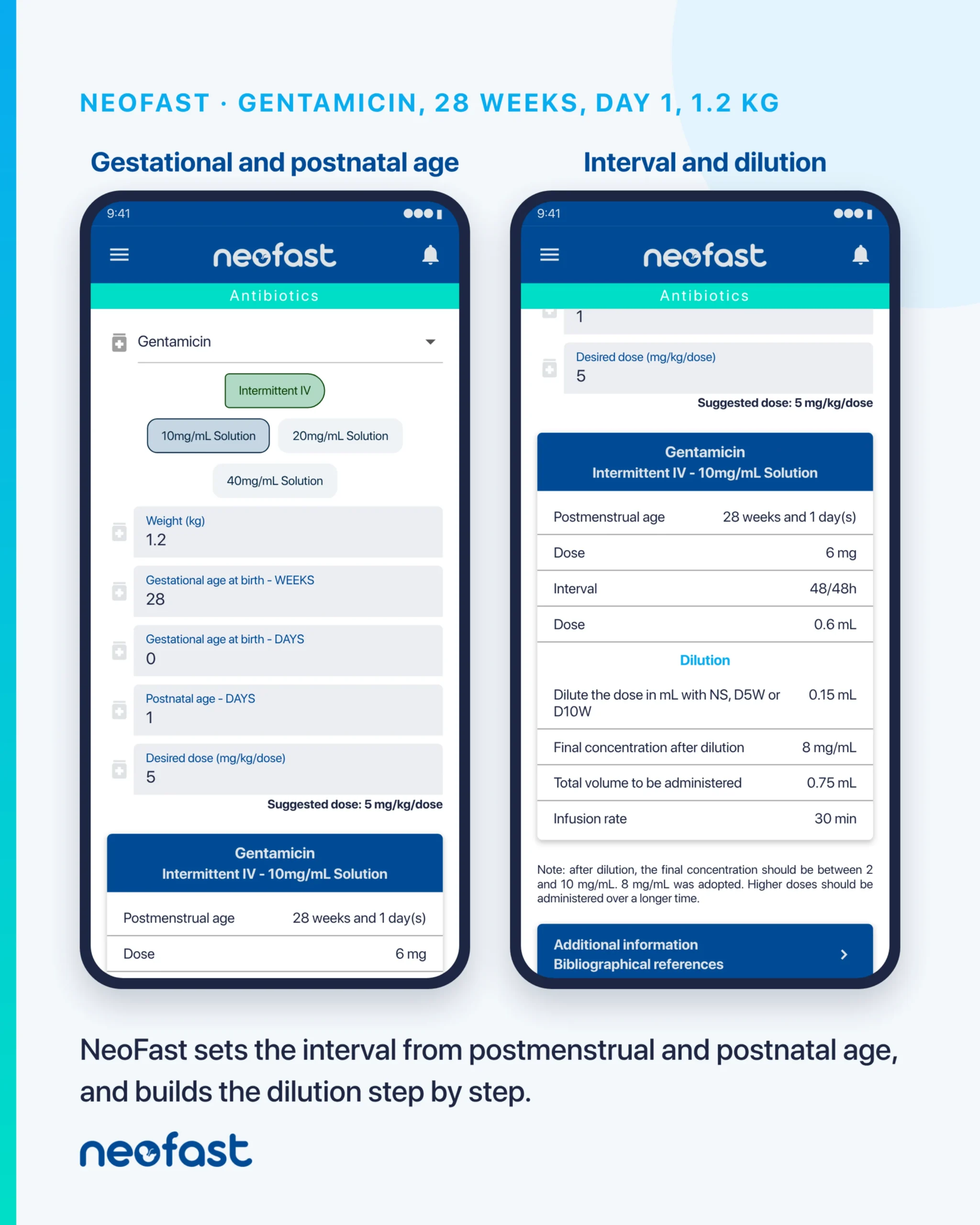
NeoFast · Gentamicin, 28 weeks, Day 1, 1.2 kg
Gestational and postnatal age
- Drug: Gentamicin
- Route: Intermittent IV
- Solution: 10 mg/mL Solution (options: 20 mg/mL Solution, 40 mg/mL Solution)
- Weight (kg): 1.2
- Gestational age at birth – WEEKS: 28
- Gestational age at birth – DAYS: 0
- Postnatal age – DAYS: 1
- Desired dose (mg/kg/dose): 5
- Suggested dose: 5 mg/kg/dose
| Gentamicin — Intermittent IV – 10mg/mL Solution | |
|---|---|
| Postmenstrual age | 28 weeks and 1 day(s) |
| Dose | 6 mg |
Interval and dilution
- Desired dose (mg/kg/dose): 5
- Suggested dose: 5 mg/kg/dose
| Gentamicin — Intermittent IV – 10mg/mL Solution | |
|---|---|
| Postmenstrual age | 28 weeks and 1 day(s) |
| Dose | 6 mg |
| Interval | 48/48h |
| Dose | 0.6 mL |
Dilution
| Dilute the dose in mL with NS, D5W or D10W | 0.15 mL |
| Final concentration after dilution | 8 mg/mL |
| Total volume to be administered | 0.75 mL |
| Infusion rate | 30 min |
Note: after dilution, the final concentration should be between 2 and 10 mg/mL. 8 mg/mL was adopted. Higher doses should be administered over a longer time.
Additional information / Bibliographical references
NeoFast sets the interval from postmenstrual and postnatal age, and builds the dilution step by step.

neofast
Neonatal calculations with the source cited on every screen.
App Store · Google Play · neofastapp.com
The app calculates. The prescriber decides.
Frequently asked questions
How does umbilical cord qPCR sensitivity compare to blood culture for detecting early sepsis death in VLBW infants?
In 15,290 very low birth weight infants, cord qPCR had 41.2% sensitivity for sepsis death within 7 days (n = 34) versus 23.5% for blood culture.
What was the association between positive cord qPCR and grade IV IVH?
Cord qPCR sensitivity for grade IV IVH (n = 548) was 8.2% versus 1.6% for blood culture, with a positive qPCR carrying an adjusted OR of 1.89 for grade IV IVH.
Is umbilical cord qPCR ready for bedside clinical use?
No. The text states it should be read as a signal, not a test: the study was retrospective (stored tissue from 2009–2021, tested in 2025–2026), covered only two pathogen groups with possible contamination at delivery, and had low positive predictive value (0.03 for death), with 97% of positive infants not dying of sepsis.
What tissue and pathogens were tested in this study?
Central cord tissue (not cord blood) was tested using multiplex qPCR for Enterobacteriaceae and group B streptococcus, confirmed in a second run, within the German Neonatal Network across 67 NICUs. qPCR was positive in 3.6% versus blood culture positive within 72 hours in 0.6%.
What is the practical bedside rule given this data?
A negative blood culture does not rule out sepsis. Clinicians should decide on the infant and start empirical antibiotics on time, at the right interval.